Best Espresso Machines in the UK 2026
A good espresso machine can make a big difference to how you make coffee at home. It gives you stronger, richer coffee than most pod machines, more control than a bean-to-cup machine, and the option to make cappuccinos, flat whites, lattes and Americanos without going to a coffee shop every day.
The difficult part is choosing the right one.
Some espresso machines are compact and beginner-friendly. Some come with built-in grinders. Others are made for people who genuinely want to learn espresso properly. The right choice depends on how much control you want, how much space you have, and how much effort you are willing to put into each coffee.
In this guide, I have focused on espresso machines that make sense for different UK homes — from compact everyday machines and budget-friendly first setups to grinder models and more serious machines for better long-term espresso.
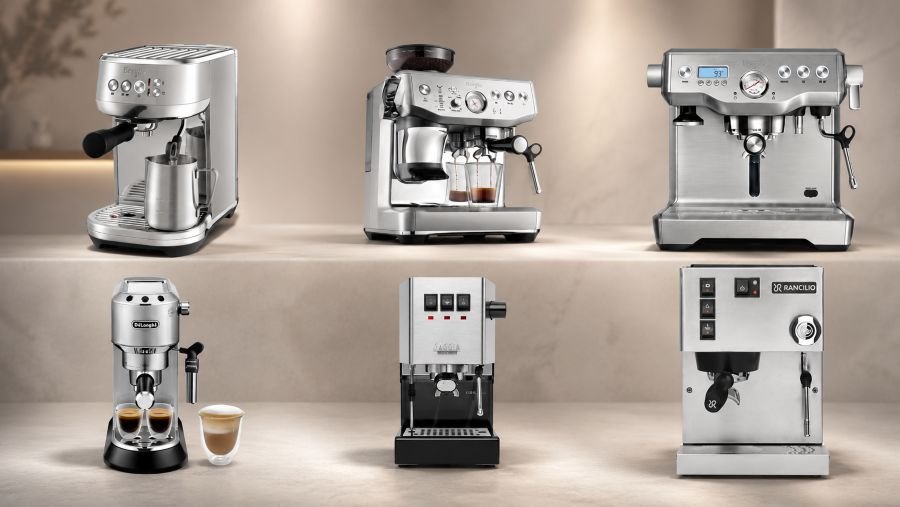
My Quick Picks
| Category | Pick | Best For |
|---|---|---|
| Best Overall | Sage Bambino Plus | Best if you want a compact espresso machine with fast heat-up, good coffee quality and easy milk frothing. |
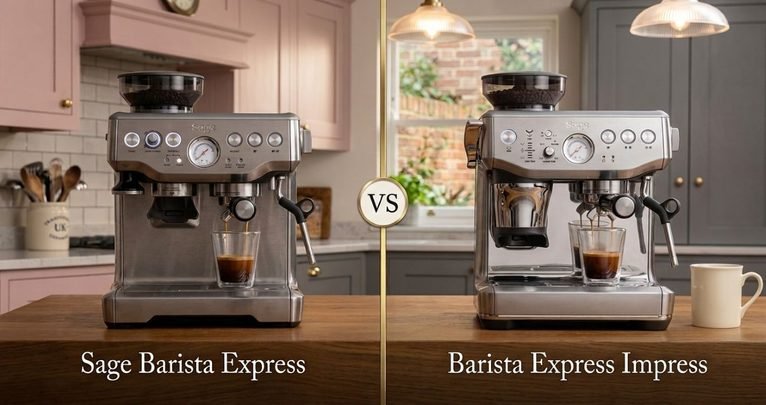
| Best with Grinder | Sage Barista Express Impress | Best if you want espresso quality, a built-in grinder and assisted tamping to improve your barista skills over time. |
| Best Manual | Gaggia Classic E24 | Best if you want a traditional espresso machine that teaches you proper grinding, dosing, tamping and milk steaming. |
| Best Budget Pick | De’Longhi Dedica Style EC685 | Best if you want an affordable, slim espresso machine for a small kitchen or first home setup. |
| Best Long-Term Pick | Rancilio Silvia E V6 | Best if you want a solid long-term machine and do not mind a steeper learning curve. |
| Best Premium Pick | Sage Dual Boiler | Best if you want more control, stronger steaming power and a serious home espresso setup. |
Espresso Machines Comparison Table
| Espresso Machine | Grinder Included | Portafilter Size | Heating System | Milk Frothing | Water Tank |
|---|---|---|---|---|---|
| Sage Bambino Plus | No | 54mm | ThermoJet | Automatic + manual steam wand | 1.9L |
| Sage Barista Express Impress | Yes | 54mm | Thermocoil | Manual steam wand | 2L |
| Gaggia Classic E24 | No | 58mm | Brass boiler | Manual steam wand | 2.1L |
| De’Longhi Dedica Style EC685 | No | 51mm | Thermoblock | Manual steam wand | 1.1L |
| Rancilio Silvia E V6 | No | 58mm | Single boiler | Manual steam wand | 2L |
| Sage Dual Boiler | No | 58mm | Dual boiler | Manual steam wand | 2.5L |
1. Sage Bambino Plus – Best Espresso Machine Overall
Overall Score: 9/10
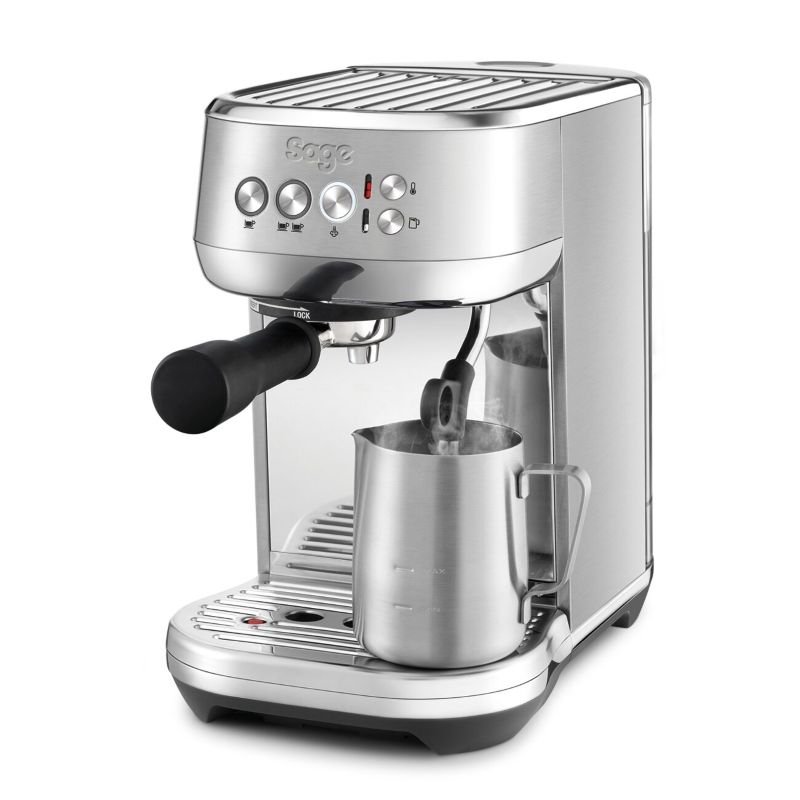
The Sage Bambino Plus is the espresso machine I would recommend to most people who want to start making proper espresso at home. It is compact, quick to use and much less intimidating than many traditional manual machines, but it still gives you enough control to improve your coffee over time.
It does not have a built-in grinder, so it is not a complete all-in-one setup. That is worth knowing before you buy, because a separate grinder will add to the total cost. But if you already own a decent espresso grinder, or you are happy to buy one separately, the Bambino Plus becomes one of the most sensible espresso machines for most UK kitchens.
The big advantage is the size. Many espresso machines look exciting online, then arrive and take over half the worktop. The Bambino Plus is small enough for normal UK kitchens, but it still feels like a proper espresso machine rather than a basic compact appliance.
Sage uses its ThermoJet heating system here, which means the machine is ready to brew in around 3 seconds. It also uses a 54mm stainless steel portafilter, an 18g dose and low-pressure pre-infusion, giving it a stronger espresso base than many cheaper compact machines.
This does not mean it will magically make perfect espresso from any coffee. Like any manual espresso machine, the grinder and beans matter a lot. With fresh beans, a proper espresso grinder and a bit of practice, the Bambino Plus can produce rich, balanced espresso with good crema.
The automatic steam wand is the other big reason this machine makes sense for beginners. You can choose different milk temperature and texture settings, then let the machine steam the milk for you. That is genuinely useful if you drink flat whites, cappuccinos or lattes and do not want to spend weeks learning milk steaming from scratch.
There are a few downsides. The lack of a built-in grinder increases the total cost, the 54mm portafilter is less universal than 58mm, and the drip tray is quite small. Even so, the Bambino Plus gets the balance right. It is fast, compact, capable and forgiving enough for beginners without feeling like something you will immediately outgrow.
| Pros | Cons |
|---|---|
| Compact enough for smaller UK kitchens | No built-in grinder |
| Very fast heat-up time | Total setup cost rises if you need to buy a grinder separately |
| 54mm portafilter with an 18g dose gives it good espresso potential | Small drip tray needs regular emptying |
| Automatic milk steaming is genuinely useful for beginners | 54mm accessories are less universal than 58mm accessories |
| Works well for flat whites, cappuccinos and lattes | Best results still need fresh beans, correct grind size and some practice |
Key Specifications
| Specification | Details |
|---|---|
| Machine Type | Manual Espresso Machine |
| Grinder | No Built-in Grinder |
| Portafilter Size | 54mm Stainless Steel Portafilter |
| Coffee Dose | 18g Dose |
| Water Tank Capacity | 1.9 Litres |
| Heating System | ThermoJet Heating System |
| Heat-Up Time | Around 3 Seconds |
| Pump Pressure | 15-Bar Italian Pump |
| Extraction Pressure | 9-Bar Extraction |
| Pre-Infusion | Low-Pressure Pre-Infusion |
| Temperature Control | PID Temperature Control |
| Milk Frothing | Automatic Steam Wand with Manual Option |
| Milk Texture Control | Adjustable Milk Temperature and Texture |
| Dimensions | Approx. 19 x 36 x 30 cm |
| Weight | Approx. 5.9kg |
| Warranty | 2 Years |
| Suitable Drinks | Espresso, Americano, Latte, Cappuccino, Flat White |
Why I Picked It
I picked the Sage Bambino Plus because it makes home espresso feel realistic for most people. It is compact, quick to use and easier to learn than many traditional machines, but it still gives you a proper portafilter setup and enough control to improve over time.
The automatic steam wand is a big part of its appeal. Milk texture is one of the hardest things for beginners to get right, and this machine removes a lot of that frustration while still letting you steam manually if you want to learn later.
It is not fully automatic, and that is a good thing. You still grind, dose and lock in the portafilter, so it feels like real espresso making, just without some of the parts that usually make beginners give up.
Who Should Buy It?
Buy the Sage Bambino Plus if you want a compact espresso machine that can make proper espresso and good milk drinks without taking over your kitchen.
It makes the most sense if you drink flat whites, cappuccinos or lattes regularly and want milk frothing to be easier. It is also a strong choice if you want to learn espresso gradually rather than jumping straight into a more demanding machine like the Gaggia Classic or Rancilio Silvia.
Who Should Avoid It?
Avoid it if you want a machine with a grinder built in. The Bambino Plus needs a separate grinder for the best results, so it may not be the cheapest route once you add everything together.
You may also want to avoid it if you already know you want a more traditional 58mm setup with heavier build quality and more manual control. In that case, the Gaggia Classic E24, Rancilio Silvia or Sage Dual Boiler may suit you better.
My Verdict
The Sage Bambino Plus is the best espresso machine here for most UK homes. It is small, fast and practical, but still capable of making proper espresso when paired with a good grinder and fresh beans.
Its biggest strength is the balance. It gives you a real manual espresso setup without making the process feel too difficult, and the automatic steam wand makes milk drinks much easier for beginners. It is not perfect, mainly because you still need to budget for a grinder, but for everyday home use it is one of the most sensible espresso machines to buy.
2. Sage Barista Express Impress – Best Espresso Machine with Grinder
Overall Score: 8.8/10
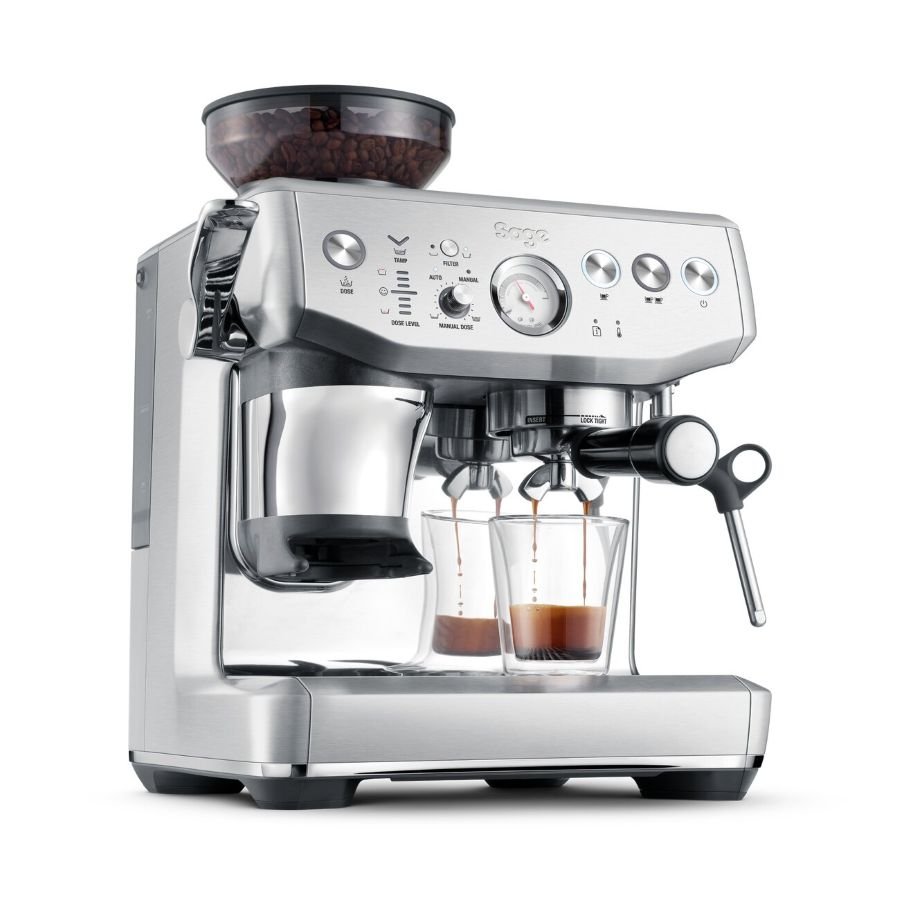
The Sage Barista Express Impress is the machine I would choose if you want a proper espresso setup with the grinder built in. It is not as compact as the Bambino Plus, and it is not as simple as a bean-to-cup machine, but it gives you a much more complete starting point if you want to make espresso from fresh beans at home.
The main appeal is that it brings grinding, dosing and tamping into one machine. That matters because home espresso can get frustrating when you are new to it. Even with good beans, the coffee can taste weak, sour or bitter if the grind size, dose or tamping is inconsistent.
Sage’s Impress Puck System assists with dosing and tamping, so you are not left guessing as much. The machine grinds into the portafilter, helps guide the dose, and uses a lever system to tamp the coffee more consistently. It also keeps the process cleaner than fully manual tamping, which is useful if you do not want coffee grounds all over the worktop every morning.
It is important to understand that this is not a fully automatic bean-to-cup machine. You still grind into a portafilter, lock it in, pull the shot, steam the milk and clean up afterwards. So it still feels like making espresso properly, just with more help in the parts beginners usually get wrong.
The built-in conical burr grinder has 25 grind settings, and the machine uses a 54mm stainless steel portafilter with an 18g dose. You also get low-pressure pre-infusion, 9-bar extraction and Sage’s Thermocoil heating system with PID temperature control, which all help give the machine a stronger base for consistent espresso.
Milk frothing is manual, so this is one area where you still need to learn. The steam wand can make good milk for flat whites, cappuccinos and lattes, but it does not do the work for you like the Bambino Plus.
The main downside is size. This is a much bigger machine than the Bambino Plus, and it needs proper counter space. Even so, the Barista Express Impress makes a lot of sense if you want fresh bean espresso, a built-in grinder and a machine that helps you build proper barista skills over time.
Pros and Cons
| Pros | Cons |
|---|---|
| Built-in grinder means you do not need a separate grinder straight away | Larger than compact espresso machines |
| Impress Puck System helps with dosing and tamping | More expensive than basic manual machines |
| Cleaner and less messy than fully manual tamping | Manual milk steaming takes practice |
| 25 grind settings give useful adjustment for different beans | Built-in grinder is convenient, but less upgradeable than a separate grinder |
| 54mm portafilter with an 18g dose gives good espresso potential | Still requires cleaning, dialling in and some learning |
| Manual steam wand gives you control over milk texture | Not as effortless as a bean-to-cup machine |
Key Specifications
| Specification | Details |
|---|---|
| Machine Type | Manual Espresso Machine with Built-in Grinder |
| Grinder | Integrated Conical Burr Grinder |
| Grind Settings | 25 Grind Settings |
| Portafilter Size | 54mm Stainless Steel Portafilter |
| Coffee Dose | 18g Dose |
| Water Tank Capacity | 2 Litres |
| Heating System | Thermocoil Heating System |
| Temperature Control | PID Temperature Control |
| Pump Pressure | 15-Bar Italian Pump |
| Extraction Pressure | 9-Bar Extraction |
| Pre-Infusion | Low-Pressure Pre-Infusion |
| Tamping System | Impress Assisted Tamping System |
| Dose Control | Assisted Dose Feedback |
| Milk Frothing | Manual Steam Wand |
| Controls | 1 Cup and 2 Cup Buttons |
| Dimensions | Approx. 33 x 38 x 41 cm |
| Weight | Approx. 11kg |
| Warranty | 2 Years |
| Suitable Drinks | Espresso, Americano, Latte, Cappuccino, Flat White |
Why I Picked It
I picked the Sage Barista Express Impress because it solves one of the biggest problems with home espresso: getting started without buying too many separate things.
With a normal manual espresso machine, you still need a capable grinder, a tamper, a dosing routine and some idea of how to adjust the shot. That can be enjoyable if you already know what you are doing, but it can also put beginners off. The Express Impress makes the process easier by building the grinder into the machine and helping with the dose and tamp.
I also like that it does not remove the espresso-making process completely. You are still using a portafilter, still adjusting the grind, still pulling the shot and still steaming milk yourself. So you can actually learn over time, rather than just pressing one button and letting the machine do everything.
It is not the cheapest option, and it is not the smallest, but as a complete home espresso setup, it is one of the most sensible choices for people who want fresh bean coffee and do not already own a grinder.
Who Should Buy It?
Buy the Sage Barista Express Impress if you want an espresso machine with a built-in grinder and you like the idea of learning proper barista-style coffee at home.
It makes the most sense if you are starting from scratch and want one machine that handles grinding, assisted dosing, assisted tamping, espresso extraction and milk steaming. It is also a good choice if you want better coffee than a pod machine or most bean-to-cup machines, but do not want to build a full separate grinder-and-machine setup straight away.
Who Should Avoid It?
Avoid it if you want the easiest possible coffee routine. This is still a hands-on machine, so you need to grind, tamp, brew, steam and clean up. If you want one-touch cappuccinos and lattes, a bean-to-cup machine will suit you better.
You may also want to avoid it if you already own a good espresso grinder. In that case, the Sage Bambino Plus, Gaggia Classic E24, Rancilio Silvia or Sage Dual Boiler may be a better use of your budget.
My Verdict
The Sage Barista Express Impress is the best espresso machine here if you want a grinder built in. It gives you a proper portafilter setup, fresh bean grinding, assisted dosing and assisted tamping in one machine, which makes it much easier to start making espresso at home.
It is not as compact as the Bambino Plus and not as effortless as a bean-to-cup machine, but it gives you a better route into proper espresso. If you want to improve your barista skills over time without buying a separate grinder straight away, this is one of the most practical machines to choose.
3. Gaggia Classic E24 – Best for Learning Proper Espresso
Overall Score: 8.5/10
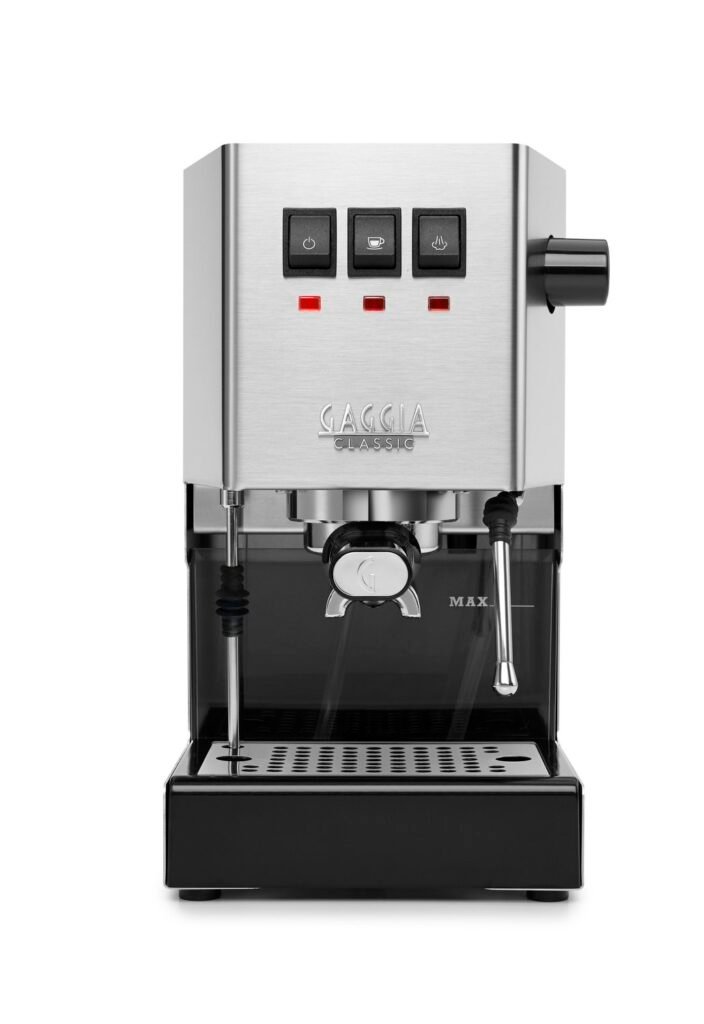
The Gaggia Classic E24 is the machine I would choose if you want to learn espresso properly rather than have the machine do most of the work for you. It is more traditional than the Sage Bambino Plus or Barista Express Impress, and that is exactly why it suits people who want to build real barista skills at home.
You need to grind properly, dose carefully, tamp consistently and learn how the machine behaves. That may sound like extra effort, but it is also the reason the Classic makes sense for espresso learning. It teaches you what really matters: grind size, puck prep, shot timing, milk steaming and temperature management.
The E24 version also brings an important update. Gaggia has moved to a lead-free brass boiler, and the company says the higher-capacity brass boiler helps with temperature stability, steam pressure and longer steam production. It is still a small single-boiler machine, but this update makes the E24 more appealing than older Classic models.
Another big strength is the 58mm stainless-steel portafilter. This is the same size used by many commercial-style machines, so it gives you more flexibility if you want to upgrade baskets, tampers, dosing funnels or other accessories later.
The controls are very simple. You get traditional rocker buttons for power, brewing and steam, with indicator lights. There is no touchscreen, no automatic milk system and no built-in grinder. Some people will see that as basic, but for learning espresso, it can be a strength because there is less to hide behind.
There are drawbacks. You need a proper espresso grinder, there is no built-in PID temperature control, and because it is a single-boiler machine, you cannot brew espresso and steam milk at the same time. For quick morning coffees, the Bambino Plus is easier. For a complete beginner setup with a grinder included, the Barista Express Impress is more convenient.
But if your goal is to understand espresso properly and improve your technique over time, the Gaggia Classic E24 is one of the most rewarding machines in this guide.
| Pros | Cons |
|---|---|
| Great machine for learning proper espresso technique | No built-in grinder |
| 58mm stainless-steel portafilter gives better accessory options | Not as beginner-friendly as Sage machines |
| Lead-free brass boiler is a useful upgrade over older versions | No automatic milk frothing |
| Professional steam wand gives proper manual milk control | No PID temperature control built in |
| Solid stainless-steel bodywork | Single-boiler design means you cannot brew and steam at the same time |
| Good long-term serviceability and upgrade potential | Not ideal if you want quick, effortless coffee |
Key Specifications
| Specification | Details |
|---|---|
| Machine Type | Manual Espresso Machine |
| Grinder | No Built-in Grinder |
| Portafilter Size | 58mm Stainless Steel Portafilter |
| Boiler | Lead-Free Brass Boiler |
| Group | Lead-Free Brass Group |
| Water Tank Capacity | 2.1 Litres |
| Pump Pressure | 15-Bar Nominal Pump |
| Pre-Infusion | No Built-in Pre-Infusion |
| Temperature Control | No PID Temperature Control |
| Milk Frothing | Professional Stainless Steel Steam Wand |
| Controls | 3 Rocker Buttons with Indicator Lights |
| Solenoid Valve | 3-Way Solenoid Valve |
| Filters Included | 3 Filters for Ground Coffee and Coffee Pods |
| Dimensions | Approx. 20 x 35.5 x 27 cm |
| Weight | Approx. 8.1kg |
| Bodywork | Brushed Stainless Steel |
| Descaling | Manual Descaling |
| Suitable Drinks | Espresso, Americano, Cappuccino, Flat White, Latte |
Why I Picked It
I picked the Gaggia Classic E24 because it is one of the strongest choices for people who want to learn espresso properly, not just press a button and hope for a good drink.
It makes you pay attention to the things that really affect the cup: grind size, puck prep, shot timing and milk steaming. That can be frustrating at first, but it also makes the machine more rewarding as your technique improves.
The 58mm portafilter is another big reason it stands out. It gives you more room to experiment with standard espresso accessories like baskets, tampers and puck screens. The brass boiler update also makes the E24 version more appealing than older Classic models, especially for heat stability and steam performance.
Who Should Buy It?
Buy the Gaggia Classic E24 if you want to learn proper manual espresso and you are happy to put in some practice.
It makes the most sense if you already own, or plan to buy, a capable espresso grinder. It is also a good choice if you like the idea of a simple, repairable machine that you can maintain and potentially upgrade over time.
This is a strong pick for someone who sees espresso as a hobby, not just a quick way to get caffeine in the morning.
Who Should Avoid It?
Avoid it if you want the easiest possible espresso machine. The Gaggia Classic E24 does not have a built-in grinder, automatic milk frothing, assisted tamping or one-touch drink settings.
You may also want to avoid it if you mainly make milk drinks for several people at once. Because it is a single-boiler machine, you need to move between brewing and steaming, which can feel slow compared with a dual-boiler machine or a more automated setup.
If you want a simpler daily routine, the Sage Bambino Plus or Sage Barista Express Impress will probably be easier to live with.
My Verdict
The Gaggia Classic E24 is the best espresso machine here for people who want to learn properly. It is not the easiest machine, and it is not meant to be. You need a good grinder, fresh beans and some patience, but it gives you a more traditional route into home espresso than the Sage machines.
Its biggest strengths are the 58mm portafilter, brass boiler, professional steam wand, simple controls and long-term upgrade potential. If you want convenience, choose something else. If you want to build real barista skills at home, the Gaggia Classic E24 is one of the most rewarding machines in this guide.
4. De’Longhi Dedica Style EC685 – Best Budget Espresso Machine
Overall Score: 8/10
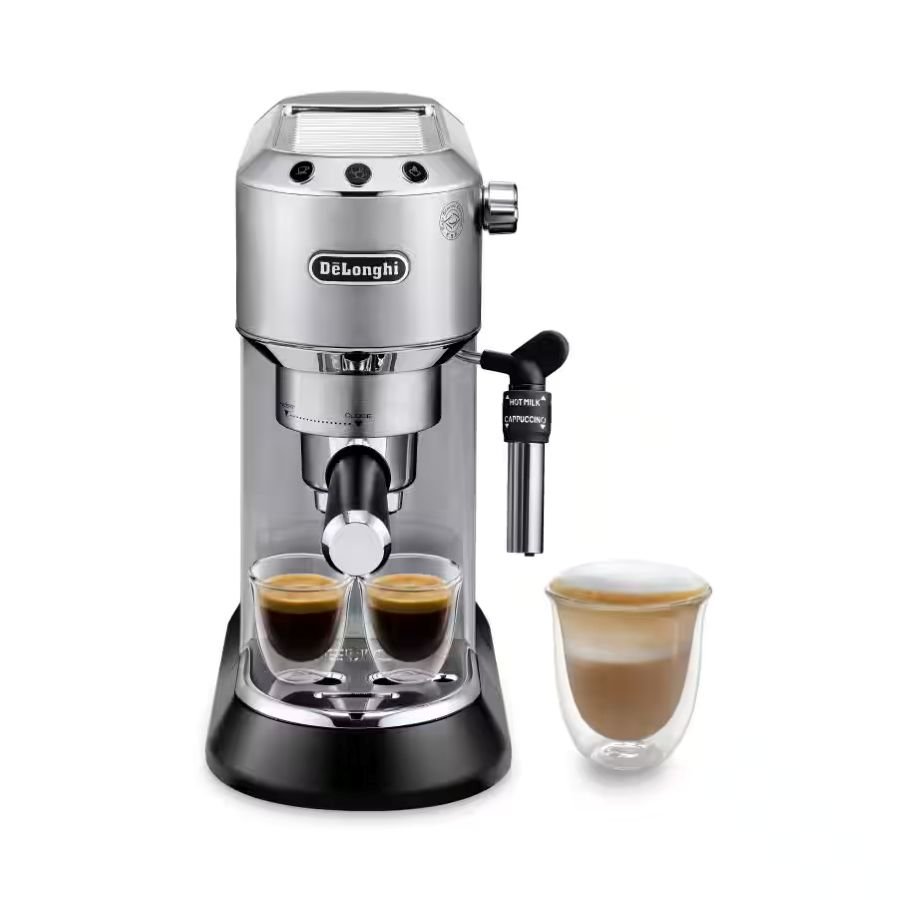
The De’Longhi Dedica Style EC685 is the espresso machine I would choose if you want something affordable, slim and easy to fit into a small kitchen. It is not the most advanced machine in this guide, but it makes a lot of sense as a first step into home espresso.
The biggest reason to consider it is the size. At around 15cm wide, the Dedica takes up far less worktop space than machines like the Sage Barista Express Impress or Gaggia Classic E24. If you live in a flat, have a narrow counter, or just do not want a large coffee machine sitting out all the time, that matters.
It is also much cheaper than most of the other machines here. You still get a manual espresso-style workflow, but without the same upfront cost. It works with ground coffee and ESE pods too, which gives beginners a more flexible and less messy way to get started.
For espresso, it uses a smaller 51mm portafilter and a 15-bar pump. The pressure number sounds impressive, but good espresso depends more on grind size, dose, coffee freshness and consistency. In this price range, the Dedica is more about convenience, size and affordability than perfect cafe-style extraction.
The steam wand is useful for cappuccinos and lattes, but it is fairly basic compared with the Sage Bambino Plus, Gaggia Classic E24 or Rancilio Silvia. You can make milk drinks with it, but smooth flat-white-style microfoam may take patience and practice.
There are clear limitations. The smaller portafilter gives you less room to grow, the pressurised baskets offer less control, and there is no built-in grinder. Even so, the Dedica Style EC685 has a place in this guide. If you want to start making espresso-style drinks at home without spending too much or giving up half your kitchen counter, it is a very sensible budget choice.
| Pros | Cons |
|---|---|
| Very slim design, good for smaller UK kitchens | No built-in grinder |
| More affordable than most espresso machines in this guide | Smaller 51mm portafilter is less flexible than 58mm machines |
| Simple controls make it beginner-friendly | Not ideal for serious espresso learning |
| Works with ground coffee and ESE pods | Steam wand is basic compared with more expensive machines |
| Quick to heat up and easy to keep on the counter | Pressurised baskets are forgiving but limit control |
| Manual steam wand for cappuccinos and lattes | Serious espresso drinkers may outgrow it |
Key Specifications
| Specification | Details |
|---|---|
| Machine Type | Manual Espresso Machine |
| Grinder | No Built-in Grinder |
| Coffee Compatibility | Ground Coffee and ESE Pods |
| Portafilter Size | 51mm Portafilter |
| Water Tank Capacity | 1.1 Litres |
| Pump Pressure | 15-Bar Pump |
| Heating System | Thermoblock Heating System |
| Temperature Settings | 3 Coffee Temperature Settings |
| Milk Frothing | Manual Milk Frother / Steam Wand |
| Controls | 1 Cup and 2 Cup Buttons |
| Cup Height | Up to 120mm |
| Cup Warmer | Passive Cup Warming Tray |
| Power | 1450W |
| Dimensions | Approx. 14.9 x 33 x 30.5 cm |
| Weight | Approx. 4.22kg |
| Body Finish | Metal Finish |
| Auto Shut-Off | Yes |
| Suitable Drinks | Espresso, Americano, Cappuccino, Latte |
Why I Picked It
I picked the De’Longhi Dedica Style EC685 because it gives budget buyers a realistic way into espresso-style coffee at home. It is small, simple and usually much cheaper than machines from Sage, Gaggia or Rancilio.
The slim design is a big part of its appeal. Not everyone has space for a large espresso machine and grinder setup, and the Dedica is easy to leave on the counter without feeling like it has taken over the kitchen.
I also like that it works with both ground coffee and ESE pods. That makes it more forgiving for beginners, especially if you want a quicker routine before experimenting more with ground coffee.
Who Should Buy It?
Buy the De’Longhi Dedica Style EC685 if you want an affordable espresso machine that is compact, simple and easy to fit into everyday life.
It makes the most sense if you are new to espresso, have limited counter space, or do not want to spend too much before knowing whether home espresso is something you will actually stick with.
It is also a good option if you mostly want espresso-style drinks, cappuccinos or lattes at home, rather than chasing perfect café-level espresso shots.
Who Should Avoid It?
Avoid it if you already know you want to learn espresso properly. The smaller 51mm portafilter, pressurised baskets and basic steam wand make it less suitable as a long-term machine for serious home baristas.
You may also want to avoid it if you expect the same coffee quality as a Sage Bambino Plus, Gaggia Classic E24 or Rancilio Silvia. The Dedica is practical and affordable, but it has limits.
If you want a machine that will grow with you for years, it may be better to spend more upfront on a stronger manual espresso machine.
My Verdict
The De’Longhi Dedica Style EC685 is the best budget espresso machine in this guide. It is slim, affordable and simple enough for beginners, which makes it a good choice for smaller UK kitchens or anyone testing whether home espresso is right for them.
It is not as capable as the more expensive machines, and serious espresso drinkers may outgrow it, but that is not really the point. For the price and size, it gives you a practical way to make espresso-style drinks, cappuccinos and lattes at home without committing to a large or expensive setup.
5. Rancilio Silvia E V6 – Best Durable Classic Espresso Machine
Overall Score: 8.6/10
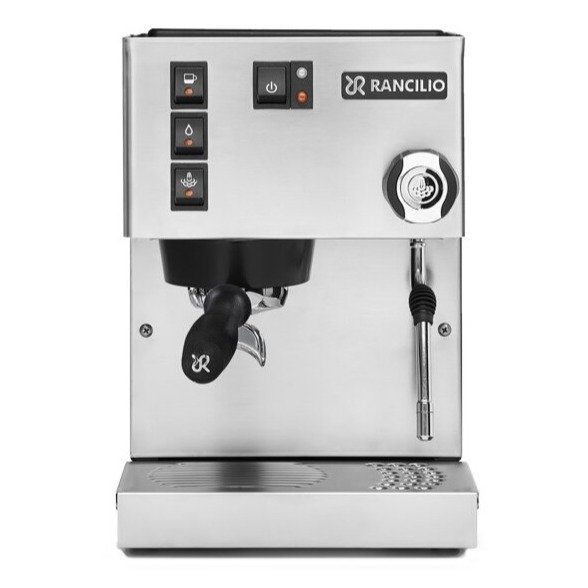
The Rancilio Silvia E V6 is the machine I would choose if you want something solid, traditional and built to last. This is a proper manual espresso machine. There is no built-in grinder, no touchscreen, no assisted tamping and no automatic milk frothing. You grind, dose, tamp, pull the shot and steam the milk yourself.
The build quality is the first thing that stands out. The Silvia has a stainless-steel body, a brass group and a heavy 58mm commercial-style portafilter. It feels more substantial than most beginner machines, and the weight helps it stay planted when you lock in the portafilter.
It also has a 0.3L single boiler, which is larger than the boiler in many entry-level manual machines. That gives it good steaming strength for a home machine, especially if you like cappuccinos or lattes.
But the Silvia does make you work for the results. There is no PID temperature control as standard, so you do not get the same easy consistency as some newer machines. Because it is a single-boiler machine, you also need to brew espresso first, then switch to steam mode and wait before frothing milk.
A good grinder is also essential. The Silvia is not very forgiving with poorly ground coffee. If the grind is too coarse, the shot will run too quickly and taste thin. If it is too fine, the machine can struggle and the coffee may taste harsh. This is not the kind of machine I would pair with supermarket pre-ground coffee and expect great results.
Where the Silvia really makes sense is long-term ownership. It has a simple design, strong parts and a reputation for being serviceable. It is not the easiest choice for beginners, but if you want a durable machine that rewards patience, the Rancilio Silvia E V6 is one of the strongest classic options in this guide.
| Pros | Cons |
|---|---|
| Very solid stainless-steel build | No built-in grinder |
| 58mm commercial-style portafilter | No PID temperature control as standard |
| Brass group helps with heat stability | Not as beginner-friendly as Sage machines |
| 0.3L single boiler gives strong steam performance | Manual milk steaming takes practice |
| Manual steam wand gives good milk control once learned | Single-boiler design means you cannot brew and steam at the same time |
| Good long-term serviceability | Needs a good espresso grinder |
Key Specifications
| Specification | Details |
|---|---|
| Machine Type | Manual Espresso Machine |
| Grinder | No Built-in Grinder |
| Portafilter Size | 58mm Commercial-Style Portafilter |
| Boiler | 0.3L Single Boiler |
| Boiler Material | Brass Boiler |
| Group Head | Brass Group |
| Water Tank Capacity | 2 Litres |
| Pump Type | Vibration Pump |
| Temperature Control | Thermostat Control |
| PID Temperature Control | No Built-in PID |
| Milk Frothing | Manual Stainless Steel Steam Wand |
| Steam Wand | Ball-Jointed Steam Wand |
| Solenoid Valve | 3-Way Solenoid Valve |
| Controls | Manual Switch Controls |
| Dimensions | Approx. 23.5 x 29 x 34 cm |
| Weight | Approx. 14kg |
| Body Finish | Brushed Stainless Steel |
| Suitable Drinks | Espresso, Americano, Cappuccino, Latte, Flat White |
Why I Picked It
I picked the Rancilio Silvia E V6 because it is one of the best machines in this guide for people who care about durability and traditional espresso making.
It does not give you the same help as the Sage machines, but it gives you a stronger manual foundation. The 58mm portafilter, brass group, solid body and powerful steam wand make it feel more serious than many entry-level machines.
I also like that it is a machine you can grow with. At first, it may feel demanding. You need to learn grind size, shot timing, milk steaming and temperature management. But once you understand it, the Silvia can produce very good espresso and milk drinks.
It is not the easiest choice, but it is one of the most satisfying if you enjoy the process.
Who Should Buy It?
Buy the Rancilio Silvia E V6 if you want a durable manual espresso machine and you are happy to learn how to use it properly.
It makes the most sense if you already own, or plan to buy, a good espresso grinder. It is also a strong choice if you want a machine with a 58mm portafilter, solid build quality and a more traditional home barista feel.
This is a good option for someone who sees espresso as a hobby, not just a quick morning routine.
Who Should Avoid It?
Avoid it if you want an easy beginner machine. The Silvia does not have assisted dosing, assisted tamping, automatic milk frothing or built-in temperature control in the same way as some modern machines.
You may also want to avoid it if you mostly make milk drinks for several people. Because it is a single-boiler machine, you need to switch between brewing and steaming, which takes time.
If convenience matters more than manual control, the Sage Bambino Plus or Sage Barista Express Impress will probably be easier to live with.
My Verdict
The Rancilio Silvia E V6 is the best durable classic espresso machine in this guide. It is solid, simple and built around proper manual espresso rather than convenience features.
It is not the best choice for complete beginners who want easy results straight away. But if you are willing to buy a good grinder, learn the machine and spend time improving your technique, the Silvia can be a very rewarding long-term option. It feels less like a kitchen gadget and more like a serious home espresso machine you can keep for years.
6. Sage Dual Boiler – Best Premium Espresso Machine
Overall Score: 9/10
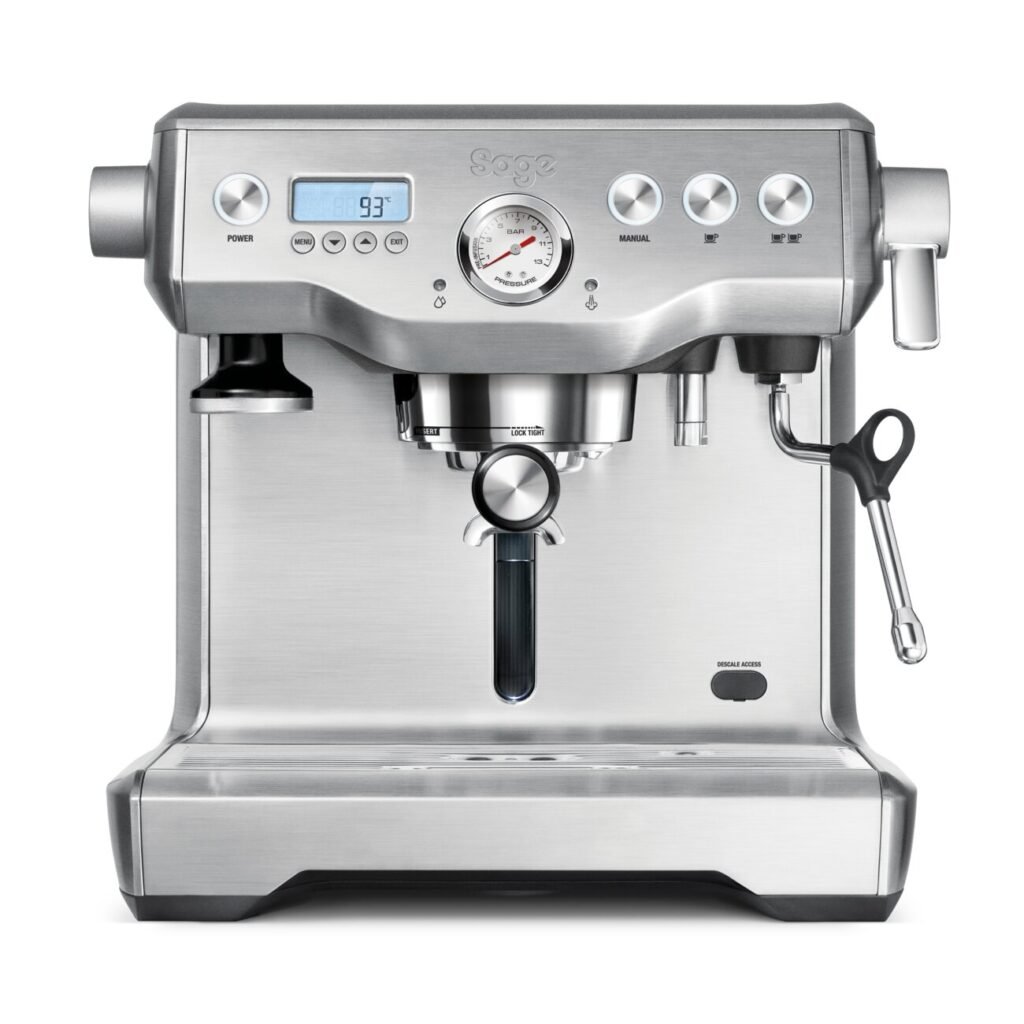
The Sage Dual Boiler is the machine I would choose if you want a serious home espresso setup without moving into very expensive prosumer territory. It is not cheap, and it is more machine than most casual coffee drinkers need, but it gives you far more control that the smaller machines in this guide.
This is still a manual espresso machine, not a bean-to-cup model. There is no built-in grinder, so you still need to grind the coffee, prepare the portafilter, pull the shot and steam the milk yourself. The difference is that the Dual Boiler gives you much better control once you know what you are doing.
The biggest reason to buy it is the dual boiler system. One boiler is used for espresso, and the other is used for steam. That means you can pull an espresso shot and steam milk at the same time. On a single-boiler machine, you usually have to brew first, then wait for the machine to reach steam temperature. With the Dual Boiler, the workflow is much smoother, especially if you make milk drinks regularly.
Temperature stability is another big strength. The espresso boiler and heated group head are PID controlled, which helps keep brewing temperature more consistent. You also get a 58mm stainless steel portafilter, a 22g dose, low-pressure pre-infusion, 9-bar extraction, an LCD screen and a pressure gauge.
The steam wand is fully manual, so this is still a machine for people who want to learn milk texturing properly. It can produce smooth microfoam for flat whites, cappuccinos and latte art, but it will not do the work for you like the Bambino Plus. If you enjoy the process, that is a strength. If you want effortless milk drinks, it may feel like too much work.
There are a few clear downsides. The first is price. This is one of the most expensive machines in the guide, and you still need a good grinder to get the best from it. Pairing this machine with a weak grinder would be a waste. The second issue is size. It is much larger than the Bambino Plus and needs proper counter space.
The Sage Dual Boiler is best seen as a serious home-barista machine. It gives you stability, steam power, control and consistency in a way that smaller machines cannot. It is not the most convenient choice for everyone, but if espresso is becoming more of a hobby than just a drink, this is one of the strongest premium options.
| Pros | Cons |
|---|---|
| Dual boiler system lets you brew and steam at the same time | Expensive compared with most home espresso machines |
| PID temperature control helps with espresso consistency | No built-in grinder |
| Heated group head improves temperature stability | Needs a good espresso grinder to get the best results |
| 58mm stainless steel portafilter gives a more serious setup | Larger footprint than compact machines |
| Strong manual steam wand for milk drinks | Manual milk steaming still takes practice |
| LCD screen and pressure gauge give useful feedback | More machine than casual users really need |
Key Specifications
| Specification | Details |
|---|---|
| Machine Type | Premium Manual Espresso Machine |
| Grinder | No Built-in Grinder |
| Portafilter Size | 58mm Stainless Steel Portafilter |
| Coffee Dose | 22g Dose |
| Boiler System | Dual Stainless Steel Boilers |
| Espresso Boiler | PID-Controlled Espresso Boiler |
| Steam Boiler | Dedicated Steam Boiler |
| Group Head | Heated Group Head |
| Water Tank Capacity | Approx. 2.5 Litres |
| Pump Pressure | 15-Bar Italian Pump |
| Extraction Pressure | 9-Bar Extraction |
| Pre-Infusion | Low-Pressure Pre-Infusion |
| Temperature Control | PID Temperature Control |
| Milk Frothing | Manual Steam Wand |
| Shot Control | Volumetric, Timed and Manual Control |
| Display | LCD Screen |
| Pressure Gauge | Yes |
| Dimensions | Approx. 40.3 x 37.3 x 37.8 cm |
| Body Finish | Brushed Stainless Steel Exterior |
| Suitable Drinks | Espresso, Americano, Cappuccino, Latte, Flat White |
Why I Picked It
I picked the Sage Dual Boiler because it gives serious home users more control than the smaller machines in this guide. It is not just a larger Bambino Plus. It is built for people who want better temperature stability, stronger steaming and more control over extraction.
The dual boiler system is the main reason it stands out. Being able to brew and steam at the same time makes a real difference if you regularly make flat whites, cappuccinos or lattes.
I also like the 58mm portafilter, larger 22g dose, LCD screen and pressure gauge. You still need skill and a good grinder, but the machine gives you a very strong platform to grow into.
Who Should Buy It?
Buy the Sage Dual Boiler if you want a premium home espresso machine with strong temperature stability, powerful milk steaming and proper manual control.
It makes the most sense if you already own a good espresso grinder, or you are planning to buy one. It is also a strong choice if you regularly make flat whites, cappuccinos or lattes and want the speed of brewing and steaming at the same time.
This is a good option for someone who enjoys the process of making coffee and wants a machine they can keep improving with over time.
Who Should Avoid It?
Avoid it if you want a simple, low-effort coffee routine. The Sage Dual Boiler is still a manual espresso machine, so you need to grind, dose, tamp, extract, steam and clean up.
You may also want to avoid it if counter space is limited. It is much larger than the Bambino Plus and needs a proper place in the kitchen.
If you are just starting out and want something smaller or easier, the Sage Bambino Plus will make more sense. If you want a grinder built in, the Sage Barista Express Impress is the more practical choice.
My Verdict
The Sage Dual Boiler is the best premium espresso machine in this guide. It gives you the control, temperature stability and steam power needed for serious home espresso, while still being more approachable than many prosumer machines.
It is not cheap, and it is not the right choice if you only want quick, easy coffee. But if you already care about espresso quality and want a machine that can grow with your skills, the Dual Boiler is one of the most capable options to buy.
Best Espresso Machines in the UK 2026: Final Verdict
If I had to choose one espresso machine for most UK homes, I would choose the Sage Bambino Plus. It is compact, fast and easier to live with than many traditional manual machines, but it still gives you enough quality and control to make proper espresso at home. The automatic steam wand also makes it a very practical choice if you regularly drink flat whites, cappuccinos or lattes.
The only thing to remember is that it does not have a built-in grinder. If you already own a good espresso grinder, or you are happy to buy one separately, the Bambino Plus is the best overall pick in this guide.
If you want a more complete setup from day one, the Sage Barista Express Impress makes more sense. It has a built-in grinder, assisted dosing and assisted tamping, so it removes some of the most frustrating parts of learning espresso.
For anyone who wants to learn espresso in a more traditional way, the Gaggia Classic E24 is the machine I would look at first. It is more hands-on, and it needs a good grinder and some patience, but the 58mm portafilter, brass boiler and professional steam wand make it a very rewarding machine to grow with.
If budget and space matter most, the De’Longhi Dedica Style EC685 is the most sensible entry-level option. It is slim, affordable and easy to fit into a small UK kitchen, even if serious espresso drinkers may eventually outgrow it.
The Rancilio Silvia E V6 is the best choice if you want something durable and traditional. It is not beginner-friendly, and it does not have modern assistance features, but it feels solid, uses a 58mm portafilter and can last for years if you are willing to learn how to use it properly.
For the most premium setup in this guide, the Sage Dual Boiler is the one to choose. It gives you dual boilers, PID temperature control, a 58mm portafilter, strong milk steaming and much more control over the espresso process. It is expensive and too much for casual users, but if espresso is becoming a serious hobby, it is the most capable machine here.
Overall, the Sage Bambino Plus is still the safest recommendation for most people. It gives the best balance of size, coffee quality, ease of use and everyday practicality. But the right choice depends on what you want most: convenience, built-in grinding, traditional learning, low price, long-term durability or premium control.