5 Best Lightweight Vacuum Cleaners in the UK (2026)
Weight is the vacuum spec people care about most and read about least. Air watts, suction figures, battery minutes: all of it gets top billing on the box, and none of it counts for anything at nine o’clock on a Sunday when the machine is still in the cupboard under the stairs because you can’t face carrying it up to the top floor.
That’s the argument for buying lightweight vacuum cleaner. What complicates it is that the number on the spec sheet tells you less than you’d think. A 3.8kg upright that propels itself along the carpet can feel easier over twenty minutes than a 2.5kg stick with its motor and battery sitting directly above your wrist. Where the weight sits matters as much as how much of it there is, and no manufacturer prints that on the packaging.
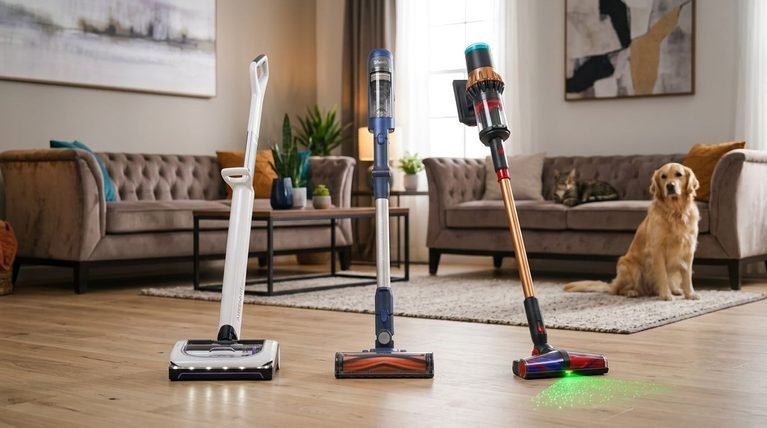
Five lightweight vacuum cleaners here, all currently sold in the UK, each chosen because lower weight actually buys you something rather than just costing you bin capacity. The Dyson V12 Detect Slim Absolute is the one we’d put first for most homes. The Vax ONEPWR Pace Plus is the sensible-money answer, the Gtech AirRAM 3 suits anyone who’d rather push than carry, the Miele DuoFlex HX1 is for homes that switch between tile and carpet all day, and the Shark Detect Clean & Empty is for people whose real objection to vacuuming is emptying the thing afterwards.
One of the five isn’t really a lightweight vacuum at all, and it might still be the right one for you.
What actually counts as a lightweight vacuum cleaner?
There’s no official threshold. Nobody at BSI has ruled on it. As a rough working line, cordless stick vacuums in the 2 to 3kg range are the ones you’ll notice carrying upstairs, and anything past about 4kg starts to feel like a job rather than a chore.
But that only holds for machines you carry. An upright is a different proposition entirely, because the floor takes most of the load and your arm is really only steering. The Gtech on this list is the heaviest thing here at 3.8kg and one of the least tiring to use, which sounds like a contradiction until you’ve pushed one across a lounge.
Which is why the lightest machine isn’t automatically the right one. Shaving 400g off the handle is a poor trade if it comes with a bin you empty twice per clean, a battery that gives up in the hallway, or a floorhead that skims over your carpet rather than digging into it. The target is light enough to pick up without thinking about it, capable enough that you don’t need a second vacuum for the jobs it can’t do.
What matters alongside the number on the box
- Where the weight sits. Motor and battery at handle height feel heavier than the same mass down at the floorhead.
- Steering effort, particularly around dining chairs and in narrow galley kitchens.
- Whether it converts to a handheld. Stairs and sofas are where low weight pays off most, and one machine here can’t do either.
- Bin size, because compact almost always means small.
- Real runtime rather than the headline figure, which is measured in eco mode on hard floors.
- Hair management, if anyone in the house has long hair or four legs.
- Whether the battery comes out. A sealed battery eventually means a new vacuum.
How we picked these five
This isn’t a list of the five lightest vacuums on sale in the UK. That list would be full of £60 machines with 0.2-litre bins that nobody would keep using past March.
Manufacturer specifications gave us the starting point: weight, quoted runtime, bin capacity, floorhead design and filtration. From there we looked at how each machine is actually designed to be lived with, which means handling and balance, whether it converts for stairs and above-floor work, how it stores and how much of a nuisance the maintenance is. Availability mattered too. Every lightweight vacuum cleaner here is currently sold in the UK through the manufacturer or the major retailers, with spares and replacement batteries you can still buy in two years’ time.
Above all, each one had to answer a different question. A 2.2kg cordless that’s ideal in a one-bed flat is the wrong recommendation for a four-bedroom house with fitted carpet throughout, and somebody who finds top-heavy sticks tiring is better served by an upright than by a lighter version of the thing that’s already hurting their wrist. So the five below take quite different approaches, and the right one depends on your floors and your stairs rather than on which has the smallest number.
Quick comparison
| Model | Best for | Weight | Max runtime | Bin | Handheld mode | Guarantee |
|---|---|---|---|---|---|---|
| Dyson V12 Detect Slim Absolute | Best overall | 2.2kg | Up to 60 min | 0.35L | ✓ | 2 years |
| Vax ONEPWR Pace Plus | Best value | 3.1kg | Up to 40 min | 0.6L | ✓ | 3 years |
| Gtech AirRAM 3 | Best lightweight upright | 3.8kg | Around 30 min | 0.7L | ✗ | 2 years |
| Miele DuoFlex HX1 | Best for mixed flooring | 3.1kg | Up to 55 min | 0.3L | ✓ | 2 years |
| Shark Detect Clean & Empty IW4621UKT | Best auto-empty | Around 2.9kg | Up to 60 min* | 0.42L | ✓ | 5 years** |
What these cost to run over five years
Electricity is almost irrelevant with a cordless vacuum. Charging one costs a few pounds a year at current rates. What actually adds up is filters, brush bars and, sooner or later, a battery.
The estimates below assume five years of normal use at around five cleans a week, and cover consumables, one battery replacement, charging and minor wear parts. They’re a planning guide for comparing machines against each other, not a forecast of what any individual household will spend.
| Vacuum cleaner | Filters & consumables | Battery allowance | Electricity | Wear parts | 5-year estimate |
|---|---|---|---|---|---|
| Dyson V12 Detect Slim Absolute | ~£40 | ~£90 | ~£25 | ~£20 | ~£175 |
| Vax ONEPWR Pace Plus | ~£35 | ~£80 | ~£25 | ~£20 | ~£160 |
| Gtech AirRAM 3 | £72 | ~£100 | ~£25 | ~£25 | ~£220 |
| Miele DuoFlex HX1 | ~£50 | ~£125 | ~£25 | ~£25 | ~£225 |
| Shark Detect Clean & Empty IW4621UKT | ~£60 | ~£100 | ~£30 | ~£25 | ~£215 |
The Vax comes out cheapest at roughly £160, helped by inexpensive filters and a battery that’s shared across a whole product range rather than made for one machine. The Dyson isn’t far behind at around £175, which is reasonable for a premium cordless and better than its purchase price might suggest.
The Gtech is the one worth explaining. Its filter is described as self-cleaning, and it is, in the sense that a vibrating system shakes dirt off it as you clean rather than leaving you to rinse it monthly. But Gtech still sells a replacement filter at £17.99 and recommends changing it once a year, so five years of ownership means four of them. That’s £72 of a known cost rather than a guess, and it’s the main reason the AirRAM 3 sits near the top of this table. The Miele is dearer still at around £225, mostly on battery pricing.
None of which changes the recommendation. A £65 difference spread across five years works out at about a pound a month, and that’s not enough to outweigh the Dyson’s weight advantage if stairs are what sent you looking in the first place. If your priorities run the other way and value is the point, the Vax wins on both counts at once.
1. Dyson V12 Detect Slim Absolute: Best Overall
Pick this one up after using almost any other full-size cordless and the difference registers immediately. At around 2.2kg it’s the lightest machine in this guide, and the gap only widens the longer you hold it above waist height. Cleaning a staircase, doing the top of a wardrobe, going over the stair carpet on a Victorian terrace with a half-landing: these are the jobs where 800g either way stops being a spec and starts being the reason you finish or don’t.
Dyson rates it at 150 air watts in boost mode and up to 60 minutes in eco. More useful day to day is the change Dyson made to the controls. The V12 was the first of its cordless machines to drop the squeeze trigger for a simple on-off button, which sounds trivial and isn’t. Anyone who has done a full ground floor with a trigger held down knows exactly why.
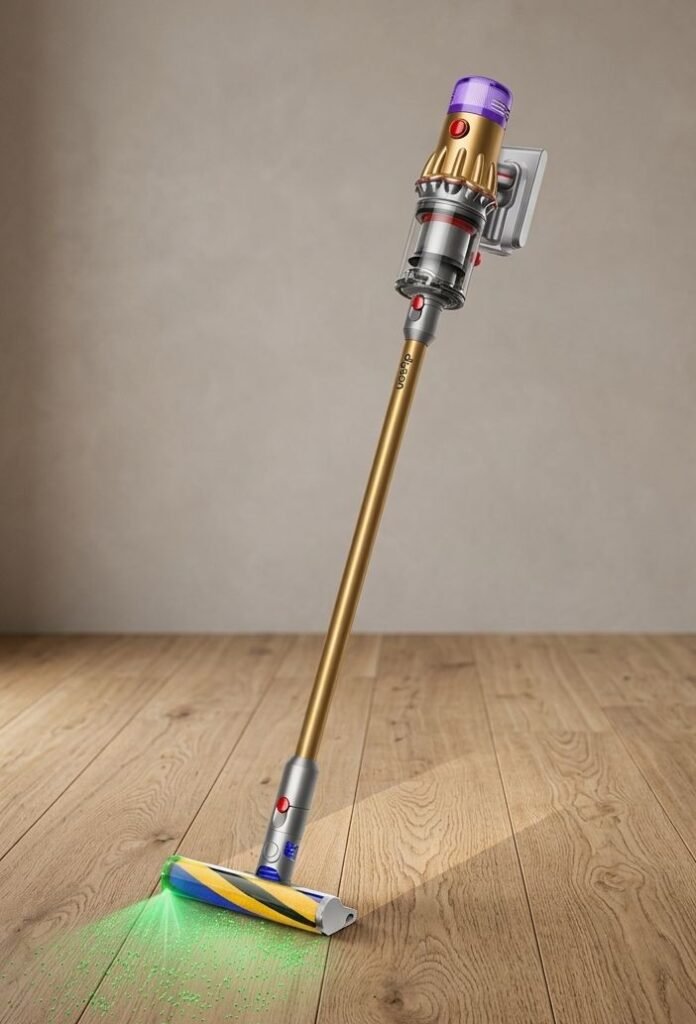
Two floorheads come in the box and they do different jobs. The Fluffy Optic head throws a low angled light across hard floors and shows up fine dust you’d otherwise walk straight past, which is either brilliant or slightly demoralising depending on your temperament. The Motorbar head handles carpet and de-tangles hair as it goes. An LCD screen on the body counts down remaining runtime, so you know whether you’ve got the landing in you.
The compromise is the bin. At 0.35 litres it holds roughly half what the Vax does and does not do well in a house with a shedding dog. In a flat or a small terrace you’ll empty it once a clean and think nothing of it. In a four-bed with carpet upstairs, you’ll be at the kitchen bin more often than you’d like.
Specifications
| Weight | 2.2kg on most UK retailer listings; Dyson’s own UK page for this model states 2.37kg |
| Suction | 150 air watts in boost mode |
| Runtime | Up to 60 minutes, quoted in eco mode on hard floors |
| Bin | 0.35 litres, with a push-through ejection mechanism |
| Cleaner heads | Fluffy Optic for hard floors, de-tangling Motorbar for carpet |
| Controls | Single power button rather than a held trigger, plus an LCD runtime display |
| Battery | Click-out and replaceable without tools |
| Guarantee | 2 years |
| Where to buy | Dyson’s UK store and the major retailers |
Pros and cons
Pros
- The lightest machine in this guide, and it shows most on stairs
- Two floorheads that properly cover both hard floors and carpet
- Button operation instead of a trigger you have to keep squeezed
- Battery clicks out, so a tired cell doesn’t mean a new vacuum
Cons
- 0.35-litre bin is small for a machine sold as a whole-home vacuum
- Costs considerably more than the Vax for the same core job
- 2-year guarantee, against three from Vax and five from Shark on registration
- Published weight varies between Dyson and its retailers
Buy it if the weight of your current vacuum is the actual reason you’re replacing it, and you don’t want to drop down to a machine that only does quick tidy-ups. Stairs and a second floor make the case on their own.
Skip it if bin size and price matter more than the last few hundred grams. The Vax gives you nearly double the capacity for meaningfully less money, and you give up refinement rather than cleaning ability.
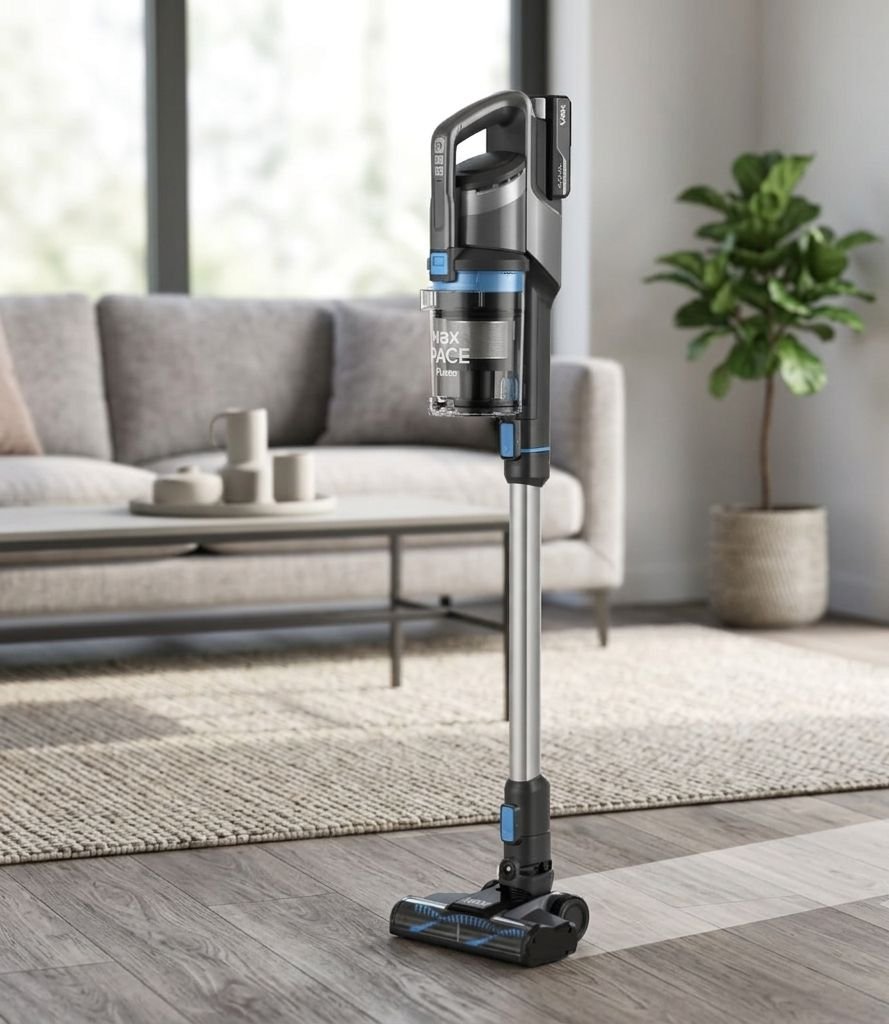
2. Vax ONEPWR Pace Plus: Best Value
At 3.1kg the Pace Plus is most of a kilo heavier than the Dyson, which you’ll notice on stairs and largely won’t on the flat. What you get back is the 0.6-litre bin, nearly twice the Dyson’s and half again on the Miele’s. In a house that generates real debris rather than a light dusting, that’s the difference between one trip to the bin and three.
The battery is the quiet argument for this one. It’s a removable 4.0Ah ONEPWR MAX pack, part of Vax’s shared battery system, so it swaps between other ONEPWR tools and can be replaced on its own when capacity fades. Vax quotes up to 40 minutes, and is unusually straight about the range: the listing says 15 to 40 minutes depending on the setting. Fifteen minutes on boost is the honest figure most brands leave out, and it’s worth reading every 60-minute claim on this page in that light.
It handles carpet and hard floors, converts to a handheld with a stair tool in the box and runs three-stage filtration that Vax rates at capturing 99% of particles down to 0.3 microns. The three-year guarantee is the longest here apart from Shark’s registered cover.
What you don’t get is any of the automation. No dust sensing, no floor detection, no screen telling you what it’s found. Press the button, clean the room, press it again.
For a lot of households that’s not a compromise so much as a relief.
Specifications
| Weight | 3.1kg |
| Runtime | Vax quotes 15 to 40 minutes depending on the power setting |
| Battery | Removable ONEPWR 4.0Ah MAX, roughly 3 hours to charge, shared across the ONEPWR range |
| Bin | 0.6 litres |
| Filtration | Three-stage, rated by Vax at 99% of particles down to 0.3 microns |
| Surfaces | Carpet, wool carpet, hard floors, laminate and stairs |
| In the box | Crevice tool, stair tool, wall mount and charger |
| Guarantee | 3 years |
| Where to buy | Vax direct, Argos and the major retailers |
Pros and cons
Pros
- 0.6-litre bin, comfortably bigger than the Dyson’s or the Miele’s
- Removable battery that swaps with other ONEPWR tools
- Three-year guarantee as standard, with no registration hoop
- Cheapest of the five to keep running on our estimates
Cons
- 3.1kg puts it nearly a kilo above the Dyson
- Shortest quoted runtime here, and as little as 15 minutes on boost
- No floor detection or dirt sensing of any kind
- Feels functional rather than premium in the hand
Buy it if you want the fundamentals done properly and you’re not interested in paying for sensors you’d never look at. The bigger bin, the swappable battery and the low running costs make it the easiest recommendation here for most households.
Skip it if carrying weight is the whole point of the purchase. The Dyson is nearly a kilo lighter, and if your stairs are the problem, that kilo is what you’re buying.
3. Gtech AirRAM 3: Best Lightweight Upright
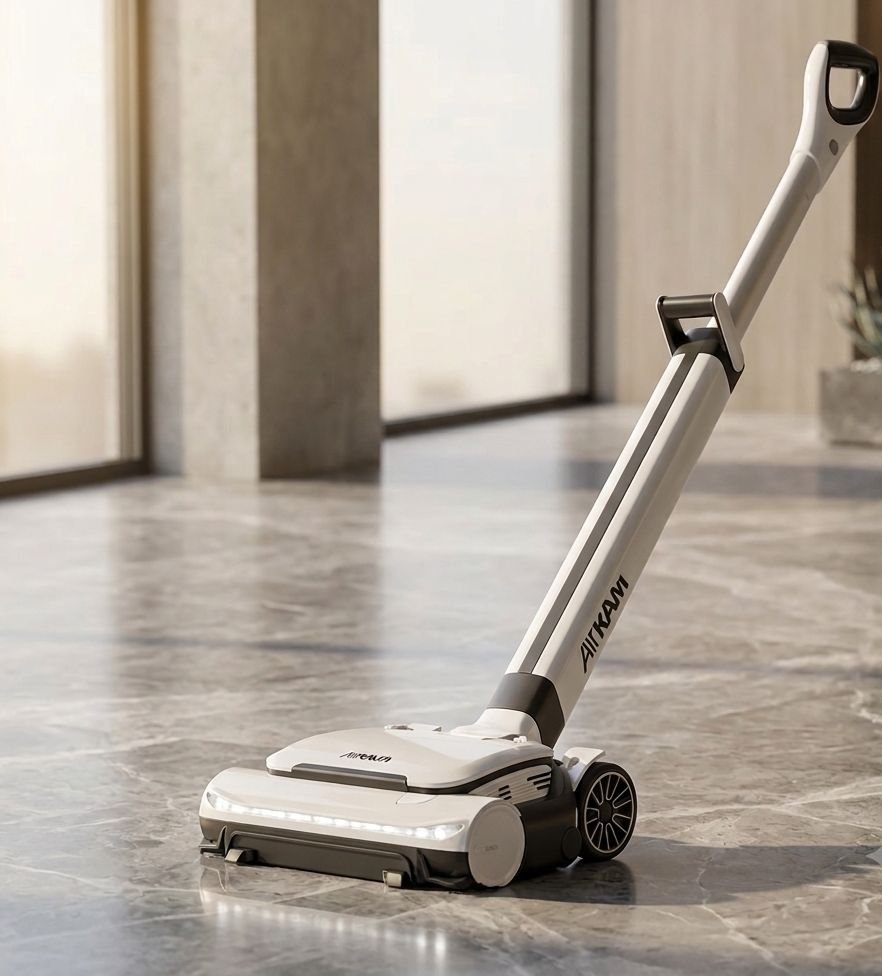
On paper the AirRAM 3 has no business being in a lightweight guide. At 3.8kg it’s the heaviest thing here by some margin.
Use one for ten minutes and the paper stops mattering.
The whole machine is built around the floorhead. Motor, battery and bin all sit at ground level, so the floor is carrying the weight and your arm is only pointing it. Gtech goes further with a forward inertia drive that pulls the unit along as soon as you switch it on, which takes most of the push out of pushing. If you’ve ever come to the end of a room with a stick vac and realised your forearm is aching, this is the design that answers that.
Gtech quotes 30 minutes from the 20V lithium-ion battery, and has published its own lab testing across carpet, mixed flooring and hard floors putting the average at 31 minutes 28 seconds with no noticeable fade before shut-off. It’s the manufacturer’s own test, so treat it as such, but it’s a more useful claim than most because it was run to full discharge on all three surfaces rather than in eco mode on laminate.
The 700ml bin is the largest here, and the self-cleaning filter is a genuine convenience: a vibrating system shakes the dirt off as you go, so there’s no monthly rinse-and-dry ritual. It isn’t a permanent part, mind. Gtech recommends a new one each year and sells them at £17.99. Anti-hair-wrap bristles guide hair into the bin instead of winding it round the bar.
The catch is scope. There is no handheld mode, no wand, no hose. It cleans floors, full stop. Stairs, sofas, the car and the tops of skirting boards all remain someone else’s problem, which for a guide about lightweight cleaning is a real limitation given that stairs are exactly where light machines earn their money.
Specifications
| Weight | 3.8kg, with almost all of it at floor level |
| Runtime | Up to 30 minutes; Gtech’s own testing averaged 31 minutes 28 seconds across three surfaces |
| Battery | 20V lithium-ion, removable, around 3 hours to charge on its base |
| Bin | 700ml, the largest in this guide, emptied by sliding an ejector arm |
| Filter | Self-cleaning, using a vibrating system rather than manual washing; Gtech recommends replacing it annually at £17.99 |
| Brush bar | Helical, soft-bristled, with anti-hair-wrap design |
| Extras | Dual edge-clean brushes, full-width LED headlights, telescopic handle |
| Handheld mode | None. Floors only |
| Guarantee | 2 years |
Pros and cons
Pros
- Weight sits on the floor, not on your wrist, so it feels far lighter than 3.8kg
- Self-propelling drive removes most of the effort of pushing
- 700ml bin, the biggest here by a clear margin
- Self-cleaning filter shakes itself clear, so there’s no monthly rinse-and-dry
Cons
- No handheld conversion, so stairs and upholstery need a second machine
- Around 30 minutes of runtime, the shortest here
- Heaviest to actually lift, which matters if you carry it between floors
- One power setting, so no eco mode to stretch a longer clean
Buy it if your problem is wrist and arm fatigue rather than lifting, you’re mostly cleaning floors on one level and you already own something for the stairs. Anyone who has given up on a top-heavy stick vac should look here first.
Skip it if you need one machine for floors, stairs, sofas and the car. That’s the Dyson, and it’s 1.6kg lighter into the bargain.
4. Miele DuoFlex HX1: Best For Mixed Flooring
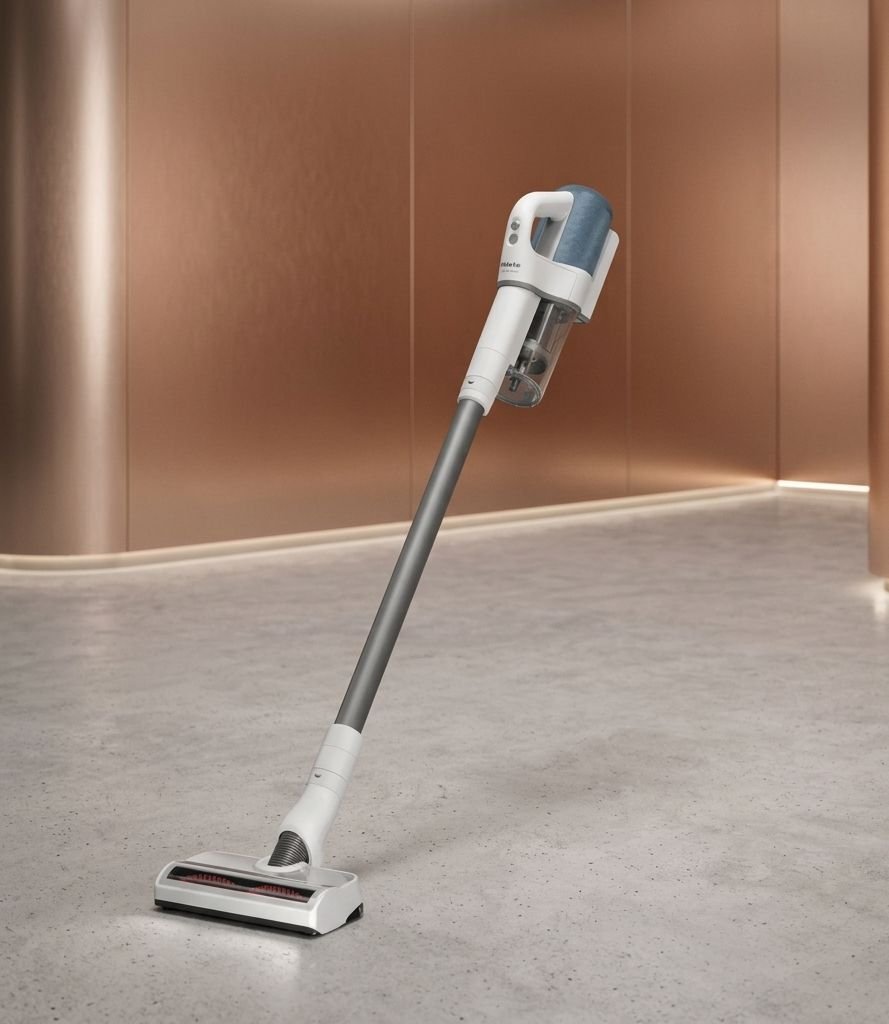
Plenty of UK homes have tiled kitchen, wood hallway, rug in the middle and carpet from the stairs up. On most cordless vacuums that means either changing the power setting four times per clean or leaving it on one setting and accepting that half the house gets the wrong one.
The DuoFlex HX1 handles it automatically. Its electrobrush reads the surface underneath and adjusts roller speed to match, which is the single reason it’s on this list rather than a lighter machine. At 3.1kg it matches the Vax and gives away most of a kilo to the Dyson, so this isn’t the one to buy on weight alone.
Miele quotes up to 55 minutes at the lowest setting, and specifies a Hygiene Filter with dust retention above 99.99%. That figure is measured under Miele’s own test conditions and describes what stays inside the machine, not what happens to the air in the room, so read it as a filtration spec rather than an air-purifying claim. Build quality is what you’d expect from Miele, and the emptying mechanism is a single button.
Two things to know before you buy. The 0.3-litre container is the smallest here, and owners of shedding pets say so repeatedly. And the DuoFlex is sold in several versions, from Nordic Blue up to Total Care and Cat & Dog, all built on the same body with different tools in the box. Check which tools you’re getting, because the price difference is entirely accessories.
Specifications
| Weight | 3.1kg |
| Runtime | Up to 55 minutes on the lowest setting; two modes, auto and max |
| Battery | 2.5Ah lithium-ion, around 3.5 hours to charge |
| Dust container | 0.3 litres, the smallest here, emptied at the push of a button |
| Floorhead | Electrobrush with flooring detection that adjusts roller speed automatically |
| Filtration | Hygiene Filter; Miele states dust retention above 99.99% under its own test conditions |
| Versions | Several, including Cat & Dog and Total Care, differing by tools rather than by machine |
| Guarantee | 2 years |
| Where to buy | Miele UK, John Lewis and specialist retailers |
Pros and cons
Pros
- Flooring detection adjusts the roller without you touching a setting
- Genuinely useful in homes that mix tile, wood, rugs and carpet
- Up to 55 minutes quoted, second only to the Dyson and Shark
- Miele build quality and a well-judged one-button emptying mechanism
Cons
- 0.3-litre container is the smallest here and fills quickly with pet hair
- 3.1kg, so not a machine you buy purely to save weight
- Costs considerably more than the Vax for a similar weight
- Several versions on sale, which makes comparing prices harder than it should be
Buy it if your house changes surface every other room and you’d rather the vacuum worked that out for itself. The automatic floorhead is what you’re paying for, and in the right home it’s worth it.
Skip it if you have pets or a large floor area. That 0.3-litre container will define your experience of owning it, and the Vax or the Gtech will suit you far better.
5. Shark Detect Clean & Empty IW4621UKT: Best Auto-empty
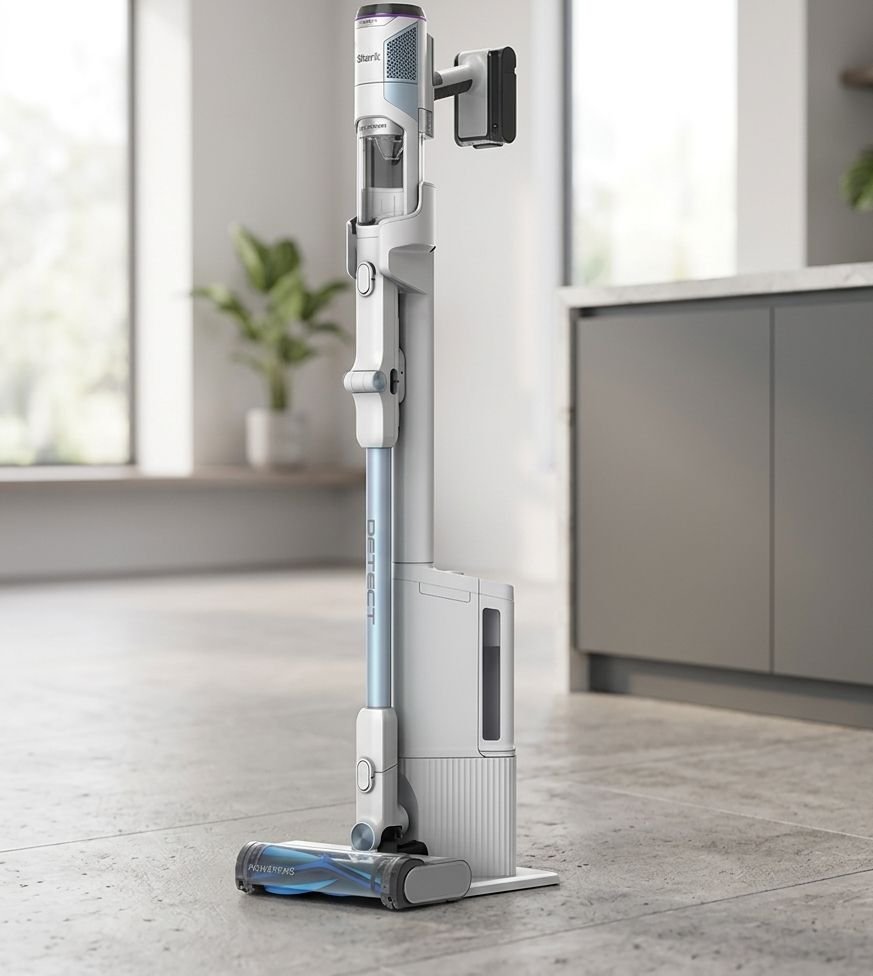
Every cordless vacuum on this list ends the same way: you carry a small transparent bin to the kitchen, press a button and watch a cloud of dust come back at you.
For allergy sufferers that’s the worst thirty seconds of the whole job.
The Shark’s answer is a dock that does it for you. Return the vacuum to its base and the debris is pulled out of the 0.42-litre onboard cup into a 2-litre bin in the dock, which Shark says holds around 45 days’ worth. Shark also claims up to 340 times less dust exposure than emptying by hand, which is the manufacturer’s own comparison and worth reading as a direction of travel rather than a number, but the underlying point is sound. You deal with dust once every six weeks instead of every clean.
At around 2.9kg the vacuum itself is the second lightest here, and the Flexology wand bends in the middle so you can get under a bed or a sideboard without going down on your knees. Detect technology adjusts power as it senses dirt and edges, anti-hair-wrap keeps the brush roll clear and the guarantee stretches to five years if you register it, which is the longest cover in this guide by a distance.
The dock is the price of admission, and it isn’t small. It needs a permanent patch of floor near a socket, which is easy in a utility room and awkward in a one-bedroom flat where the vacuum currently lives behind a door. If floor space is tight, that’s what decides this purchase, not the price.
Specifications
| Weight | Around 2.9kg for the vacuum; the dock sits separately on the floor |
| Runtime | Up to 60 minutes, quoted in eco mode |
| Onboard bin | 0.42 litres |
| Dock | 2-litre auto-empty base, freestanding rather than wall-mounted, which Shark rates at around 45 days between emptyings |
| Detection | Senses dirt, edges and floor type, adjusting power as it goes |
| Brush roll | PowerFins with anti-hair-wrap |
| Filtration | Anti-Allergen Complete Seal |
| Wand | Flexology, bends to reach under low furniture |
| Guarantee | 5 years on registration with Shark; 2 years on the battery |
Pros and cons
Pros
- Dock empties the vacuum for you, roughly once every six weeks instead of every clean
- Around 2.9kg, second only to the Dyson
- Bending wand reaches under beds and sofas without kneeling
- Five-year guarantee on registration, the longest cover here
Cons
- The dock needs permanent floor space next to a socket
- 60-minute figure applies in eco mode and drops sharply on boost
- More filters and more parts than the simpler machines here
- You’re paying for auto-emptying, which is wasted if emptying a bin doesn’t bother you
Buy it if the vacuum comes out most days, someone in the house has a dust allergy, or you’ve simply had enough of the cloud that comes off the bin. Busy family homes with pets get the most from it.
Skip it if storage is tight. In a flat, the Dyson gives you a lighter machine and nothing taking up the corner, and the Vax costs less to buy and less to run.
How to choose a lightweight vacuum cleaner
Work out whether you’re lifting it or pushing it
This is the question that decides which half of the list you’re shopping from. If the vacuum has to come upstairs, go over the stair carpet and reach the tops of wardrobes, total weight is what matters and the Dyson wins outright. If it stays on one floor and your complaint is aching arms after twenty minutes, weight distribution matters more than total weight, and the Gtech’s floor-level design will suit you better despite being 1.6kg heavier.
Check the bin against your household, not against other vacuums
Compact machines have small bins because that’s where the space goes. Capacities here run from 0.3 litres on the Miele up to 700ml on the Gtech, which is more than double. A 0.3-litre container is fine for a couple in a flat and genuinely irritating in a house with a labrador. Be honest about which one you are before the machine arrives.
Read every runtime figure as a best case
Quoted runtimes are measured in eco mode, usually on hard floors, usually without a motorised head. Vax is unusually candid about this and lists the Pace Plus at 15 to 40 minutes depending on setting. The others don’t publish the lower number, but the same physics applies. If you’re going to clean carpet on a mid or high setting, assume you’ll get somewhere between a third and two thirds of the headline figure.
Don’t buy an upright if you also need the stairs done
It sounds obvious written down, and it’s still the most common mismatch in this category. The Gtech cleans floors superbly and cannot touch a staircase, a sofa or a car boot. If it’s replacing your only vacuum, you’ll be buying a handheld within a month.
Measure the storage space before you order an auto-empty model
A cordless stick hangs on a wall bracket and disappears. A dock does not. The Shark’s base needs a permanent spot near a socket, and in a small flat that footprint can be harder to justify than the price. Worth a tape measure and two minutes before you click buy.
Look at what the spares cost while you’re still shopping
Search the exact model name plus “replacement filter” and “replacement battery” before you buy. If spares come up from more than one seller at sensible prices, the machine is a safer long-term purchase than the spec sheet alone suggests. If your budget is the binding constraint rather than weight, our guide to the best cordless vacuum cleaners under £300 covers the same ground at a lower price. A removable battery matters most of all, because it turns a dying vacuum into a £80 part rather than a £400 replacement.
Can a lightweight vacuum be your only one?
In a flat or a medium-sized house, comfortably. Every machine here except the Gtech converts to a handheld and covers stairs, upholstery and above-floor work as well as floors. Where it gets harder is a large, carpet-heavy home with pets: small bins fill faster, carpet drains batteries faster and you can end up recharging halfway through. In that situation a slightly heavier machine with a bigger bin is often the more practical answer, even though it isn’t the one you set out to buy. And if a good part of your floor area is tile or laminate that needs washing rather than just vacuuming, a wet and dry vacuum cleaner is a different answer to the same problem.
Frequently asked questions
Which is the lightest vacuum in this guide?
The Dyson V12 Detect Slim Absolute, at 2.2kg on most UK retailer listings. Dyson’s own site gives 2.37kg for this model, and the difference is worth knowing about, but either figure leaves it the lightest of the five and the obvious choice if stairs are the problem you’re solving.
Does lighter mean less powerful?
Not on its own. A lightweight vacuum cleaner gets its weight from the motor, battery, bin and floorhead together, and a compact machine can carry a strong motor with a small bin rather than a weak motor with a big one. The Dyson here is the lightest and among the most capable. What actually determines whether a vacuum cleans your home well is the floorhead and how it suits your floors, not the figure on the scales.
Is the Gtech AirRAM 3 really a lightweight vacuum at 3.8kg?
It’s a lightweight upright rather than a lightweight stick, and the distinction is real. Because the motor, battery and bin all sit at floor level, your arm carries almost none of that 3.8kg. People who find top-heavy cordless sticks tiring often get on far better with it, even though it’s the heaviest machine in this guide to pick up.
Which is best for stairs?
The Dyson V12, on weight alone, and it converts to a handheld easily. The Shark is a close second at around 2.9kg with a bending wand that helps on awkward flights. The Gtech is the one to rule out here, because it has no handheld mode at all.
Which is best for a small flat?
The Dyson, if the budget stretches, because the small bin is a non-issue over a small floor area and it stores on a wall bracket. On a tighter budget the Vax does the same job for less and has a bigger bin. The Shark is the one to think twice about in a flat, since the dock needs floor space you may not have.
How long do cordless batteries really last per charge?
Less than the box says, on every machine. The quoted 40, 55 and 60-minute figures come from eco-mode testing. On a mid setting with a motorised head on carpet, expect roughly half. Vax publishes the honest range for the Pace Plus at 15 to 40 minutes, which gives you a reasonable rule of thumb for reading the others.
How often will I need to replace the battery?
Lithium-ion packs lose capacity gradually rather than failing outright, and most people notice the drop somewhere between years three and five with regular use. The important question isn’t when, but whether the battery comes out. On the Dyson, Vax and Gtech it does, which turns a fading battery into a spare part. Check before you buy on any model, because a sealed battery eventually means a new vacuum.
Final verdict
The Dyson V12 Detect Slim Absolute is our pick of the best lightweight vacuum cleaners in the UK. It’s the lightest machine here, it converts for stairs and above-floor work, and the two floorheads mean it can be the only vacuum in most homes. The small bin is the price you pay, and in a flat or a medium-sized house it’s a fair one.
If the money matters more than the last kilo, the Vax ONEPWR Pace Plus is the smart buy: bigger bin, shared battery, three-year guarantee and the lowest running costs of the five. The Gtech AirRAM 3 is for anyone whose arms ache rather than their back, the Miele DuoFlex HX1 for houses that change flooring every other room, and the Shark Detect Clean & Empty for people who’d happily give up a corner of the utility room never to empty a dust cup again.
The one thing not to do is buy on weight alone. The best lightweight vacuum isn’t the lightest one; it’s the one light enough that you actually reach for it, with a bin and a battery that see you through to the end of the job.
How we verified these specifications
Weights, runtimes, bin capacities and guarantee terms were checked against current UK manufacturer listings in August 2026, cross-referenced with major retailer listings where the two disagreed. Where a figure differs between sources, as it does with the Dyson’s weight, both are given. Manufacturer performance claims, including Miele’s dust retention figure, Gtech’s runtime testing and Shark’s dust-exposure comparison, are attributed to the companies that published them rather than presented as independent findings. Prices and spare-part availability change frequently, so promotional pricing has not been treated as standard.