Air Fryer Cooking Times & Temperatures: UK Chart (2026)
Most everyday food cooks quickly in an air fryer, but no chart can tell you exactly when yours will be ready. Put the same chicken breast in two different machines at 200°C and one may well finish a few minutes before the other. A full basket also cooks differently from one that’s half empty.
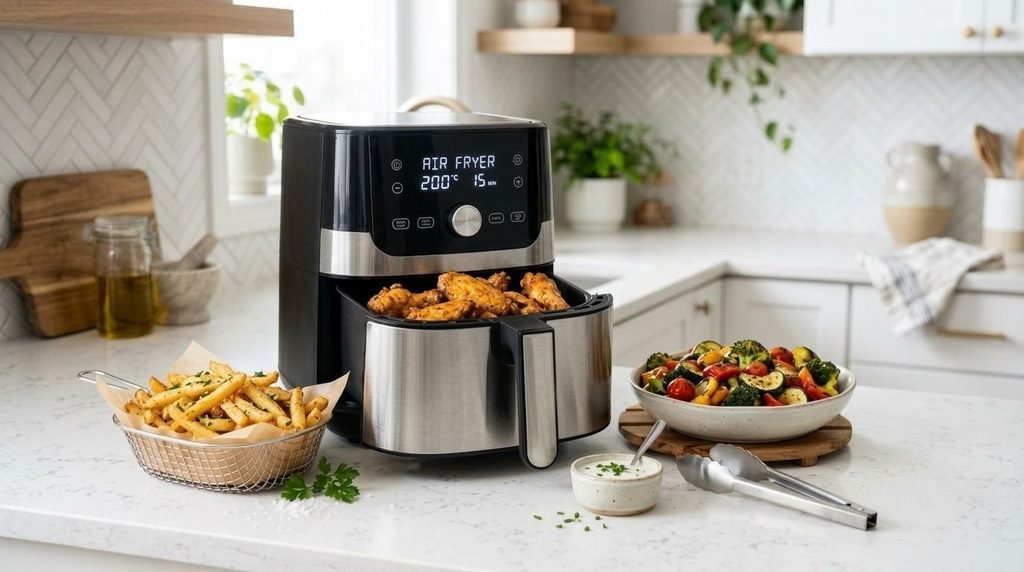
That’s why the air fryer cooking times below are given as ranges. Start checking a little before the lower figure and keep going until the food’s ready. With chicken, pork, burgers and sausages, ready means cooked all the way through, and you can’t tell that from the timer alone.
We’ve covered chicken, chips and potatoes, meat, fish, veg and the frozen foods most of us keep in the freezer. Further down, there’s advice on preheating, converting oven instructions and checking food is properly cooked.
Air Fryer Cooking Times: The Quick Answer
Most foods cook well in an air fryer at 180–200°C.
- Around 180°C: fish, frozen chips, frozen breaded food and most vegetables.
- 190–200°C: homemade chips, roast potatoes, chicken wings, sausages, burgers and steak.
- Time: most everyday portions take 8–25 minutes. Jacket potatoes take much longer, usually 35–50 minutes.
- Shake or turn most foods once or twice, usually around halfway.
- Frozen packaged food: if the packet has air fryer instructions, use those over any chart, this one included.
- Meat and poultry: check the thickest part is cooked through. A clean food thermometer is the most reliable way to do it.
Air Fryer Cooking Chart: Times and Temperatures at a Glance
The times are for a normal portion in a single layer, cooked straight from the fridge unless the food is listed as frozen. If the basket’s packed, expect it to take longer.
| Food | Temperature | Time | Turn or shake? | Tip |
|---|---|---|---|---|
| Chicken breast (boneless) | 180–200°C | 15–22 min | Turn halfway | Thick breasts may need longer. Check the thickest part. |
| Chicken thighs | 180–200°C | 18–25 min | Turn halfway | Bone-in, skin-on thighs usually need the top of the range or a bit more. |
| Chicken drumsticks | 180–200°C | 20–30 min | Turn halfway | Check near the bone, without touching it. |
| Chicken wings | 180–200°C | 18–25 min | Shake or turn 1–2 times | A single layer gives crisper skin. |
| Sausages | 180–200°C | 10–18 min | Turn 1–2 times | Chipolatas finish sooner. Thick sausages take longer. |
| Bacon | 180–200°C | 6–10 min | Not usually | Lay flat. Thick-cut takes longer than thin streaky. |
| Beef burgers (fresh) | 180–200°C | 10–18 min | Flip halfway | Cook through, with no pink in the middle. |
| Steak | 190–200°C | 8–15 min | Flip halfway | Depends on thickness and how you like it. |
| Pork chops | 180–200°C | 12–18 min | Flip halfway | Must be cooked through. Thin chops finish sooner. |
| Salmon fillet | 180–200°C | 8–15 min | No need | Skin-side down. Thicker fillets need longer. |
| White fish fillet | 180–200°C | 8–15 min | No need | Thin fillets can be ready at the low end. |
| Raw king prawns | 180°C | 4–8 min | Shake once | Ready when pink and opaque. Overcooked prawns go rubbery. |
| Frozen chips | 180–200°C | 12–22 min | Shake 2–3 times | Packet instructions first. |
| Homemade chips | 190–200°C | 20–30 min | Shake 2–3 times | Cut evenly, dry well and use a little oil. |
| Roast potatoes | 190–200°C | 20–30 min | Shake or turn halfway | Parboiled potatoes crisp up faster. |
| Jacket potato | 190–200°C | 35–50 min | Turn once | A large baking potato can take up to an hour. |
| Broccoli | 180–200°C | 6–12 min | Shake halfway | Floret tips catch quickly at 200°C. |
| Cauliflower | 180–190°C | 10–15 min | Shake halfway | Keep florets a similar size. |
| Carrots | 180°C | 12–18 min | Shake halfway | Thinner batons cook faster. |
| Courgette | 180°C | 10–15 min | Shake halfway | Don’t pack the basket or it steams. |
| Peppers | 180–200°C | 8–15 min | Shake halfway | Thick strips take longer than thin slices. |
| Brussels sprouts | 170–190°C | 12–18 min | Shake halfway | Halve the bigger ones. |
| Frozen chicken nuggets | 180–200°C | 10–16 min | Shake halfway | Go by the packet if it has air fryer times. |
| Frozen fish fingers | 180–200°C | 8–12 min | Turn halfway | Check the packet first. |
| Frozen Yorkshire puddings | 180°C | 3–5 min | No need | Check the packet. They burn quickly. |
| Frozen breaded chicken (fillets, goujons, kievs) | Follow the packet | Follow the packet | As the packet says | Many are raw inside. See our frozen food advice. |
It’s also worth digging out your manual. Many come with a cooking chart written for that exact basket and element, and where it says something different from ours, go with the manual.
How Long to Cook Chicken in an Air Fryer
Chicken breasts vary a lot in size, so a fixed timer often lets you down here. A small fillet and a big, thick breast won’t be ready at the same time, even at the same temperature.
Ninja’s UK cooking guide gives chicken breast 16–22 minutes at 200°C, and even Ninja adds that the time depends on the model and how much you’re cooking. Our 15–22 minutes is in the same ballpark, though a thick breast at 180°C could need a bit longer.
Thighs and drumsticks are more forgiving because the extra fat stops them drying out so easily. They take longer, though, especially on the bone. Spread wings out in one layer and give them a shake or turn once or twice, otherwise the skin stays soft where they touch.
Whole chickens are a different job. Whether one fits at all depends on your basket, and the time depends heavily on the bird’s weight. Follow your manual if it covers whole birds, and check the thickest part of the breast and thigh before serving. If chicken is what you cook most, our guide to the best air fryer for meat and chicken looks at which models handle bigger cuts.
Safety check: poultry has to be cooked all the way through. Cut into the thickest part and make sure there’s no pink meat and the juices run clear, or use a clean food thermometer. See how to check food is properly cooked.
Chips, Potatoes and Frozen Foods
Potato timings vary more than most, mainly because you could be cooking them frozen, fresh-cut, parboiled or whole.
Frozen chips
Frozen chips usually do well at around 180°C. Ninja’s guide gives 14–25 minutes at 180°C depending on the model and quantity, which shows how much a full basket can stretch the time. Shake two or three times. If they’re still pale near the end, a few minutes at 200°C will help them crisp.
Homemade chips
Cut the potatoes to a similar size, dry them well with a clean tea towel and toss them in a small amount of oil. Wet chips steam before they crisp. Don’t fill the basket so full that air can’t get between them, and shake two or three times so every side gets a turn in the hot air.
Roast and jacket potatoes
For roast potatoes, parboiling first gives you a fluffier middle and a rougher outside that crisps nicely. Raw chunks work too, but start towards the top of the range.
With jacket potatoes, size matters far more than the temperature setting. A medium potato might be ready in 35–40 minutes, while a large baking potato can take close to an hour. It’s ready when a knife or skewer slides into the middle without resistance.
Frozen foods: the packet comes first
If the packet has air fryer instructions, use them. They’re written for that specific product, so they’re a safer bet than any general chart, ours included.
This matters most with frozen breaded or battered chicken, such as goujons, kievs, dippers and fillets. Many of these are raw chicken under a coating that already looks golden. After salmonella cases were linked to these products, the Food Standards Agency reminded shoppers to check the packaging and follow the cooking instructions on every pack, because different brands of the same product can have different instructions.
If a pack only gives oven instructions, don’t use a quick conversion shortcut on raw breaded chicken. Use the oven guidance as your starting point and check that the thickest piece is steaming hot all the way through, ideally with a thermometer. If a pack says a product isn’t suitable for an air fryer, go with that.
Meat and Sausage Cooking Times
Sausages, burgers and smaller cuts of meat suit an air fryer well. Thickness and whether the meat has come straight from the fridge make the biggest difference to timing.
Sausages
Sausages usually take 10–18 minutes at 180–200°C. Chipolatas can be done in under 10 minutes, while thick butcher’s sausages sit at the top of the range. Turn them once or twice so they brown evenly. Like all minced meat, sausages need to be cooked all the way through.
Bacon
Bacon only takes 6–10 minutes or so. Lay the rashers flat in a single layer and start checking at about 5 minutes, as thin streaky can crisp up fast. Ninja suggests 220°C for bacon on models that go that high, but plenty of air fryers top out at 200°C, which works fine with a little extra time.
Bacon leaves fat in the drawer. Once it’s cooled, empty it out, because old grease can smoke the next time you cook at a high temperature. Our guide on how to clean an air fryer covers baked-on grease.
Burgers
Fresh beef burgers can start at 180–200°C for 10–18 minutes depending on thickness, flipped halfway. Ninja’s chart lists 10–18 minutes at 190°C. Burgers shouldn’t be served rare or pink at home, so check the middle rather than going by the colour outside. For frozen burgers, follow the packet.
Steak
Steak is the one meat here that doesn’t have to be cooked through. UK food-safety guidance allows whole cuts of beef and lamb, like steaks, to be served pink in the middle, as long as the outside is properly cooked.
So the timing really comes down to how you like it. Start checking an average steak at around 8 minutes at 190–200°C. Ninja’s own chart runs from 8 up to 20 minutes, which covers thicker cuts and well done. Let it rest for a few minutes before cutting.
Pork chops
Pork needs to be cooked all the way through, the same as poultry. An average chop can start at 180–200°C for 12–18 minutes, flipped halfway. Thin chops can be ready sooner and thick ones may need longer. Check the centre near the bone, not just the edge.
Fish and Seafood Cooking Times
Fish cooks quickly, and thickness is the thing to watch. A thin piece of white fish can be done in about 8 minutes, while a thick salmon fillet may need 12–15.
Salmon is best cooked skin-side down, and you don’t need to turn it. Ninja’s chart gives 10–14 minutes at 200°C. It’s ready when the flesh has turned opaque in the middle and flakes easily.
Cod, haddock and other white fish fillets are more delicate. Leave them where they are rather than trying to flip them, and check the thickest part, because the outside can look done before the middle is.
Raw king prawns take around 4–8 minutes at 180°C with a shake halfway. Once they’re pink and opaque all the way through, they’re done. Smaller ones can be ready in under 4 minutes, so keep an eye on them, as overcooked prawns turn tough and rubbery. If you’re using ready-cooked prawns, they only need a few minutes to heat through.
For fish fingers and other breaded fish, follow the packet’s air fryer instructions if it has them, and turn them halfway so both sides brown.
If you cook fish often, our guide to the best air fryers for fish covers which baskets make delicate fillets easier to handle.
Vegetable Cooking Times
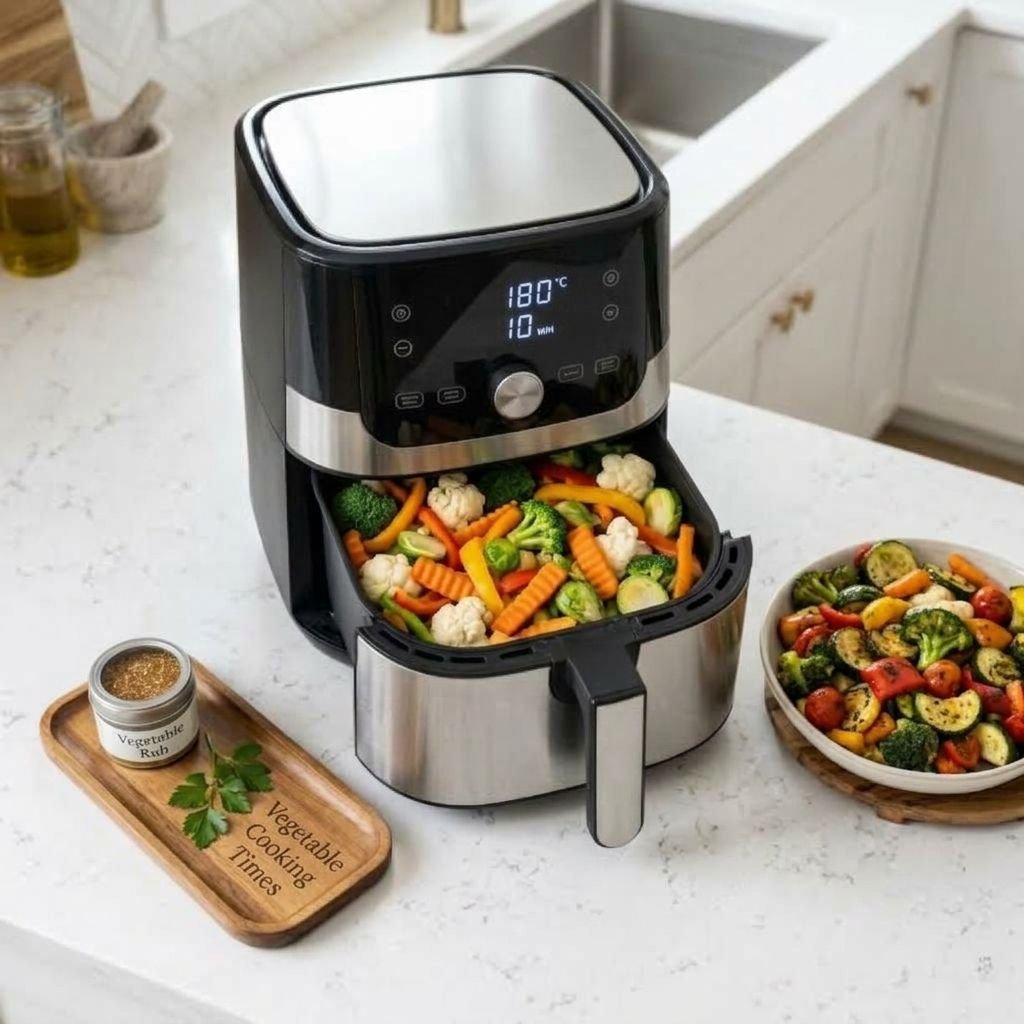
Vegetables are the easiest food to experiment with, because what you’re aiming for is a texture you like. The exception is frozen vegetables, which the FSA says need to be cooked thoroughly before you eat them.
- Cut pieces to a similar size so the small bits don’t burn while the big ones are still firm.
- A light coating of oil helps browning. You don’t need much.
- Shake or toss halfway through.
- Don’t overfill the basket. Crowded veg steams instead of roasting.
For a mixed tray, start the slower vegetables first, such as carrots or potato chunks, then add quicker ones like broccoli, courgette or peppers partway through. That way everything finishes together.
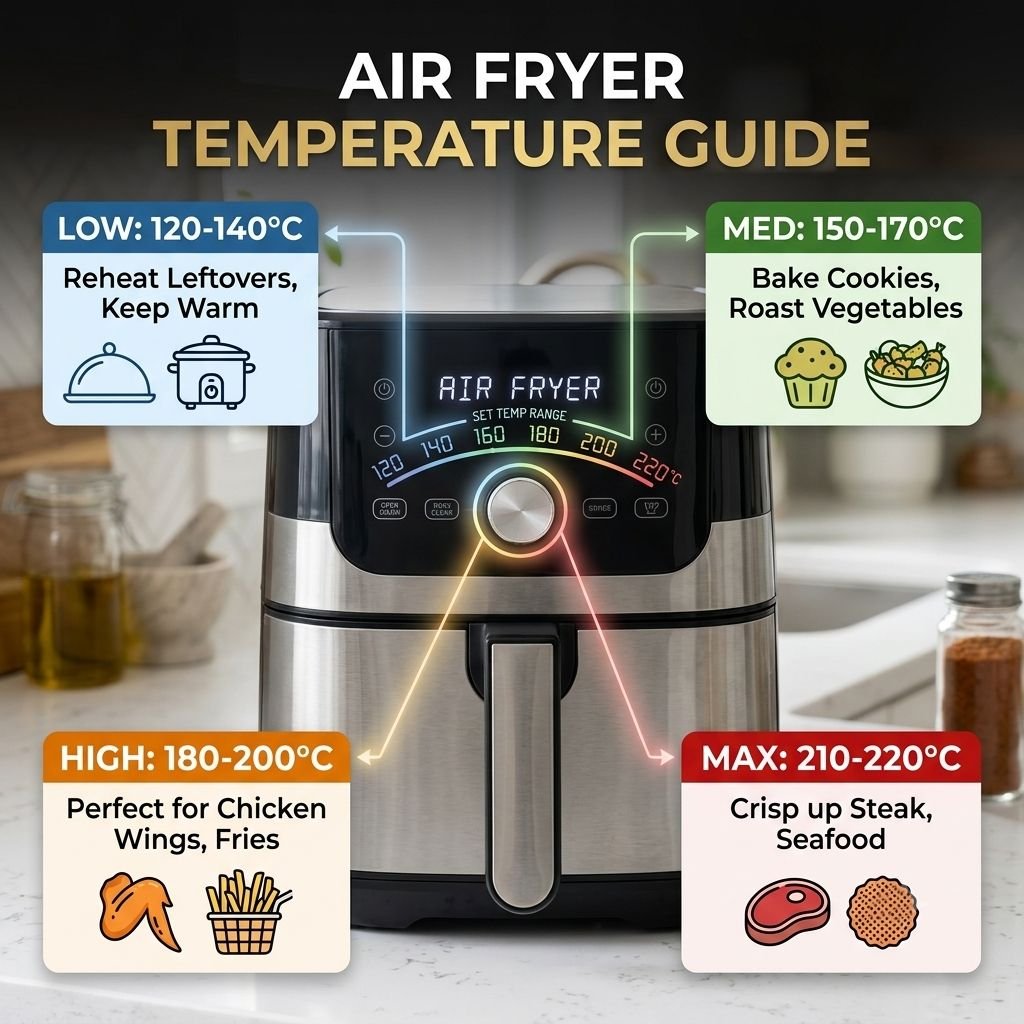
Air Fryer Temperature Guide
If a food isn’t in the chart above, these temperature bands give you a sensible place to start.
| Air fryer temperature | Good for |
|---|---|
| Below 100°C | Dehydrate settings on models that have one, for drying fruit or vegetable slices. |
| 140–160°C | Cakes, muffins and other bakes, plus foods that brown before the middle is cooked. |
| 170–180°C | Frozen chips and breaded foods, fish, chicken breast, most vegetables and reheating leftovers. |
| 190–200°C | Homemade chips, roast potatoes, wings, sausages, burgers and steak. |
| Above 200°C | High-heat or “Max Crisp” style modes on some models, for short bursts of crisping. |
Not every air fryer covers all of these. Many top out at 200°C, which is enough for everything in our chart. Lower temperatures matter more if you bake, and our guide to the best air fryers for baking looks at the models that handle them best.
Do You Need to Preheat an Air Fryer?
It depends on the model and the recipe. Philips says you don’t need to preheat its Airfryers and can put food straight in. Ninja says its air fryers need little to no preheat time compared with an oven. Some other manuals and recipes do ask for a few minutes’ preheat.
So the simple answer is to do what your manual says.
If you skip the preheat but your recipe was written for a preheated air fryer, the food may take a little longer. Check it rather than adding a few minutes and hoping for the best.
How to Tell When Food Is Properly Cooked
Cooking time on its own won’t tell you whether food is safe to eat, especially meat and poultry. What matters is how hot the middle gets.
The Food Standards Agency’s cooking guidance says the middle of the food should reach 70°C for 2 minutes. Equivalent combinations also count, such as 75°C for 30 seconds or 80°C for 6 seconds. The same guidance mentions air fryers specifically: leave space around the food so it can cook properly, and follow the instructions for your appliance or on the food packet.
| Food | Cook all the way through? | How to check |
|---|---|---|
| Chicken, turkey and other poultry | Yes | Thermometer in the thickest part, or cut in: no pink meat and the juices run clear. |
| Pork | Yes | Thermometer in the centre, away from the bone. |
| Burgers, sausages and other minced meat | Yes | No pink in the middle. Thermometer in the centre. |
| Steak and whole cuts of beef or lamb | No, can be served pink | Make sure the outside is cooked all over. |
| Frozen breaded chicken | Yes | Follow the packet. Steaming hot all the way through. |
| Reheated leftovers | Yes | Steaming hot throughout, not just warm. Only reheat once. |
When you’re checking:
- Push the thermometer into the thickest part, not the thin edge, and avoid touching bone. Clean the probe after each use.
- Don’t rely on colour alone. A breaded coating can turn golden well before the chicken inside is cooked.
- If it isn’t ready, put it back for a few more minutes and check again.
Why Air Fryer Cooking Times Vary
Even with the same food and the same setting, two air fryers won’t always agree. The main reasons are:
- The basket shape and where the fan and element sit, which change how evenly heat reaches the food. Oven-style models with shelves behave differently again.
- How quickly the machine heats up, and how fast it gets back to temperature after you open the drawer.
- How much food is in there. A bigger load takes longer to heat through and brown.
- Thickness, since heat takes longer to reach the middle of thick food.
- Starting temperature. Frozen food takes longer than chilled, and chilled takes a bit longer than food that’s been out of the fridge for a while.
- Crowding. If the air can’t get round the food, it steams instead of crisping.
- Whether you preheated or started from cold.
In practice, it just means checking a bit earlier the first few times you cook something, then adding a few minutes at a time if it needs it.
How to Convert Oven Cooking Times to an Air Fryer
Instant Pot’s UK conversion advice is a handy starting point:
| Food type | Air fryer temperature | Air fryer time |
|---|---|---|
| Fresh food | About 20°C lower than the oven | About 20–25% shorter |
| Frozen food | About the same as the oven | Around half the oven time |
So a fresh-food recipe that says 190°C for 40 minutes in the oven would start at about 170°C for 30–32 minutes in an air fryer. Check it at around 25 minutes.
Treat that as a rough guide rather than a formula. A few things can throw it out:
- Fan or conventional oven: Instant Pot applies the rule to fan oven temperatures. If a recipe only gives a conventional (non-fan) temperature, convert from the fan equivalent, which is usually around 20°C lower.
- Basket size and load: a big portion in a small basket will need longer than the formula suggests.
- Frozen food: the half-time rule is the least predictable part. It can work for things like frozen chips, but never use it as a shortcut for raw breaded chicken. Follow the packet.
- Checking: look at the food before the converted time is up, especially the first time you try a recipe. It’s easier to add a few minutes than to rescue something that’s overcooked.
If you’re still weighing up whether an air fryer can take over from your oven for everyday cooking, our air fryer vs oven comparison goes into the differences in more detail.
Common Air Fryer Cooking Mistakes
Overcrowding the basket: air needs room to move. A packed drawer browns unevenly and takes longer, so cook in batches if you need to. If you’re batch-cooking for the family most nights, the basket is probably too small, and our guide to large air fryers is worth a look.
Trusting the timer over the food: published times, ours included, are only a starting point. Look at the food, and check meat and poultry properly.
Ignoring the packet: for frozen packaged food, the air fryer instructions on the pack come first.
Using one time for every size: a thick chicken breast or large potato needs longer than a small one. Adjust for what’s actually in the basket.
Never shaking or turning: chips, veg and breaded food cook more evenly when they’re moved around once or twice.
Cooking everything at maximum: higher heat isn’t always better. The outside can brown long before the middle is ready, particularly with thick food.
Letting fat build up: grease left in the drawer from bacon, sausages or wings can smoke the next time you cook hot. Empty it once it’s cool.
Air Fryer Tips for Better Results
- Pat fresh food dry before it goes in. Surface moisture slows browning.
- Use a little oil on fresh chips and vegetables. Most frozen chips and breaded foods don’t need any extra.
- If you cook a lot of meat, a basic digital probe thermometer is one of the most useful things to keep next to your air fryer.
- If the outside is browning before the middle’s done, turn the temperature down by 10–20°C and give it longer.
- Keep a note of the times that work in your machine. A list stuck inside a cupboard door saves a lot of guesswork.
Air Fryer Cooking Times FAQs
What temperature should I use for chips?
Frozen chips usually start well at around 180°C, while homemade chips do better at 190–200°C. Shake the basket two or three times and check them before the end of the time range. For frozen chips, the packet’s air fryer instructions come first.
How long does chicken take in an air fryer?
A boneless chicken breast usually takes 15–22 minutes at 180–200°C. Thighs take 18–25 minutes and drumsticks 20–30 minutes, with bone-in pieces at the longer end. Thickness and how much is in the basket change things a lot, so check the thickest part is cooked through rather than relying on the clock.
Can you put frozen food straight in an air fryer?
Yes, a lot of frozen food is made to be cooked from frozen, but check the packet first. If it says to defrost before cooking, do that. Take extra care with frozen breaded chicken, as many of these products are raw inside.
Does an air fryer cook faster than an oven?
Often, yes, but by how much depends on the food. Ninja’s own chart puts roast potatoes at 15–26 minutes in its air fryers against 40–50 minutes in an oven, while salmon takes a similar time in both. For fresh food, around 20°C lower and 20–25% shorter than the oven is a reasonable starting point.
Do you need to turn food in an air fryer?
Not always. Chips, vegetables, wings and breaded foods cook more evenly if you shake or turn them once or twice. Burgers, steaks and chops are worth flipping halfway. Delicate fish fillets are better left alone.
Do you need to preheat an air fryer?
Only if your manual or recipe says so. Some manufacturers, including Philips, say preheating isn’t needed for their models. If you start from cold, allow a little extra time and check the food.
Can you cook different foods at the same time?
Yes. In a single basket, put the slowest food in first and add the quicker food later so they finish together. A dual-zone model lets you run two drawers at different settings, which is easier for full meals. Our single vs dual air fryer guide explains when the second drawer is worth having.
Can you reheat leftovers in an air fryer?
Yes. Around 170–180°C works for most leftovers. The FSA says reheated food should be steaming hot throughout, not just warm, and you should only reheat leftovers once.
Final Takeaway
No chart knows your air fryer, so use the ranges here as a starting point and adjust from there.
Check a little before the lower time and add more in small steps if it needs it. With frozen packaged food, go by the packet. With chicken, pork, burgers and sausages, don’t rely on the timer or how brown it looks. Check the thickest part, ideally with a thermometer.
Once you’ve cooked your usual meals a few times, you’ll know roughly where your machine sits in each range, and it gets a lot easier from there.