Best Coffee Machines for Beginners UK 2026: 6 Easy Picks
If you’re shopping for your first coffee machine, you’ve probably already got a few tabs open and a head full of words like portafilter, pre-infusion and thermoblock. Prices don’t help either. You can spend £60 or £700 and both machines will claim to make “barista-quality” coffee.
You don’t need to understand all of that to choose well. What matters more is how you actually drink coffee. One quick cup before work, or a flat white you like to take your time over at the weekend? Milk or no milk? And do you fancy learning something new, or would you rather just press a button?
This guide sticks to one question: would this make a sensible first machine for someone new to coffee? If you’d like the wider picture, our guide to the best coffee machines in the UK covers the whole market.
Quick Answer
- Easiest of all: Nespresso Vertuo Pop. Pod in, one button, done.
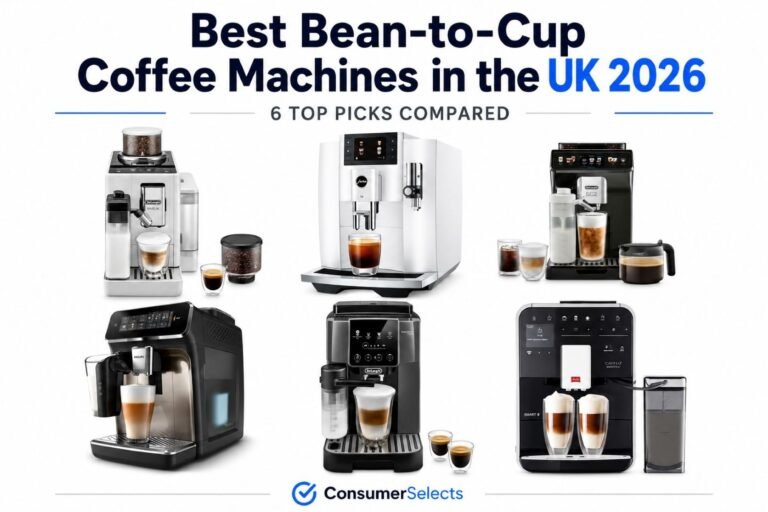
- Best value bean-to-cup: Philips Series 2300 LatteGo. Fresh-bean coffee and one-touch cappuccinos without any fuss.
- Best for mixed households: Ninja Luxe Café Premier (ES601UK). Espresso, filter-style coffee and cold brew, with plenty of hand-holding.
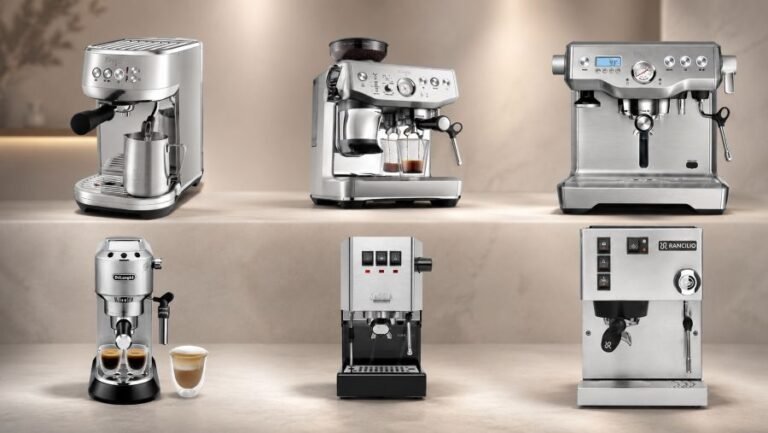
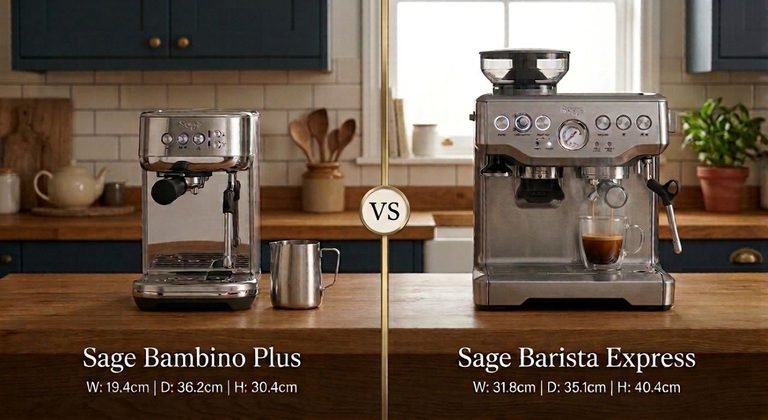
- Best for learning espresso on a budget: Sage Bambino Plus. Real espresso, and the milk frothing is done for you.
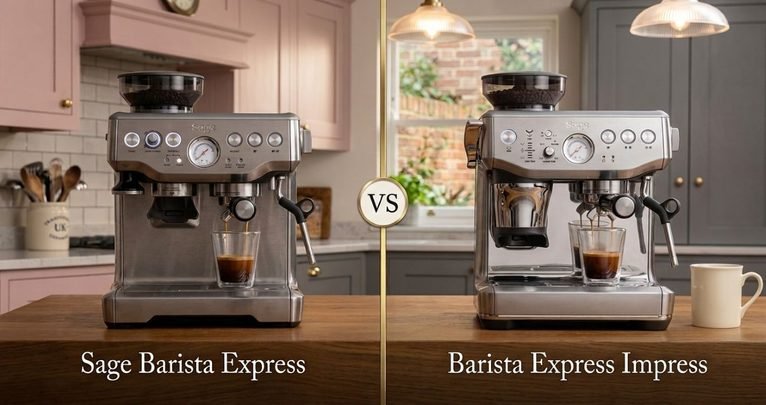
- Best to learn and grow with: Sage Barista Express Impress. A grinder built in, plus help with the fiddliest steps.
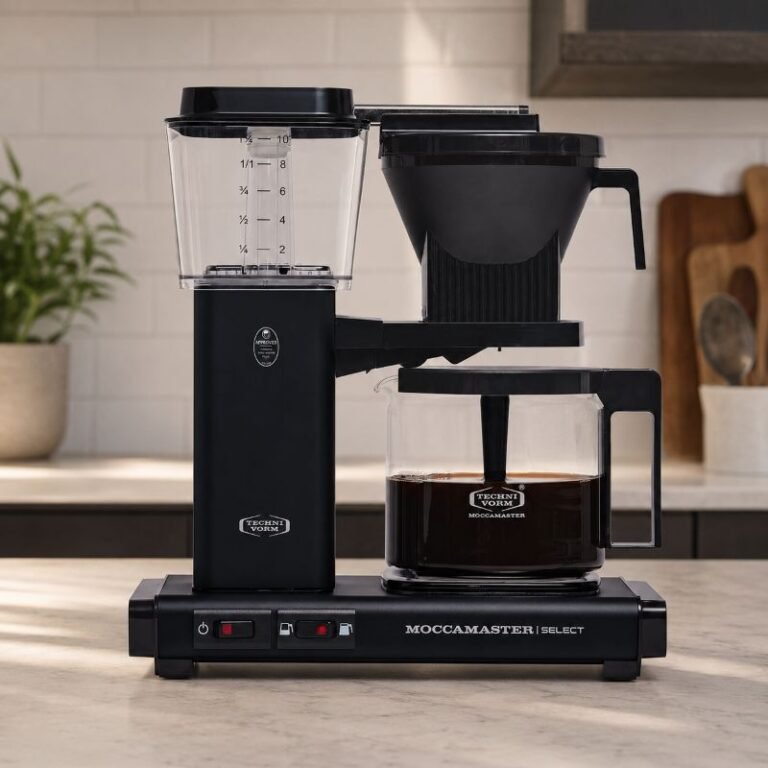
- Best for black coffee drinkers: Moccamaster KBG Select. Lovely filter coffee and almost nothing to learn.
Best Coffee Machines for Beginners: Comparison Table
| Machine | Type | Best for | Effort | Milk drinks | Approx. price |
|---|---|---|---|---|---|
| Nespresso Vertuo Pop | Pod | Minimal effort, small kitchens | Very low | Separate frother needed | £50-£110 |
| Philips Series 2300 LatteGo | Bean-to-cup | One-touch cappuccinos | Low | Yes, automatic | £330-£520 |
| Ninja Luxe Café Premier | Guided espresso with grinder | Households with mixed tastes | Low to medium | Yes, automatic | £450-£580 |
| Sage Bambino Plus | Manual espresso | Learning espresso on a budget | Medium | Yes, automatic wand | £330-£400 |
| Sage Barista Express Impress | Manual espresso with grinder | Learning with room to grow | Medium | Yes, manual wand | £550-£730 |
| Moccamaster KBG Select | Filter | Black coffee, several cups | Low | No | £229-£270 |
1. Nespresso Vertuo Pop: Best for Coffee at the Press of a Button
Effort: Very Low
If weighing and grinding coffee sounds like a chore before you’ve even had your coffee, start here. The Vertuo Pop is about as simple as a coffee machine gets. Water in, pod in, press the button on top. That’s it.
The clever bit is the barcode printed on every Vertuo capsule. The machine reads it and sets the brew for that coffee and cup size, so there’s nothing for you to adjust (or get wrong). It’s ready in about 30 seconds, which matters more than you’d think on a weekday morning.
You get four cup sizes, from a single espresso up to a mug. It won’t do the bigger Alto or carafe sizes some Vertuo machines offer, but if you’re mostly making one cup for yourself, you’re unlikely to miss them.
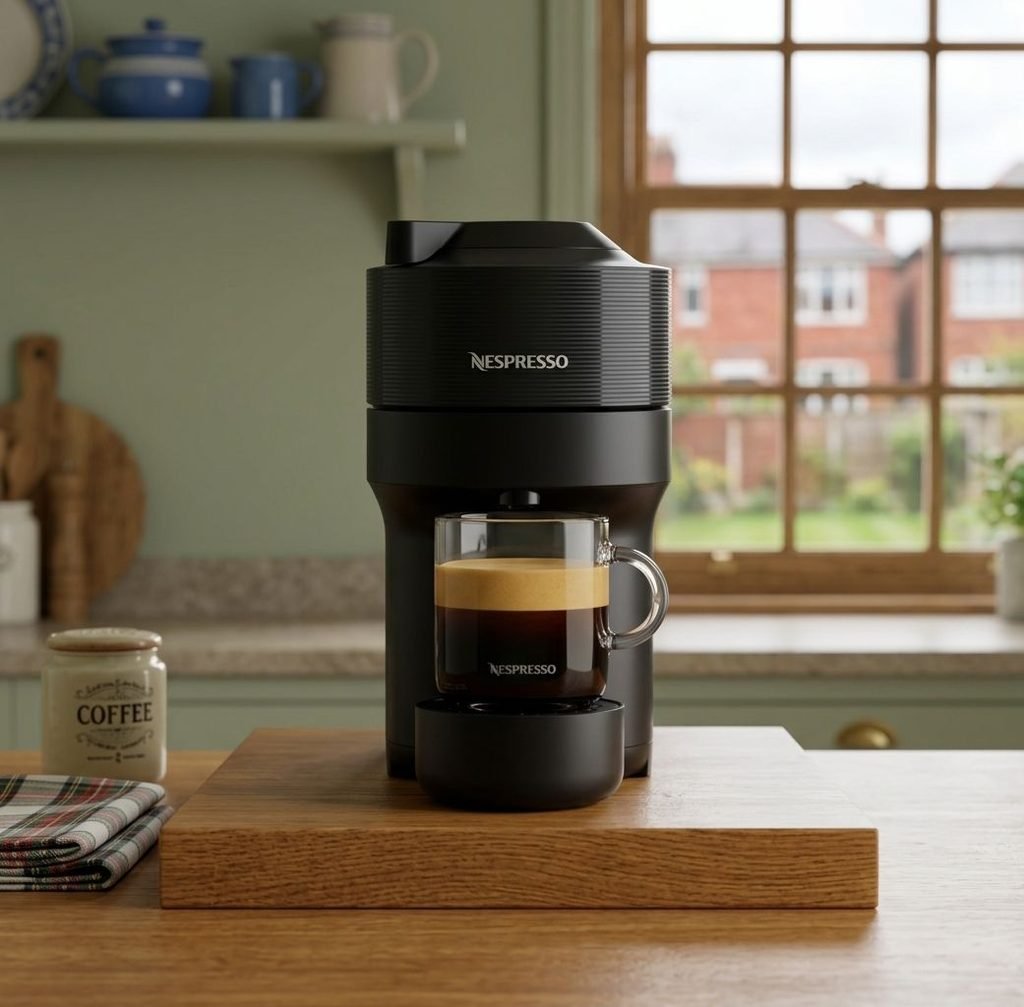
Now for the less fun part. Pods cost more per cup than beans, and you’re more or less tied to Nespresso’s own Vertuo range. There’s no milk frother either, so latte drinkers will need an Aeroccino or something similar. Some retailers sell a Barista bundle with one included, and that usually works out cheaper than buying the two separately.
The 560ml water tank is small. If two of you drink coffee, expect to top it up every day.
| Specification | Details |
|---|---|
| Type | Pod machine (Nespresso Vertuo capsules only) |
| Dimensions (H x W x D) | 25 x 13.6 x 42.6cm |
| Weight | 3.5kg |
| Water tank | 560ml |
| Grinder | Not needed (pre-portioned capsules) |
| Milk system | Not included (Aeroccino sold separately or in bundles) |
| Heat-up time | Around 30 seconds |
| Drinks and cup sizes | Four cup sizes, from espresso to mug |
| In the box | Machine and a starter set of capsules |
| Warranty | 2 years |
Pros and cons
What I Like
- One button and nothing to adjust
- The same cup every time, because the pod does the work
- Small enough for a flat or a tight worktop
- Barely any cleaning beyond emptying used pods and the odd descale
What Could Be Better
- Pods cost more per cup than beans, and you’re locked into Vertuo
- Lattes mean buying a frother as well
- Small water tank
- Nothing to learn, which also means nowhere to go
Buy it if: you want decent coffee with zero effort, you’re short on space, or it’s mostly one or two cups a day.
Skip it if: you get through several milky coffees a day, running costs matter to you, or you’re curious about how espresso actually works.
2. Philips Series 2300 LatteGo (EP2339/40): Best Value Bean-to-Cup for Beginners
Bean-to-cup is where a lot of first-time buyers end up, and for good reason. You pour whole beans into the top, tap the drink you want, and the machine grinds, brews and froths the milk for you. Fresh-bean coffee, no skills required.
The Philips Series 2300 is one of the easier ones to live with. The menu is short (espresso, coffee and cappuccino, plus hot water for tea), and you can tweak strength and cup size once you know what you like. On day one you don’t need to touch any of it.
What I like most is the LatteGo milk system. Plenty of bean-to-cup machines run milk through thin tubes that need proper cleaning, and that’s exactly the job people quietly stop doing after the first couple of weeks. LatteGo has no tubes at all, just two parts that rinse under the tap or go in the dishwasher.
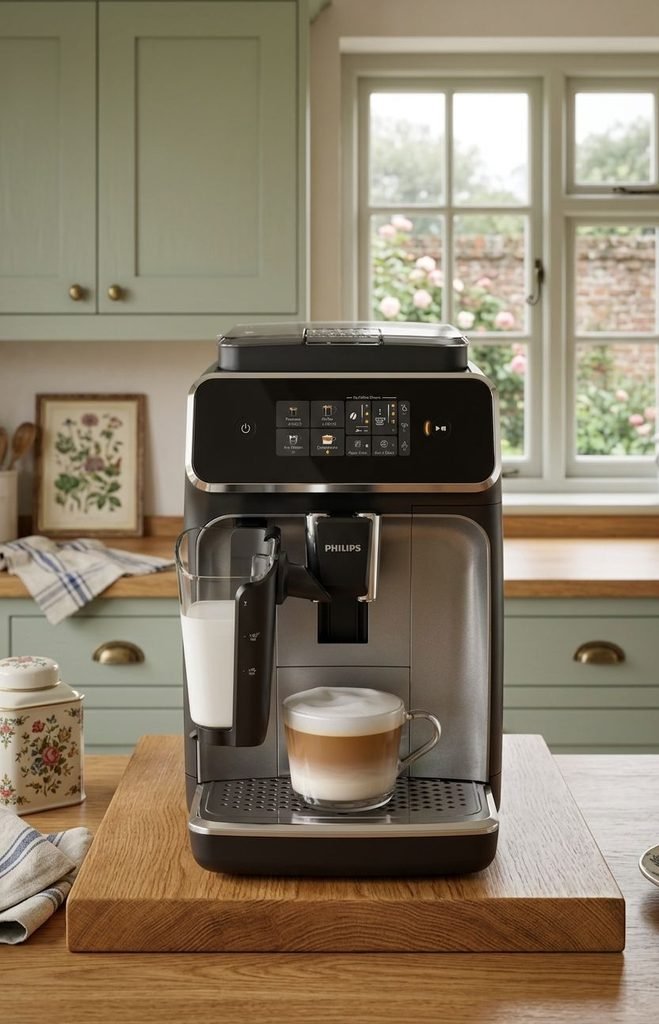
The rest of the upkeep is manageable too. The brew group slides out for a rinse, and if you fit the AquaClean filter and swap it when the machine asks, Philips says you can go up to 5,000 cups without descaling. Useful if you live in a hard-water area, which covers a lot of England.
It isn’t perfect. Espresso from a machine at this price is decent rather than rich, and the foam suits a cappuccino more than a silky flat white. The milk container only holds 260ml, and it makes one milk drink at a time.
A buying tip: Philips sells several near-identical Series 2300 models (EP2330, EP2336 and EP2339, among others), and prices can differ by over £100 between them and between shops. Check the exact model number before you pay.
For more options in this category, our guide to the best bean-to-cup coffee machines in the UK goes into more detail.
| Specification | Details |
|---|---|
| Type | Bean-to-cup (fully automatic) |
| Dimensions (H x W x D) | 27.1 x 24.6 x 43.3cm |
| Weight | 8kg |
| Water tank | 1.8L |
| Grinder | Built-in ceramic, 12 settings, 275g bean container (also takes pre-ground) |
| Milk system | LatteGo, automatic, 260ml, no tubes |
| Heat-up time | Not published by Philips |
| Drinks and cup sizes | Espresso, coffee and cappuccino, plus hot water; adjustable strength and length |
| In the box | AquaClean filter, measuring spoon, water hardness strip, descaler, coffee oil removal tablets, cleaning brush, brew group lubricant |
| Warranty | 2 years |
Pros and cons
What I Like
- Fresh-bean coffee with no barista skills needed
- LatteGo is one of the easiest milk systems to keep clean
- Removable brew group and a water filter keep maintenance simple
- Far cheaper per cup than pods over time
What Could Be Better
- Espresso lacks the depth of a good manual machine
- Foam suits cappuccinos more than flat whites or latte art
- One milk drink at a time, from a small 260ml container
- Not much to grow into once you want more control
Buy it if: you drink cappuccinos or lattes most days and want fresh-bean coffee at the touch of a button.
Skip it if: you mostly want espresso with real depth, or you already suspect you’d enjoy the hands-on side.
3. Ninja Luxe Café Premier (ES601UK): Best for Households With Different Coffee Preferences
Effort: Low to Medium
This is the one I’d look at first for a house where nobody drinks the same thing. One person wants a flat white, another wants a big mug of black coffee, and someone else is after an iced latte in July. The Luxe Café Premier makes espresso, filter-style coffee and cold brew, with a grinder and automatic milk frothing built in.
A bit of honesty about what it is, though. Ninja calls it bean-to-cup, but really it’s a semi-automatic espresso machine. You still move the portafilter from the grinder to the brew head and tamp the coffee yourself. What makes it beginner-friendly is how much help you get along the way:
- Weight-based dosing: a built-in scale weighs the ground coffee, so there’s no need for separate scales.
- Grind recommendations: it suggests grind changes based on how your last shots went, which tackles the thing beginners find most confusing.
- Assisted tamper: a lever presses the coffee evenly, so you’re not guessing how hard to push.
- Hands-free frothing: four presets (steamed milk, thin froth, thick froth and cold foam) that work with dairy and plant milks.
Put together, that makes it far more forgiving than a traditional espresso machine, while you still get the satisfaction of actually making the coffee.
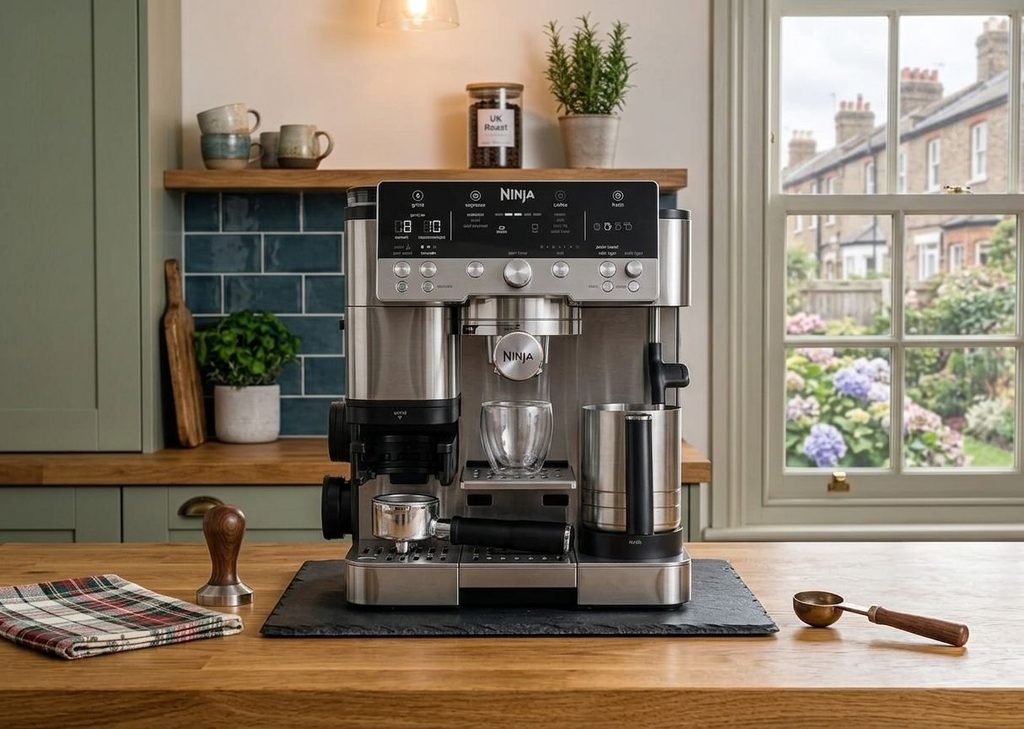
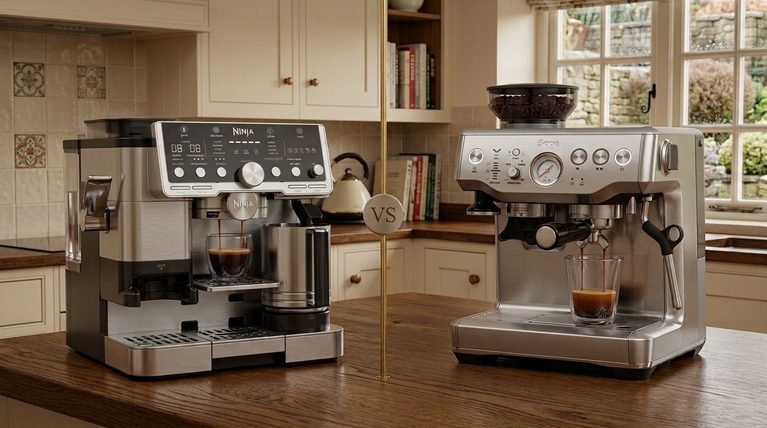
The catches are mostly about size and flexibility. It’s a big, heavy machine, around 37cm tall and 34cm deep, so measure your worktop and the gap under your wall cupboards before ordering. Owners who get more experienced sometimes find the dose hard to change and the grinder a little limiting. There’s no separate hot water spout either. The pricier Luxe Café Pro (ES701UK) adds one, along with a built-in tamper, and we compare it with its closest Sage rival in Ninja Luxe Café Pro vs Sage Barista Express Impress.
| Specification | Details |
|---|---|
| Type | Semi-automatic espresso machine with grinder |
| Dimensions (H x W x D) | 37.2 x 33.6 x 34.4cm |
| Weight | 11.8kg (Ninja also quotes 17kg on the same listing) |
| Water tank | 2L |
| Grinder | Conical burr, 25 settings, built-in scale for weight-based dosing |
| Milk system | Dual Froth System, 4 automatic presets |
| Heat-up time | Not published by Ninja |
| Drinks and cup sizes | 4 espresso styles, 4 coffee styles (including cold brew and over ice), 7 drink sizes |
| In the box | Portafilter, single, double and Luxe baskets, assisted tamper, funnel, milk jug with whisk, cleaning brush and disc, descaling powder, hard water test kit |
| Warranty | 2 years (on registration) |
Pros and cons
What I Like
- Help with dose, grind and tamping takes out most of the guesswork
- Espresso, filter-style and cold brew suits households with mixed tastes
- Automatic frothing, including cold foam
- You still learn how espresso works, just with a safety net
What Could Be Better
- Tall, deep and heavy for smaller kitchens
- Less flexible once you want fine control
- No dedicated hot water spout on this model
- More steps each morning than a true bean-to-cup machine
Buy it if: your household drinks a mix of espresso-based drinks and longer coffees, or you want to learn espresso with lots of help.
Skip it if: you want pure one-button convenience, or counter space is tight.
4. Sage Bambino Plus: Best for Learning Espresso on a Budget
Effort: Medium
If you’re curious about espresso itself, not just drinking it but how it’s made, and you don’t want to spend £700, this is where I’d send you. The Bambino Plus is a proper manual machine: you fill the portafilter, tamp it and pull your own shot, the same way a café does. It’s also narrow enough for a galley kitchen.
Two things take the edge off the learning curve. It heats up in about three seconds, so there’s no standing around. And the steam wand does the milk for you. Choose one of three temperatures and three textures, leave the jug in place, and it stops when the milk’s ready. Milk is usually what beginners struggle with most, so this helps a lot. Later on, when you’re feeling braver, you can texture milk by hand with the same wand.
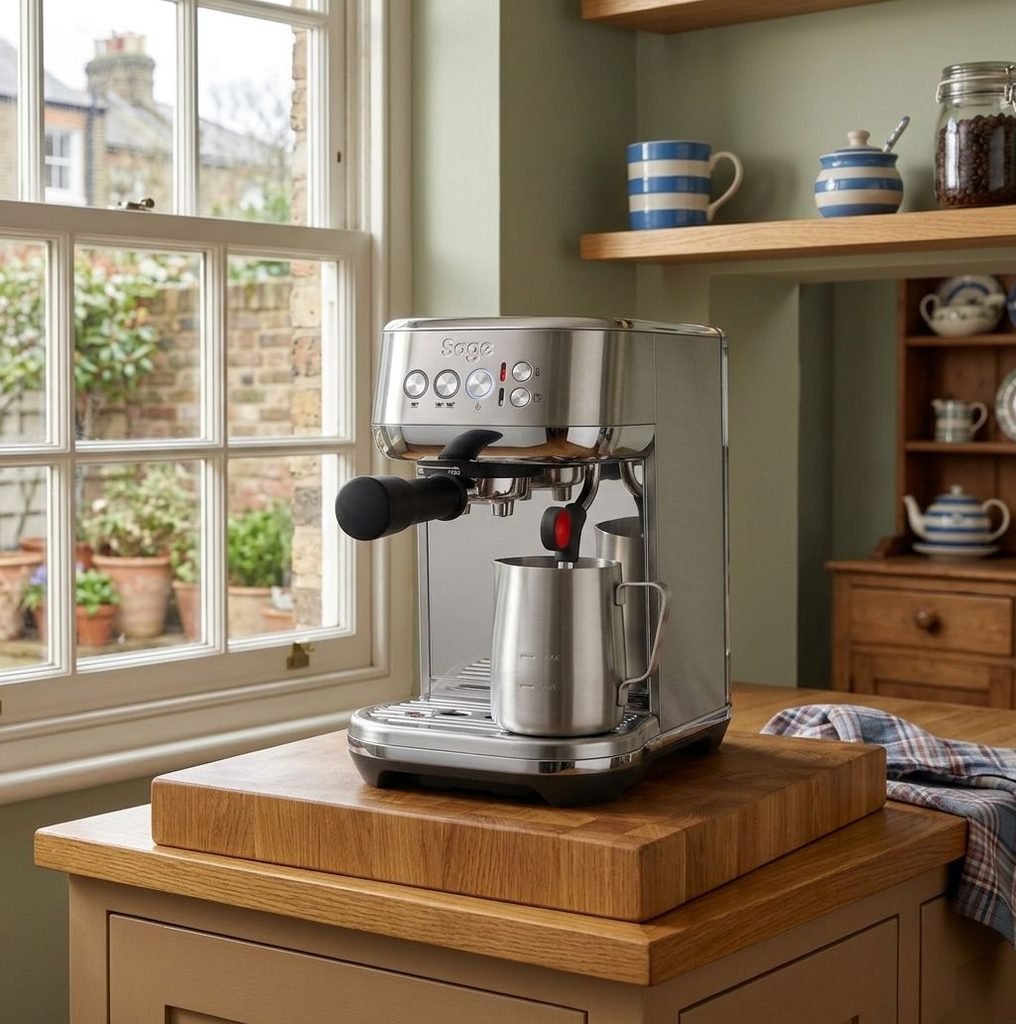
Sage includes pressurised (dual-wall) baskets as well as standard ones. The pressurised baskets are more forgiving with pre-ground coffee, so you can get a reasonable shot while you’re still finding your feet, then move to the standard baskets when you want better results.
The catch is the grinder, or rather the lack of one. Pre-ground coffee works, but it goes stale quickly once the bag’s open, so most people end up buying a separate espresso grinder. Build that into your budget from the start. For more espresso options, have a look at our guide to the best espresso machines in the UK.
| Specification | Details |
|---|---|
| Type | Manual espresso machine |
| Dimensions (H x W x D) | 30.4 x 19.4 x 36.2cm |
| Weight | 4.95kg |
| Water tank | 1.9L |
| Grinder | Not included |
| Milk system | Automatic steam wand, 3 temperatures and 3 textures (manual use possible) |
| Heat-up time | Around 3 seconds |
| Drinks and cup sizes | One-touch single or double shot, 54mm portafilter, 18g dose |
| In the box | 54mm portafilter, tamper, Razor dosing tool, water filter, 480ml milk jug, single- and dual-wall baskets, cleaning tool and disc |
| Warranty | 2 years |
Pros and cons
What I Like
- Real espresso skills from a compact, affordable machine
- The automatic steam wand removes the hardest part for beginners
- Ready almost instantly
- Pressurised baskets included for a gentler start
What Could Be Better
- No grinder, so the real cost is higher than the price tag
- The drip tray is small and fills quickly
- Every shot needs a bit of attention while you learn
Buy it if: you want to learn espresso, you like milky coffee, and space or budget is limited.
Skip it if: you’d rather not buy a separate grinder or think about grind size at all.
5. Sage Barista Express Impress: Best to Learn and Grow With
Effort: Medium
Want to make properly good espresso without outgrowing your machine in six months? This is the one I’d point most beginners towards. It’s a manual espresso machine with a grinder built in, but it takes care of the two steps that trip people up most: getting the dose right and tamping evenly.
You pull a lever and it tamps the coffee at a steady 10kg, with a small twist at the end to polish the surface. Then it checks how that dose went and adjusts the next grind to suit. Put simply, fewer messy, uneven shots while you’re learning. Sage includes pressurised baskets too, which gives you a little slack early on.
The rest is down to you. You’ll adjust the grind, keep an eye on the pressure gauge and gradually learn what a good shot looks and tastes like. The steam wand is fully manual, so milk takes practice. That’s also why it works so well as a first machine: once you’ve got the basics, there’s a lot of room left to improve.
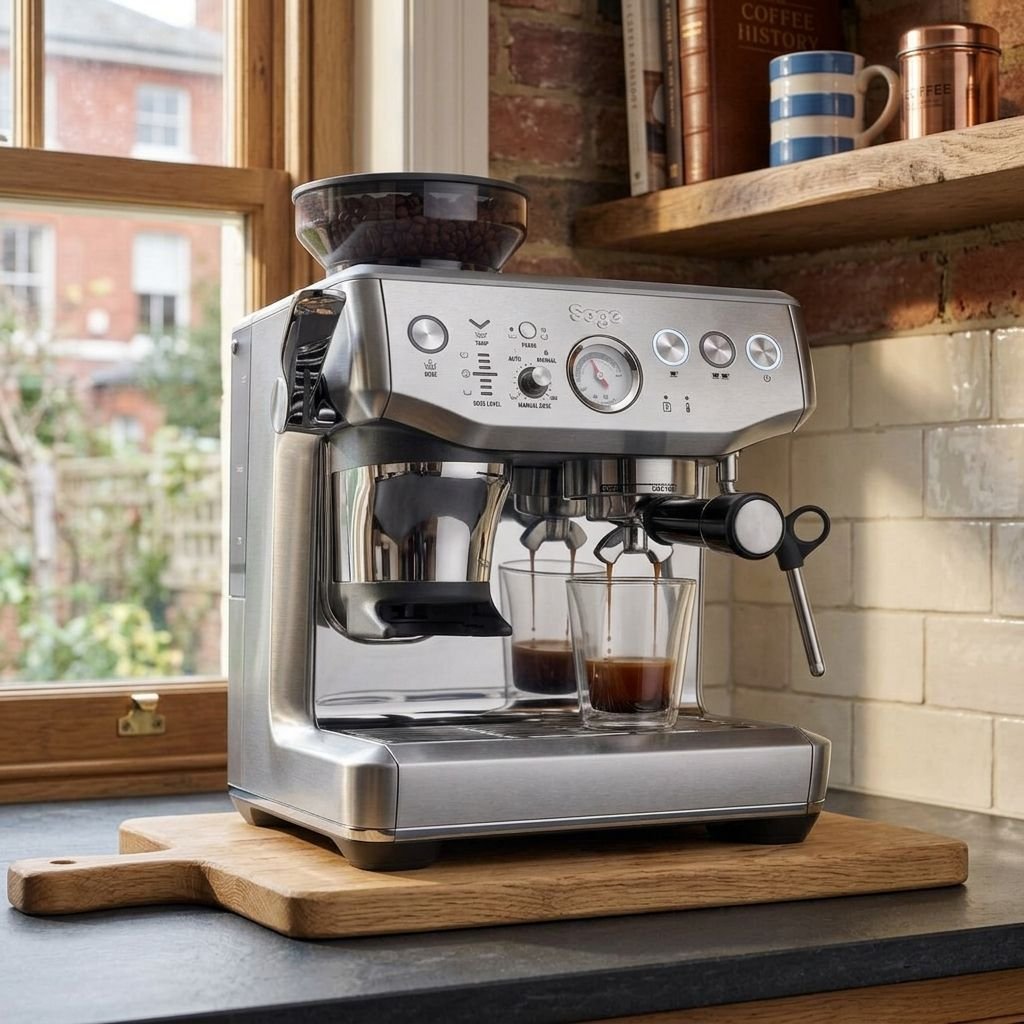
Be realistic about the routine, though. It’s less forgiving than the Ninja, and nowhere near as quick as a pod machine at 7am. Most people need a week or two before their shots feel consistent. If you’re deciding between this and the older model, our Sage Barista Express vs Barista Express Impress comparison explains the differences.
| Specification | Details |
|---|---|
| Type | Manual espresso machine with grinder, assisted tamping |
| Dimensions (H x W x D) | 41 x 33 x 38cm |
| Weight | 11kg |
| Water tank | 2L |
| Grinder | Conical burr, 25 settings, 250g hopper, intelligent dosing |
| Milk system | Manual steam wand |
| Heat-up time | Not published by Sage |
| Drinks and cup sizes | Single or double shots, 54mm portafilter, 18-22g dose |
| In the box | 54mm portafilter, 480ml milk jug, single- and dual-wall baskets, water filter, Razor trimming tool, cleaning tablets, cleaning tools and disc, descale powder |
| Warranty | 2 years |
Pros and cons
What I Like
- Assisted tamping and dosing take the mess out of learning
- Grinder built in, so nothing extra to buy
- The pressure gauge gives you useful feedback as you improve
- Plenty of room to get better over time
What Could Be Better
- Manual milk frothing takes practice
- A longer routine every morning
- More cleaning than a pod or bean-to-cup machine
- The most expensive machine in this guide
Buy it if: you like the idea of learning a new skill and want café-quality coffee as your confidence grows.
Skip it if: speed and convenience matter most, or a daily routine of grinding, tamping and wiping down sounds tedious.
6. Moccamaster KBG Select: Best for Black Coffee Drinkers
Not everyone wants espresso, and that’s completely fine. If you drink your coffee black, or you’re making several cups at once in the morning, a good filter machine is often the easiest and most satisfying first buy. The Moccamaster KBG Select is one of the best-regarded filter machines around.
Using it couldn’t be simpler. Add water, put ground coffee in a paper filter, switch it on. A full 1.25L jug takes about six minutes. Making half a jug? The Select switch slows the flow so a smaller batch still tastes balanced. Moccamaster’s copper heating element keeps the water between 92°C and 96°C while it brews, which is a big part of why the coffee tastes cleaner and less bitter than from a cheap drip machine.
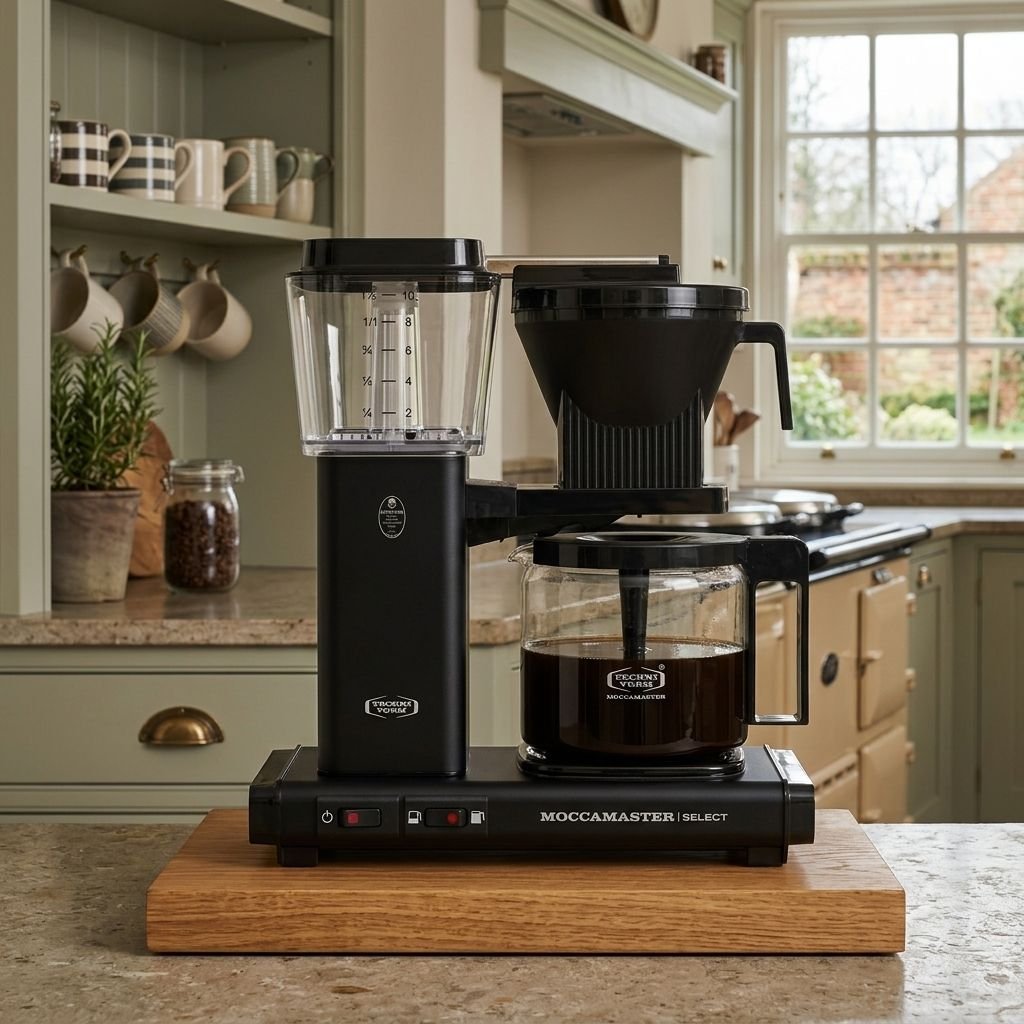
There’s very little to look after. No pump, no grinder, no milk system, just the filter basket, the jug and a descale every so often. It comes with a five-year warranty, and spare parts are sold separately if something does wear out.
What it won’t do is espresso or frothed milk. There’s no grinder, so you’ll need ground coffee or a grinder of your own, and the hot plate switches off after 40 minutes. There’s more detail in our Moccamaster KBG Select review.
| Specification | Details |
|---|---|
| Type | Filter (drip) coffee machine |
| Dimensions (H x W x D) | 36 x 32 x 17cm |
| Weight | 2.8kg |
| Water tank | 1.25L (4 to 10 cups) |
| Grinder | Not included (uses ground coffee) |
| Milk system | None |
| Heat-up time | Brews a full jug in around 6 minutes |
| Drinks and cup sizes | Filter coffee, full or half jug via Select switch |
| In the box | Glass jug, filter holder with lid, water reservoir lid, overflow pipe, measuring spoon, 3 No.4 filter papers |
| Warranty | 5 years |
Pros and cons
What I Like
- Excellent black coffee with almost no skill needed
- Makes several cups at once, which suits households
- Very little maintenance and a five-year warranty
- Built to last, with spare parts available
What Could Be Better
- No espresso or milk drinks
- Needs a grinder or pre-ground coffee
- Pricey for a filter machine
Buy it if: you drink black coffee, often make more than one cup at a time, and want something simple that lasts.
Skip it if: cappuccinos, lattes or espresso are what you actually enjoy.
What Type of Coffee Machine Is Easiest for a Beginner?
Strictly speaking, a pod machine. There’s nothing to measure, adjust or learn, and a filter machine isn’t far behind.
But easiest isn’t always best. A pod machine is easy on day one and stays exactly the same forever. The running costs add up, and the only way to change your coffee is to buy different pods. Bean-to-cup asks for a bit more cleaning, but you get fresher coffee for less per cup. A manual espresso machine takes the most effort and gives the best results, eventually.
So I’d ask a slightly different question: what’s easiest for the coffee you actually like?
- Black coffee or a quick espresso: pod or filter
- Milky coffee with no effort: bean-to-cup
- Café-quality espresso and happy to learn: manual espresso, ideally with some assisted features
Pod vs Bean-to-Cup vs Manual Espresso Machines
| Pod | Bean-to-cup | Manual espresso | |
|---|---|---|---|
| Effort per cup | Very low | Low | Medium to high |
| Learning curve | None | Very low | Moderate |
| Coffee quality | Good, consistent | Good | Best, once learned |
| Cost per cup | Highest | Low | Low |
| Daily cleaning | Minimal | Moderate | Most involved |
| Room to improve | Very little | Limited | Plenty |
Pod machines use sealed capsules of pre-ground coffee. They’re compact, cheap to buy and very consistent. You pay for that convenience with every pod, and you’re tied to one system.
Bean-to-cup machines grind whole beans and brew at the press of a button, and many froth milk automatically too. They cost more up front but less per cup. Expect to rinse the brew group, empty the grounds container and clean the milk system regularly.
Manual espresso machines put you in charge of grinding, dosing, tamping and frothing. (Sage calls theirs “manual” even though the pump and temperature are automated.) They reward practice, but a poor grind or uneven tamp will show up in the cup. Assisted models like the Barista Express Impress and the Ninja Luxe Café sit somewhere between bean-to-cup and fully manual.
To put running costs into numbers: if a kilo of beans costs you around £20, the coffee in an 18g double shot works out at roughly 36p. Pods generally cost more than that per cup, which adds up quickly if you drink several a day.
What Should Beginners Look for When Buying a Coffee Machine?
Features worth caring about
- A milk system that matches your habits. If you drink milky coffee every day, automatic frothing (LatteGo, Ninja’s Dual Froth, or the Bambino Plus’s auto wand) will make your life easier. If you rarely use milk, don’t pay for it.
- Easy cleaning. Removable brew groups, tube-free milk systems and dishwasher-safe parts all help. A machine you actually keep clean is the one that keeps making good coffee.
- A water filter or clear descaling alerts. Much of the UK has hard water, and limescale is one of the main reasons machines lose performance.
- Help with the tricky steps. For espresso, assisted tamping, grind guidance or pressurised baskets make the first few weeks much less frustrating.
- A sensible water tank. A small tank is fine for one person but soon becomes a chore for a household.
Features you can mostly ignore
- Bar pressure claims. “19 bar” or “20 bar” on the box doesn’t mean better espresso. Good espresso is brewed at around 9 bar, and many machines regulate it anyway.
- Long drink menus. Twenty presets look impressive, but most people settle on two or three.
- App connectivity. Nice to have, rarely essential on a first machine.
How Much Should a Beginner Spend?
- Under £100: pod machines. Low upfront cost, higher running costs, no skill needed.
- £200-£300: good filter machines and some entry-level espresso machines. Most espresso machines at this level don’t include a grinder, so budget for one.
- £300-£500: entry bean-to-cup machines like the Philips 2300 LatteGo, and compact manual machines like the Bambino Plus. For most beginners who drink milky coffee, this is the sweet spot.
- £450-£750: guided or assisted espresso machines with built-in grinders, such as the Ninja Luxe Café Premier and Sage Barista Express Impress. Worth it if you want better coffee and room to grow.
It usually pays to spend a little more on a machine that fits your routine than to save money on one you’ll find frustrating. Equally, there’s no point spending £700 on an espresso machine if what you really want is a quick mug of black coffee. A £230 filter machine will do that job better.
Common Beginner Mistakes
- Buying something more hands-on than your mornings allow. A manual espresso machine is lovely on a Saturday and can feel like hard work at 7am on a Monday.
- Forgetting about the grinder. The Bambino Plus and Moccamaster both need ground coffee, and a decent grinder adds to the cost.
- Using stale coffee. Pre-ground coffee loses flavour quickly once opened. Smaller bags, or whole beans, make a noticeable difference.
- Skipping descaling. Hard water slowly affects taste and performance. Use a water filter if your machine has one, and descale when it asks.
- Ignoring the milk system. Milk residue builds up fast. A quick rinse after each use saves a much bigger clean later.
- Judging a manual machine on day one. First shots on any espresso machine are rarely great. Give it a week or so of adjusting the grind before you decide.
Frequently Asked Questions
What is the easiest coffee machine to use?
A pod machine like the Nespresso Vertuo Pop. You put in a capsule, press one button, and the machine sets the brew itself. If you drink black coffee, a filter machine like the Moccamaster is almost as easy.
Is a bean-to-cup machine good for beginners?
Yes, especially if you drink milky coffee. You get fresh-bean coffee at the touch of a button, and it costs less per cup than pods. Just be ready for a little regular cleaning.
Should a beginner buy a manual espresso machine?
Only if you’re interested in learning. Manual machines make the best coffee once you’ve got the hang of them, but that takes time and practice. Assisted models like the Sage Barista Express Impress or Ninja Luxe Café Premier make the learning curve much gentler.
Do I need a grinder for an espresso machine?
For the best results, yes, unless your machine has one built in. Pre-ground coffee works, especially with pressurised baskets, but it’s hard to get consistently good espresso from it.
What’s the difference between Sage and Breville?
They’re the same brand. Breville machines are sold as Sage in the UK and Europe, so a Sage Barista Express Impress or Bambino Plus is the same machine under a different badge.
What’s the cheapest way to make good coffee at home?
Over time, a filter or bean-to-cup machine usually costs less per cup than pods. If the upfront price matters most, a pod machine is the cheapest to buy, just not the cheapest to run.
Final Buying Advice
If you’re still torn, go back to two questions: how do you take your coffee, and how much time do you want to spend making it?
- Convenience comes first: a pod machine like the Nespresso Vertuo Pop. It’s the least effort you’ll find, as long as you’re happy paying for pods.
- Milky coffee, no learning: a bean-to-cup machine like the Philips Series 2300 LatteGo.
- A household with different tastes: the Ninja Luxe Café Premier, which covers espresso, longer coffees and cold brew with plenty of guidance.
- Keen to learn espresso on a tighter budget: the Sage Bambino Plus. Just remember the grinder.
- Keen to learn and happy to invest: the Sage Barista Express Impress, which gives you the most room to grow without making the first weeks overwhelming.
- Mostly black coffee: keep it simple with the Moccamaster KBG Select.
One last thing, because it’s the part first-time buyers tend to underestimate: cleaning. Every machine here needs some, but emptying a pod container takes seconds, while a portafilter, steam wand and grinder need a few minutes every day. Think about which of those you’ll realistically keep up on a busy weekday, and let that guide your choice as much as the coffee itself.