Bagged vs Bagless Vacuum Cleaner: Which Is Better?
Almost everything on a vacuum can be changed later. You can fit a different floorhead, replace a worn hose, buy a spare battery. The collection system is the one thing you are stuck with for the life of the machine, and it is also the part you deal with most often, because the dust has to go somewhere every single time.
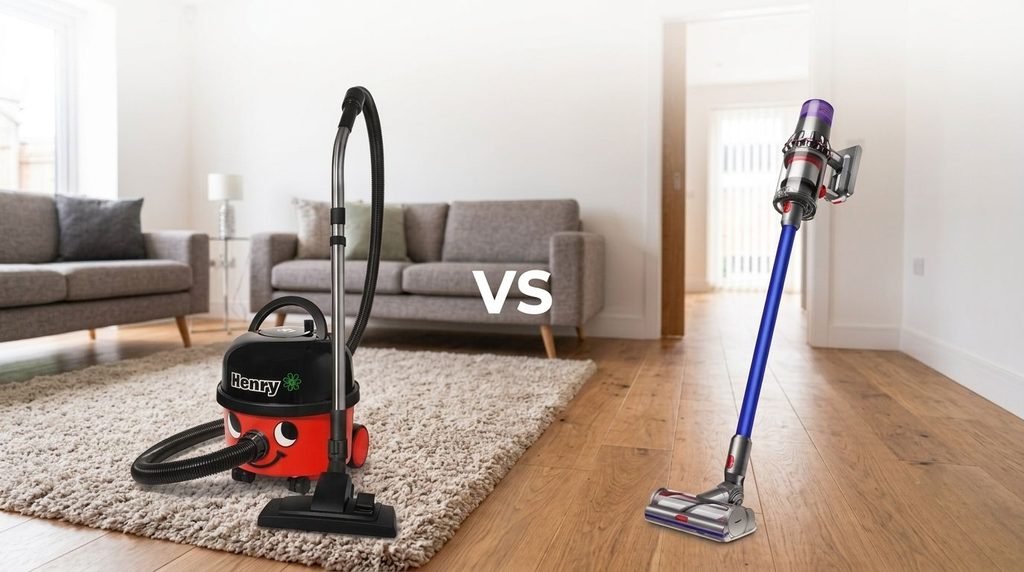
Quick verdict
Both types clean well. The more meaningful difference is what happens once the dust has been collected, and how much ongoing maintenance you are willing to deal with.
A bagged vacuum suits you if you want contained disposal and as little contact with dust as possible. Bags also hold far more than most bagless bins, so you go longer between changes. Bagless removes the recurring job of buying bags, shows you when the bin is full, and is the standard format for cordless sticks. In exchange you empty more often and spend more time on filters.
Cleaning power should not decide it. Both formats lose suction as they fill, and floorhead design matters more than where the dust ends up.
Choose bagged if contained disposal, larger capacity and minimal contact with dust matter most to you.
Choose bagless if avoiding replacement bags and having a visible, quick-to-empty bin matter more.
Bagged vs bagless vacuum cleaner at a glance
| Comparison | Bagged | Bagless | Advantage |
|---|---|---|---|
| Cleaning performance | Can be excellent | Can be excellent | Model dependent |
| Emptying hygiene | Dust stays inside the bag | Dust can escape when tipped out | Bagged |
| Dust capacity | Roughly 3–9 litres | Roughly 0.3–2.5 litres | Bagged |
| Consumable cost | Replacement bags needed | No bags to buy | Bagless |
| Knowing when to empty | Indicator or manual check | Clear bin, easy to monitor | Bagless |
| Routine maintenance | Bag changes, filters as specified | Bin and filters need regular attention | Bagged |
| Speed of emptying | Slower, new bag to fit | Faster, tip and refit | Bagless |
| Cordless choice | Limited | Very wide | Bagless |
| Best suited to | Low-mess disposal, bigger homes | No-bag convenience, frequent quick cleans | Depends on household |
What is the difference between a bagged and bagless vacuum?
The way each vacuum collects dirt is the fundamental difference. A bagged vacuum draws dust and debris into a replaceable bag inside the machine. Once the bag reaches the manufacturer’s recommended fill level, you remove it, throw it away and fit a new one.
Modern vacuum bags are more sophisticated than the paper sacks fitted to older machines. Many use several layers of material and form part of the filtration system rather than sitting behind it, so the bag itself is doing some of the work of trapping fine particles as air passes through. Some, such as Miele’s HyClean range and Numatic’s HepaFlo bags, also have a collar or tab that closes the opening as the bag is pulled out.
A bagless vacuum does away with the disposable bag. Dirt is separated from the airflow, usually using some form of cyclonic action, and collected in a reusable bin. When the container is full you remove it, empty it into your household waste and refit it. There are no bags to buy, but that does not make a bagless vacuum maintenance-free. Its filters still need cleaning or replacing at the intervals the manufacturer specifies.
What this difference does not tell you is how well the vacuum will actually clean. A bagged model is not automatically more powerful, and a bagless model is not inherently better at maintaining suction. Floorhead design, brush-roll performance, airflow, filtration, sealing and how the machine behaves as its container fills all matter more.
Worth remembering when you shop: bagged versus bagless is a choice about dust handling, maintenance and consumables. It is not a shortcut for judging cleaning performance.
Which cleans better, bagged or bagless?
Neither, as a category. The claim that bagless machines never lose suction is a marketing position rather than a physical fact. Any collection system restricts airflow as it fills, whether the restriction comes from a bag whose pores are clogging with fine dust or from a cyclone whose pre-motor filter is loading up with the same material. Both formats slow down. The rate depends on the design, the filter and what you have been picking up.
That is an important buying point. A well-designed bagged cylinder can outperform a mediocre bagless upright, and the reverse is equally true. If cleaning performance is your priority, look at evidence for the individual model on the flooring you actually own rather than assuming one collection format is stronger.
For carpet, pay attention to the powered brush and how easily the head moves across deeper pile. On hard floors, check whether the head picks up fine dust and larger crumbs without pushing them ahead of itself. Pet owners should look for an effective anti-tangle system and a decent upholstery tool.
Cleaning-performance verdict: model dependent.
Which is better for allergies and dust containment?
This is where bagged vacuums have their clearest practical advantage, and it is worth being precise about why. The advantage is not that bagged machines filter better while you are cleaning. It is what happens at disposal.
Think about the mechanics of each. Removing a bag means lifting out a closed container of dust and dropping it in the bin, and on bags with a self-sealing collar the opening shuts before the bag leaves the machine. Emptying a bagless bin means opening a container of loose dust directly over your rubbish and relying on gravity to shift it. Fine particles are light enough to stay airborne for some time, so a proportion of what you release ends up back in the room rather than in the bin. Allergy UK specifically advises taking care when emptying a bagless vacuum, because disturbing the contents can expose you to house-dust-mite and pet allergens.
For a household where minimising contact with dust matters, we would favour a well-sealed bagged vacuum with effective filtration and a bag designed to close when removed.
There is an important caveat. A bagged design does not automatically mean better filtration. Fine particles can still escape from a poorly sealed machine through joints, seals and the exhaust, and a well-engineered bagless vacuum can do an excellent job of retaining allergens while it runs. Manufacturers publish retention figures for whole machines as well as filters, and those are the numbers to look for.
Does a HEPA filter settle the question?
A HEPA rating tells you what that filter does to the air passing through it. It tells you nothing about how much air goes past it. On a machine that is not properly sealed, fine dust escapes at the joints rather than through the exhaust, and the filter rating stops meaning very much. This catches out a lot of buyers, because HEPA is the one specification manufacturers put on the box.
So look past the filter specification. Check how the manufacturer describes the complete filtration and sealing system, and whether there is credible certification for the exact model rather than the range. Then consider how cleanly the machine can be emptied, because even a vacuum that filters its exhaust extremely well can release collected dust the moment the bin is opened.
If you own a bagless machine already and allergies are an issue, emptying it outdoors and directing the contents straight into a waste bag is a practical way to cut how much dust returns indoors.
Dust-containment verdict: bagged, at the point of disposal. Filtration during cleaning is model dependent.
Bagged vs bagless vacuum cleaner: Which is cheaper to own?
Bagless vacuums have one obvious financial advantage: no replacement bags. The same container is emptied and reused, which removes a recurring purchase from the household budget. It also removes the annoyance of reaching for the vacuum and finding you have run out of the right bags.
The size of that saving is smaller than most people assume, and it depends heavily on which bagged machine you would otherwise buy. Numatic HepaFlo bags for a Henry sell in packs of ten for roughly £6 to £9, which is around 60p to 90p per bag for 6 to 9 litres of capacity. Genuine Miele HyClean bags cost more, at around £13 for a pack of four with filters included, so closer to £3 a bag. A household changing one bag a month is therefore looking at roughly £8 a year on a Henry, or nearer £39 a year on a Miele running genuine bags. Compatible third-party bags cost less, though fit and sealing quality vary and a poor seal undoes the main reason for buying bagged in the first place.
Bagless is not free either. Filters need washing and drying, and they do eventually wear out. A genuine replacement filter for a Dyson V12 is £27.50 direct from Dyson, which is most of a year’s Henry bag budget in a single part. On cordless machines the battery is the bigger long-term cost, and it is usually the component that decides when the vacuum gets replaced. Treat all of those numbers as illustration rather than forecast, because how fast you get through bags depends on the size of your home, whether you have pets and how often you clean.
The general point holds either way. Bagless usually costs less in consumables, but the gap is a few pounds a month, not a serious ownership saving.
Ongoing-cost verdict: bagless, in most cases, by a smaller margin than expected.
Capacity: why bagged suits bigger homes
Capacity is easy to skim past on a specification sheet, but it decides how often you have to interrupt a clean. The gap between the two formats is larger than most buyers realise. A cylinder bag typically holds somewhere between 3 and 9 litres. A cordless stick bin usually holds between 0.3 and 0.8 litres, and a full-size bagless upright somewhere around 1.5 to 2.5 litres.
That is not a small difference. A large bagged cylinder can hold ten times what a slim cordless bin holds, which is the practical reason bagged machines go weeks between changes while a cordless needs emptying after most sessions.
Bagged machines also keep collected debris enclosed as the bag fills. In a transparent bin, bulky fluff and pet hair take up a surprising amount of room, so a compact vacuum may need emptying more than once during a whole-home clean.
None of this matters much if you clean little and often. Someone using a cordless for ten-minute sessions around the kitchen and hallway will find a small bin perfectly adequate, and emptying it afterwards just becomes part of the routine. Capacity becomes important when you prefer to do the entire house in one go. Being able to keep going without stopping to empty is a genuine convenience rather than a bigger number on a spec sheet.
Capacity verdict: bagged, generally.
Which is easier to empty and maintain?
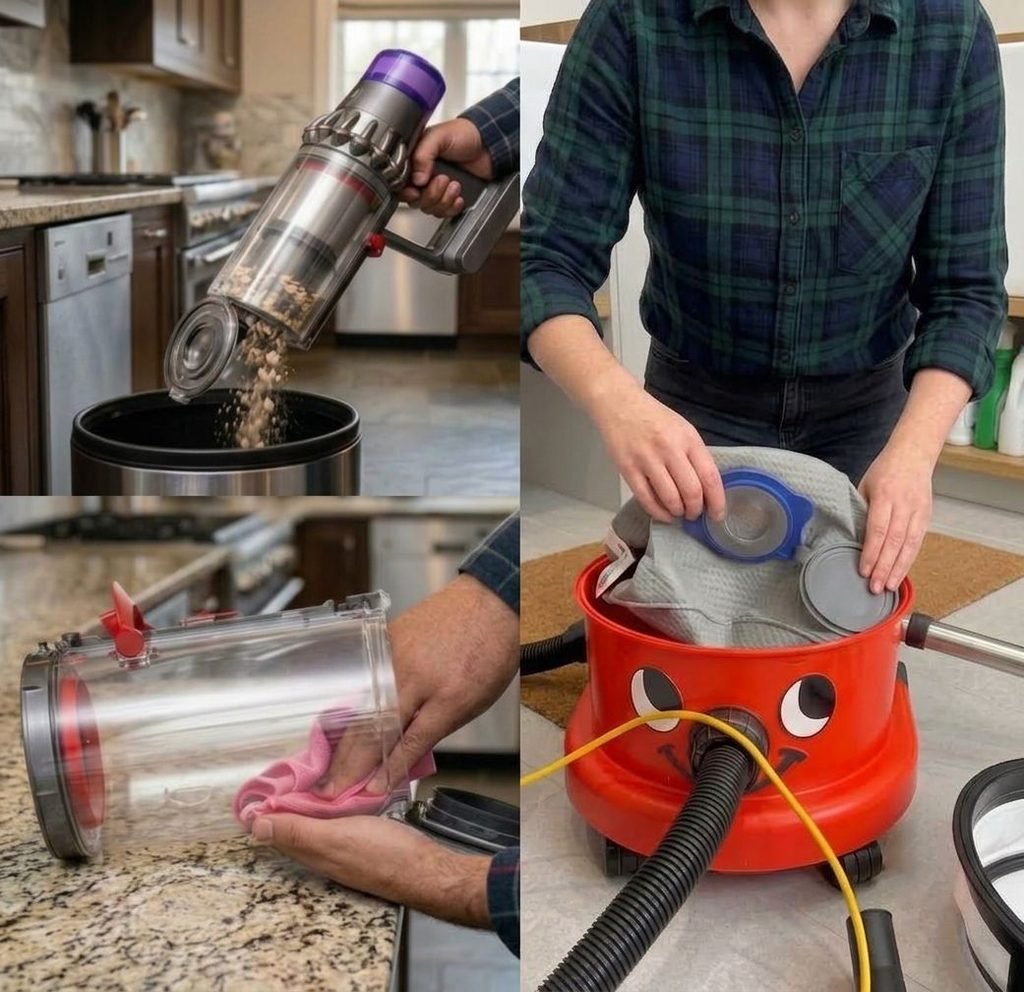
Bagless wins for speed, bagged wins for containment. With most bagless vacuums you release the bin, tip the contents into the bin and carry on. No new bag to fit, and a transparent container makes it obvious when it needs doing.
It is not always as tidy as that sounds. Fine dust clings to the inside of the bin, and pet hair compacts around the internal shroud instead of dropping straight out. When that happens, emptying involves tapping the container or pulling trapped debris out by hand, which is exactly the contact some buyers are trying to avoid.
A bagged vacuum handles it differently. Emptying is less frequent, and the dirt stays inside the bag as it comes out. The trade-off is straightforward: you have to keep the right bags at home.
Maintenance follows the same pattern. Bagless machines need more hands-on attention around the collection system, since the bin needs regular emptying, trapped debris occasionally needs clearing and washable filters must be cleaned and then dried completely before refitting. That last part catches people out. A damp filter restricts airflow and can leave the machine smelling, so most manufacturers ask for a full 24 hours of drying, which means you cannot wash a filter and use the vacuum the same evening.
A bagged machine keeps more of the dirt inside the bag, so there is less cleaning around the dust compartment. It is not maintenance-free. Filters still need checking or replacing at the recommended intervals, and floorheads, brush rolls and airways need the same basic attention either way.
This is why we would not read “no bags to buy” as “nothing to maintain”. Bagless saves you a recurring purchase and asks for a bit more of your time in exchange.
Emptying verdict: bagged for cleanliness, bagless for speed. Routine maintenance: bagged, generally.
Is one type quieter?
How loud a vacuum is comes down to motor design, insulation and the airflow path, and those vary far more between models than between formats. There is one general point worth knowing, though. Cyclonic separation spins air at speed through narrow cones and tends to produce a higher-pitched whine, while a bag sitting in the airflow path absorbs some of the sound. Plenty of people find that pitch more irritating than a louder but duller noise, which is why two machines with similar decibel ratings can feel very different in a small flat.
It is a tendency, not a rule. If noise matters to you, compare the figures for the specific models on your shortlist.
Which is better for pet owners?
Pet hair makes the trade-off more noticeable in both directions. A larger bag is genuinely useful when you are collecting a lot of fur, and contained disposal helps when the machine is also picking up dander. For a heavily carpeted home with several shedding pets, a capable bagged cylinder or upright makes good sense.
Bagless has its own advantage here: you can see exactly what has been collected and empty the bin the moment hair starts taking up space. Most cordless pet vacuums are bagless and come with anti-tangle floorheads or mini motorised tools for sofas and stairs.
We would choose on the whole package rather than the collection system. Prioritise brush-roll design, a useful upholstery tool, enough capacity and effective filtration. If someone in the household is sensitive to pet allergens, the contained disposal of a good bagged system becomes more persuasive. For ground-in mess that a vacuum cannot shift, a machine from our guide to the best carpet cleaners is a better tool than a more powerful vacuum.
What if you want a cordless vacuum?
If you specifically want a cordless stick, bagless is by far the easier format to find. Most mainstream cordless models use a small reusable bin because it suits the slim, lightweight design.
There are exceptions and hybrids. Some cordless products use disposable collection systems, and a growing number of premium bagless models empty themselves into a larger bag inside a docking station. That combines everyday bagless convenience with more contained disposal at the dock, though it adds cost and needs floor space.
For a straightforward cordless purchase, expect a bagless bin and pay attention to how easily it removes, empties and cleans. That single detail shapes the day-to-day ownership experience more than the headline suction figure. Our corded vs cordless comparison covers the runtime and power trade-offs in more detail, and our round-up of the best cordless vacuum cleaners compares current models.
Environmental considerations
Bagless vacuums avoid throwing away a bag every time the collection system fills, which is a real reduction in one type of consumable waste. Used vacuum bags are also difficult to recycle once they contain mixed household dust.
That does not make bagless the greener choice, though. Filters and other parts still need replacing, and the impact of the whole appliance depends on durability, repairability, materials and how long you keep it. Cordless bagless models also add a rechargeable battery to the picture, and a battery is a much harder thing to dispose of at end of life than a few paper bags.
The most defensible advice is to buy a vacuum that suits your home well enough to keep for years, maintain it as the manufacturer recommends and replace consumables only when they need it. Bag type is a small part of that picture.
Bagged vacuum cleaners: pros and cons
Pros
- Contained disposal, with self-sealing bags on many models
- Considerably larger capacity, typically 3 to 9 litres
- Emptying needed far less often
- Good choice for allergy-aware households when paired with effective filtration
- No cyclone or bin cleaning on conventional designs
Cons
- Replacement bags are a recurring cost, from around 60p to £3 each
- You need to keep the correct bags in stock
- Fill level is less obvious without an indicator
- Used bags add to household waste
- Very limited choice if you want a modern cordless stick
Bagless vacuum cleaners: pros and cons
Pros
- No replacement bags to buy or run out of
- Transparent bin makes the fill level obvious
- Quick to empty and refit
- Much wider choice, particularly among cordless models
- Easier to spot something you vacuumed up by accident
Cons
- Emptying releases fine dust back into the room
- Small bins need emptying much more often
- Filters need washing and a full drying period before refitting
- Pet hair compacts inside the bin and needs pulling out by hand
- Replacement filters can cost as much as a year of bags
Who should buy a bagged vacuum?
Choose bagged if contained disposal matters more to you than avoiding replacement bags. It is the format we would favour for someone sensitive to dust, a household that collects a lot of debris, or anyone who simply dislikes emptying a dusty plastic bin.
Bagged also makes sense in larger homes. A cylinder with a generous bag covers several rooms before disposal becomes part of the job. If you prefer to vacuum the whole house in one session rather than clean little and often, that is a real advantage.
Before buying, check the price and availability of the correct bags. Look up the bag code, not just the vacuum model. Even a good machine becomes frustrating if its consumables are expensive or awkward to source, and the difference between a Henry-style bag and a premium branded one is roughly fivefold.
Who should buy a bagless vacuum?
Choose bagless if you want to avoid buying bags and prefer a collection system you can see. It works particularly well for households that clean frequently and do not mind emptying a smaller bin after each session.
It is also the obvious route if you want the widest choice of cordless sticks, or a genuinely light machine. Grabbing a cleaner, dealing with a five-minute job and emptying the bin afterwards is most of the appeal of modern cordless designs, and our guide to lightweight vacuum cleaners is a useful starting point if weight is your main concern.
If dust exposure is a concern, you do not have to rule out bagless. Be more selective about the model, look for whole-machine filtration figures rather than filter ratings alone, and consider whether emptying the bin outside would fit into your routine.
What to check before you buy
- Filtration system. Look past a single filter label and check how well the complete air path is sealed.
- Emptying method. For bagged models, check whether the bag closes as it is removed. For bagless, check how cleanly the bin empties.
- Capacity. Match it to the size of your home, your pets and how often you vacuum.
- Bag code, availability and price. Check this before buying a bagged model, not after.
- Filter care. Find out which filters are washable, which are replaceable, what a replacement costs and how long they need to dry.
- Floorhead. Cleaning performance depends heavily on floorhead and brush design, especially on carpet and with pet hair.
- Parts and support. Bags, filters, brush rolls and batteries should all be easy to get hold of years from now.
- Corded or cordless. Collection type is one consideration. Runtime, weight and reach may matter more day to day.
Final verdict: bagged or bagless?
There is no universal winner, because the two formats solve different problems. Bagged machines cost you a few pounds a year in bags and give you cleaner, less frequent disposal in return. Bagless models remove that purchase and ask for a little more of your time.
If dust containment, allergies or capacity are high on your list, we would favour a good bagged vacuum. The advantage is at the point of disposal, which is the part shoppers tend to overlook while comparing HEPA labels and suction figures.
If you would rather never order another pack of bags and are happy emptying the container regularly, bagless is the more convenient choice, and it gives you a far wider selection if you want cordless.
The thing to avoid is letting the collection system decide the whole purchase. Floorhead design, effective filtration, useful capacity, manageable weight and available spare parts will have more influence on how the machine feels to live with. Work out whether bagged or bagless suits the way you clean, then buy the strongest individual vacuum in that format for your home.
Bagged vs bagless vacuum cleaner FAQs
Are bagged vacuums more powerful than bagless vacuums?
Not inherently. Cleaning performance depends on the individual machine, particularly its floorhead and brush design. Both formats can lose suction as the collection system fills.
Are bagged vacuums better for allergies?
They have a clear advantage at disposal, because the dirt stays inside the bag and many bags seal as they are removed. That is a meaningful benefit if handling dust is the problem. Filtration while cleaning is a separate question and depends on how well the whole machine is sealed, not on whether it uses a bag.
Is a bagless vacuum cheaper to run?
Usually, but by less than people expect. Bags run from roughly 60p to £3 each depending on brand, so a typical year might cost £8 to £40. Bagless machines avoid that but still need filters, and a genuine replacement filter can cost more than a year of bags.
Do bagged vacuums lose suction as the bag fills?
They can, but this is not a bagged-only problem. Any collection system restricts airflow as it loads with fine dust, including cyclones and their pre-motor filters.
How often do vacuum bags need changing?
There is no useful universal interval. It depends on bag capacity, what you are collecting and the manufacturer’s fill guidance. Follow the indicator or the instructions for your model rather than swapping a part-used bag on a calendar.
Do bagless vacuum filters need replacing?
Some do. Many are washable, but washable does not mean permanent, and a washed filter needs to dry completely before it goes back in. Follow the cleaning and replacement guidance for the exact model.
Can a bagged vacuum use any replacement bag?
Use the bag specified as compatible by the manufacturer. Fit, sealing and filtration are part of the vacuum’s design, so the cheapest generic bag is not automatically equivalent. A poorly sealing bag undermines the main reason for choosing bagged.
Should I replace a good bagged vacuum with a bagless one?
Not just to avoid buying bags. If your current machine cleans well and the bag cost is acceptable, switching format solves very little. Replace it when the new format fixes a real problem for your household.