Dehumidifier vs Heated Airer: Which Is Better for Drying Clothes? (2026)
Drying clothes indoors is a fact of life for most UK households from October to March. Windows stay shut, the outdoor line is unreliable and every wash adds moisture to the air inside your home. Sooner or later, most people end up weighing a dehumidifier against a heated airer.
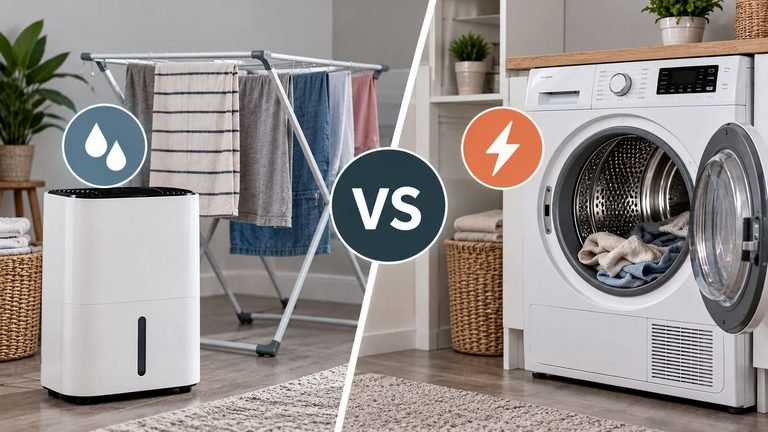
The two appliances tackle the job in different ways. A heated airer warms the rails your clothes hang on, so water evaporates from the fabric more quickly. A dehumidifier pulls moisture out of the surrounding air, so the clothes can keep releasing water into drier air. Both can speed up indoor drying, but only one of them does anything about the water once it has left your laundry.
Running cost is the question most people start with, but the hourly figure alone won’t tell you which is cheaper. In this dehumidifier vs heated airer comparison, we look at what each appliance costs per drying session, how they handle condensation, cold rooms, full loads and noise, and which type of household each one suits.
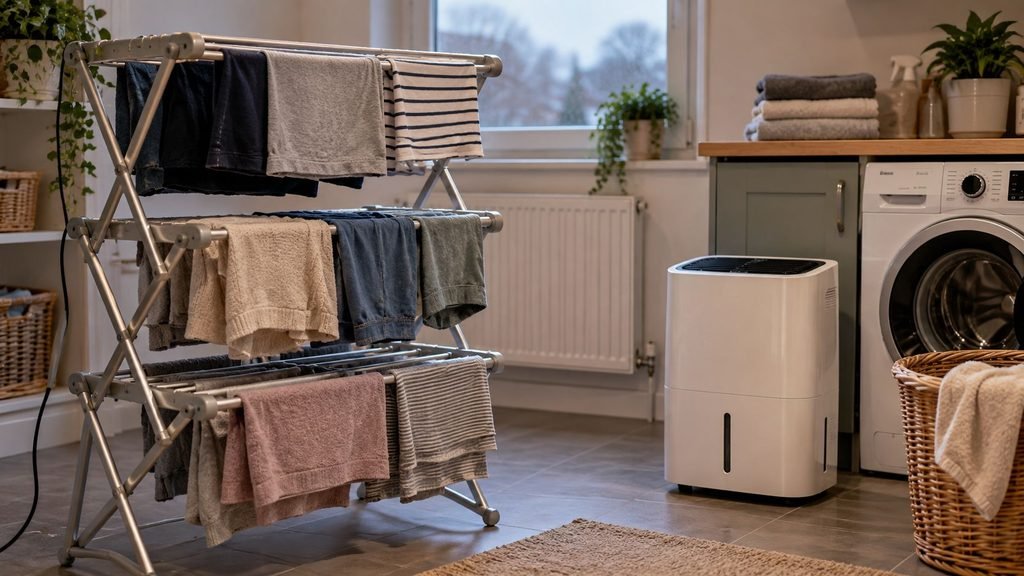
Quick answer: A heated airer is the simpler, quieter choice if you mainly want your washing to dry a bit faster and indoor humidity isn’t a problem. A dehumidifier is the better fit if drying clothes indoors leaves your windows streaming or your home feeling damp, because it removes the moisture instead of leaving it in the room. Efficient compressor dehumidifiers and standard heated airers draw similar power per hour, so the real cost difference comes down to how long each takes to dry your load.
Dehumidifier vs Heated Airer: Quick Comparison
| Feature | Dehumidifier | Heated airer |
|---|---|---|
| How it helps drying | Removes moisture from the surrounding air, so clothes keep releasing water | Warms the rails and the fabric touching them to speed up evaporation |
| Typical rated power | Varies widely by type and size; efficient compressor models can draw around 150–250W, while desiccant models usually draw more | Most standard models are roughly 200–300W |
| Illustrative hourly cost at 26.32p/kWh | About 5.4p for a 207W example; more for higher-powered models | About 5.3p to 7.9p for 200–300W examples |
| What decides the cost of a load | Wattage, runtime, room conditions and whether the compressor cycles off | Wattage and how long the load takes to dry |
| Moisture control | Collects water from the air in a tank or through continuous drainage | Doesn’t remove moisture; evaporated water stays in the room unless ventilated or extracted |
| Noise | Fan noise on all models, plus compressor hum on compressor types | Standard models are close to silent |
| Cold-room performance | Compressor models lose extraction as the room cools; desiccant models hold up better in genuinely cold spaces | Supplies its own heat, though a cold, damp room still slows drying |
| Effect on clothes | No direct heat on garments | Gentle heat where fabric touches the rails |
| Other uses | Can help control humidity and condensation around the home | Built for drying clothes |
| Best suited to | Homes where indoor laundry adds to condensation or damp | Homes wanting simple, quiet help with indoor drying |
How Does a Heated Airer Work?
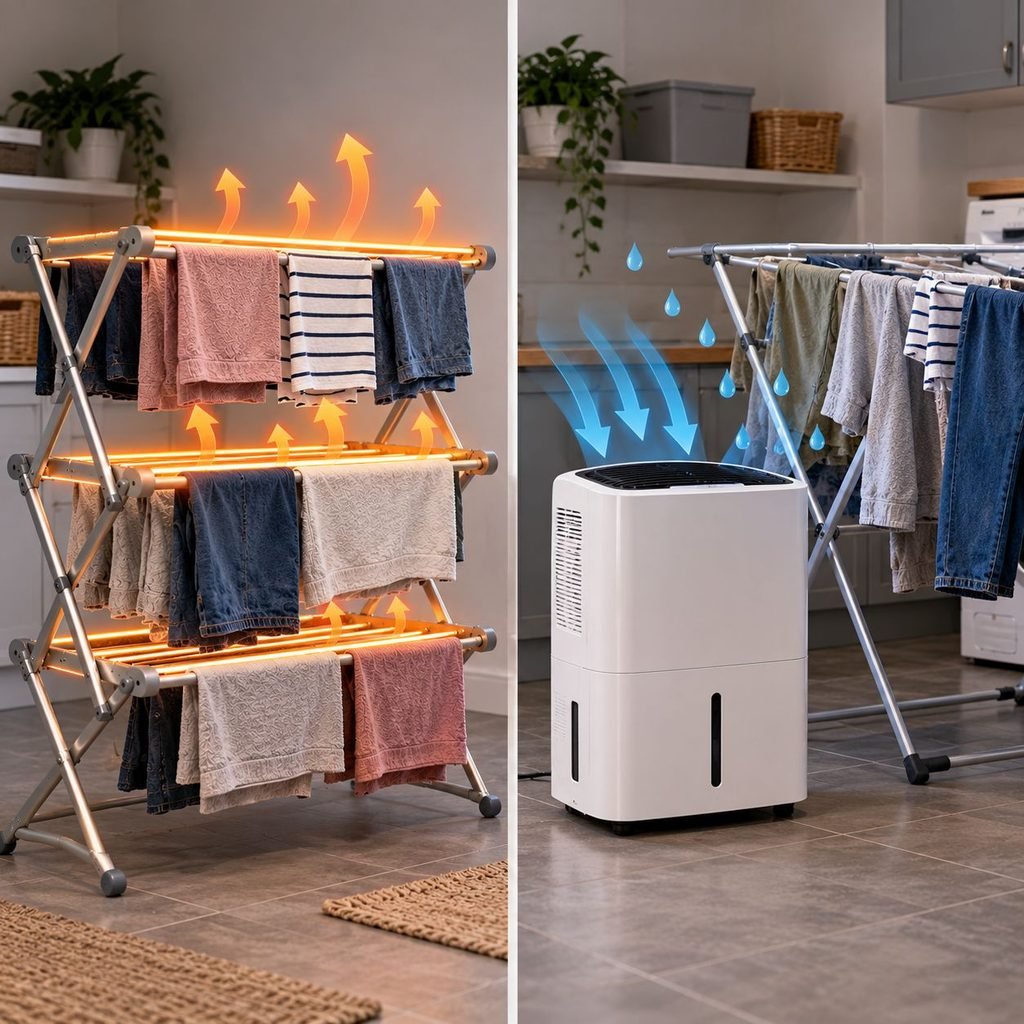
A heated clothes airer works much like a normal folding rack, except electricity warms the rails beneath your laundry. That gentle heat encourages moisture in the fabric to evaporate more quickly than it would on an unheated airer.
The key limitation is that a heated airer doesn’t remove that moisture from the room. As clothes dry, the water simply moves into the surrounding air. In a well-ventilated space that may be manageable, but regularly drying washing in a closed bedroom, spare room or utility area can push indoor humidity up and lead to condensation on colder surfaces.
How Does a Dehumidifier Dry Clothes?
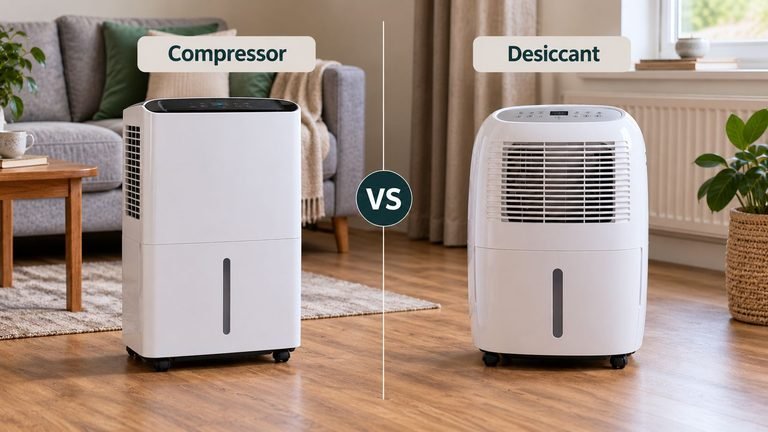
A dehumidifier approaches the problem from the other side by taking moisture out of the air. Compressor models draw air over a cold coil so the water condenses out, much like a cold drink “sweating” on a warm day. Desiccant models pass the air through a moisture-absorbing material instead, then use a heater to dry that material out again.
As the humidity around your laundry falls, water keeps evaporating from the fabric into the drier air. Airflow matters too, which is why many full-size dehumidifiers have a dedicated laundry mode. On most models this runs the fan at a higher speed and keeps the machine working continuously for a set period, rather than switching off once a target humidity is reached.
Which Is Cheaper to Run?
This is where a lot of dehumidifier vs heated airer comparisons go wrong. A fair cost comparison has to look at two things: how much electricity each appliance draws per hour, and how many hours it needs to run before the clothes are actually dry.
To keep the numbers consistent, the calculations below use an electricity rate of 26.32p per kWh. This is Ofgem’s average unit rate for customers on standard variable (default) tariffs paying by Direct Debit across England, Scotland and Wales from 1 October to 31 December 2026. VAT has been removed from domestic electricity bills for this period, so there’s nothing extra to add. Your own rate will vary with your region, tariff and payment method.
| Example | Rated power | Approx. cost per hour | Approx. cost over 6 hours |
|---|---|---|---|
| Compact heated airer example | 200W | 5.3p | 31.6p |
| Three-tier heated airer example | 300W | 7.9p | 47.4p |
| Efficient compressor dehumidifier example | 207W | 5.4p | 32.7p |
| Higher-powered dehumidifier example | 300W | 7.9p | 47.4p |
These are illustrative calculations based on rated power, not estimates of what drying a load will cost you. They assume each appliance draws its full rated power for the whole time, which isn’t always the case (more on that below).
Why Hourly Cost Can Mislead
What you actually pay for is the energy used per drying session, and that’s wattage multiplied by runtime. A lower-wattage appliance that takes much longer to dry your load can end up costing more than a higher-wattage one that finishes sooner.
| Runtime | 200W appliance | 300W appliance |
|---|---|---|
| 3 hours | 0.6kWh, about 15.8p | 0.9kWh, about 23.7p |
| 5 hours | 1.0kWh, about 26.3p | 1.5kWh, about 39.5p |
| 7 hours | 1.4kWh, about 36.9p | 2.1kWh, about 55.3p |
| 9 hours | 1.8kWh, about 47.4p | 2.7kWh, about 71.1p |
Compare the rows. A 200W appliance that needs nine hours (about 47.4p) costs more than a 300W appliance that’s done in five (about 39.5p). None of these runtimes is a claim about how long any particular heated airer or dehumidifier takes. They simply show why runtime matters as much as wattage.
Room conditions change the picture too. A heated airer keeps supplying heat to its rails, but drying slows as the air around it gets more humid. A dehumidifier’s extraction also varies with temperature and humidity. A warm room with well-spaced garments is a very different job from a cold utility room packed with a full wash.
If you want to compare properly at home, time how long a typical load actually takes to dry. That runtime, multiplied by the wattage, is what you’re really paying for.
Rated Power vs Actual Energy Use
Most standard heated airers are rated at roughly 200–300W. Compact and winged designs often sit around the lower end, while larger three-tier models are commonly around 300W. Basic heated-rail airers tend to draw close to their rated power the whole time they’re switched on, so the simple calculation above is a reasonable guide for them. Models with thermostats or timers may use a little less over a session.
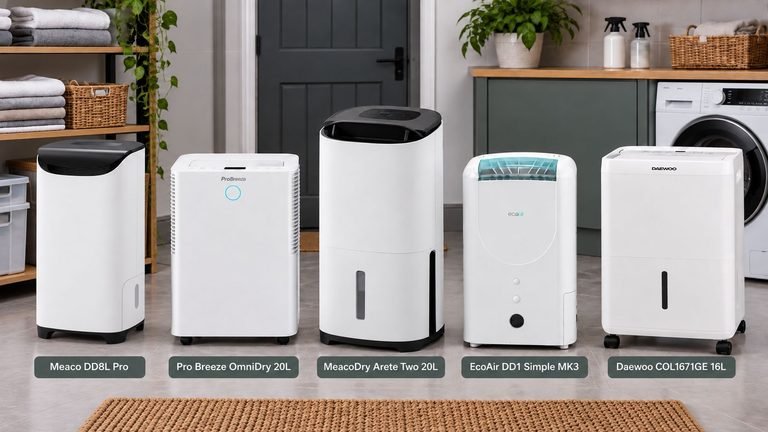
Dehumidifiers vary much more. Efficient compressor models can draw well under 250W, while bigger machines and desiccant models draw considerably more. Their actual consumption also moves with the room. Meaco, for example, publishes figures for its Arete One 20L showing it drawing around 180W at 10°C and up to 225W at 20°C and 80% humidity.
Compressor cycling matters too. In normal humidistat mode, a compressor dehumidifier switches its compressor off once the room reaches the target humidity, so it can use noticeably less than rated power multiplied by hours. Laundry mode usually keeps it running continuously, which brings real consumption closer to the rated figure.
Which Dries Clothes Faster?
A heated airer has one obvious advantage over an unheated rack: it applies warmth directly to the laundry. Even so, don’t expect tumble-dryer speed. A typical load on a standard heated airer usually takes several hours, and thick items lag behind the rest. The waistbands of jeans and the folded edges of towels are usually the last bits to dry.
There’s no equally useful universal drying time for a dehumidifier either. It depends on the appliance, room temperature, humidity, airflow, load size and how widely the clothes are spaced. A capable dehumidifier in a reasonably warm, closed room can make a big difference to indoor drying, while a compressor model in a cold room will extract moisture more slowly.
So neither method is consistently faster. The practical difference is this:
- A heated airer adds gentle heat right where the clothes are.
- A dehumidifier makes the air around the clothes drier, so they can keep giving up water.
With either one, thick fabrics, tightly packed garments and a weak final spin in the washing machine will stretch the drying time.
What Happens to All the Moisture?
This is the biggest practical difference between the two, and for many readers it’s the one that decides it.
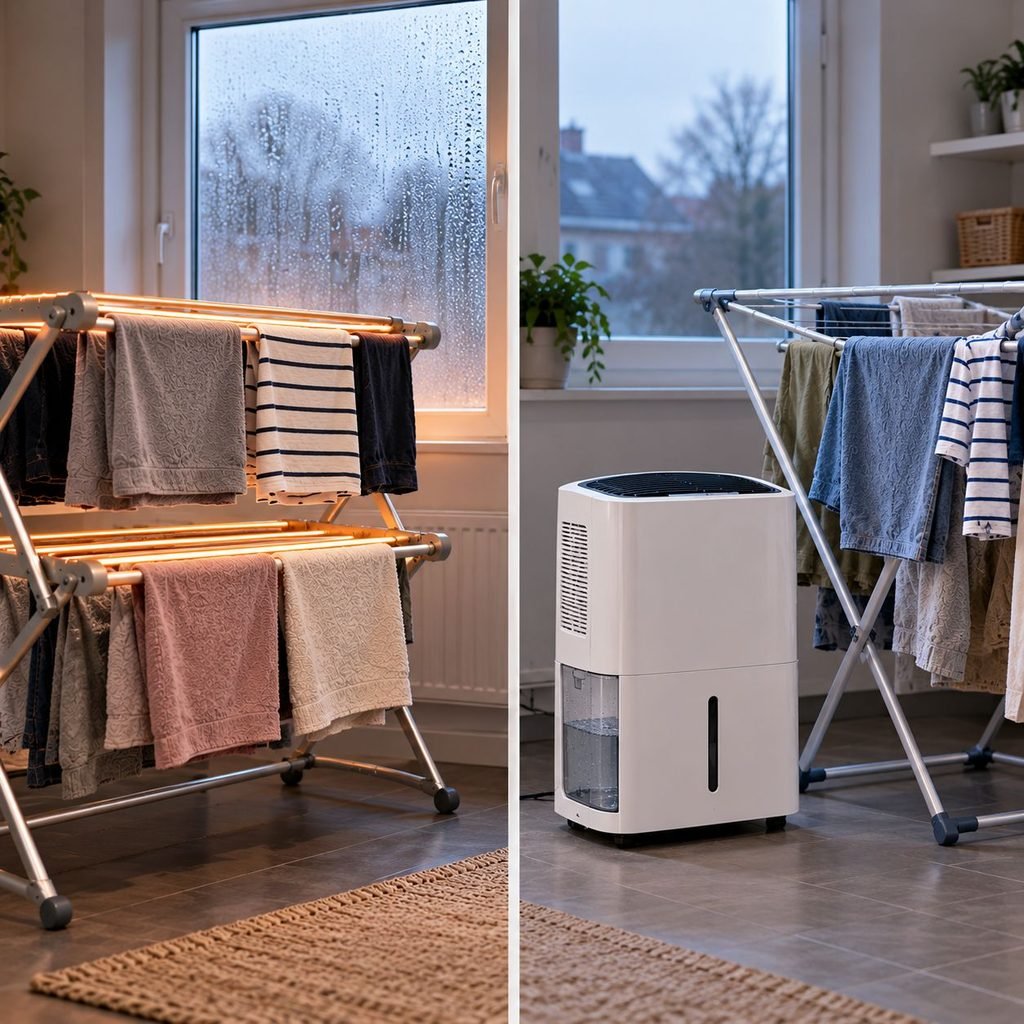
A heated airer doesn’t create any water, but it does encourage the water in wet clothes to evaporate into the room. That moisture stays in the indoor air until it’s removed by ventilation or a dehumidifier, or until it condenses on a colder surface. If your windows regularly mist up while washing is drying, that’s a good sign moisture is building up indoors.
A dehumidifier is designed specifically to take water vapour out of the air. The water it collects goes into a tank or, on models that support it, down a drain through continuous drainage. While laundry is drying, that leaves less moisture to condense on cold windows, walls and other surfaces.
Which Is Better for Condensation and Damp?
If controlling humidity is part of the reason you’re buying, a dehumidifier has the clearer advantage because it actively removes water from the air.
That advantage has limits. A dehumidifier can help manage excess moisture, including the moisture released by indoor laundry, but it can’t fix leaking pipes, rising or penetrating damp, failed window seals or other sources of water getting into the building. Existing mould also needs cleaning and treating properly rather than relying on humidity control alone. If damp is a wider problem in your home, our guide to the best dehumidifiers for mould and damp covers what to look for.
A heated airer can still be a sensible choice in a home where humidity isn’t a problem. Its limitation is simply that it speeds up evaporation without collecting the released moisture, so ventilation or separate humidity control becomes more important if the room starts to feel damp.
Which Is Better in Winter?
Winter is when the difference between these two really shows. Windows stay closed for longer, outdoor drying is less dependable, and colder surfaces make condensation more likely when wet laundry releases moisture indoors.
A heated airer brings its own local warmth, giving clothes more help than an unheated rack. The catch is that the evaporated water still ends up in the room, so repeated drying in a closed or poorly ventilated space can push humidity up.
For dehumidifiers, the type matters:
- Compressor models suit normally heated rooms best. Their extraction drops as the temperature falls, although newer efficient models can still perform reasonably well in cooler rooms.
- Desiccant models keep extracting moisture much more consistently in genuinely cold spaces, such as an unheated garage, conservatory or utility room, especially below about 10°C. They also blow out noticeably warmer air, which helps with drying. They usually cost more to run, though.
Both types release some warmth as they run, so the room may get slightly warmer, but neither should be treated as a replacement for heating. Our compressor vs desiccant dehumidifier comparison goes into this in more detail.
In a heated home, an efficient compressor dehumidifier can be a strong option for laundry, particularly if condensation is also an issue. In a cold room, weigh the heated airer’s direct warmth against how well your chosen type of dehumidifier copes at low temperatures.
Is One Gentler on Your Clothes?
Both methods avoid the repeated tumbling of a tumble dryer, which makes them suitable for many garments that would normally be air-dried. Still, the care label should always decide how an individual item is dried. If you’re also considering a tumble dryer, our dehumidifier vs tumble dryer comparison covers that side of the decision.
A dehumidifier applies no direct heat to your clothes. They stay on a normal airer while the appliance lowers the moisture in the air around them. A heated airer applies gentle heat through its rails, so the parts of the fabric resting on them get more direct warmth.
Neither method suits every fabric. Delicates that need to be dried flat or kept away from heat should still be handled according to their care instructions.
Which Handles a Full Load Better?
Large three-tier heated airers offer generous hanging space, but their maximum load figures need some context. A rating such as 15kg usually refers to the weight the frame is designed to support. It isn’t a promise that 15kg of wet laundry will dry efficiently in one session.
What matters more is how much washing you can spread out while leaving space for heat and air to circulate. Pack a heated airer too tightly and the thicker or overlapping areas will stay damp for longer.
The same goes for a normal airer paired with a dehumidifier. The dehumidifier improves the drying conditions around the clothes, but it can’t fully make up for garments crammed together. So when you’re comparing airers, look at the usable hanging space rather than the weight rating.
Noise and Everyday Convenience
A heated airer wins clearly if quiet operation is a priority. Standard heated-rail designs have no compressor or fan, so there’s little or no mechanical noise. That makes them easier to live with in a home office, open-plan living area or any room you’re actually using.
A dehumidifier has to move air through the machine, so there’s always some fan noise, and compressor models add a compressor hum on top. Some have night or quiet modes that lower the fan speed and dim the display, but none should be thought of as silent.
Convenience is more evenly balanced. A heated airer is easy to set up and usually folds flat when you’re done. A dehumidifier needs permanent storage space and its tank needs emptying unless you can use continuous drainage. On the other hand, humidistats, timers and laundry modes mean you can mostly set it and leave it.
Which Is Cheaper to Buy?
Heated airers generally have the lower upfront cost. Basic heated racks are simple appliances, while larger three-tier and covered designs cost more. A capable full-size dehumidifier will usually need a bigger initial outlay.
That changes if you’ll also use the dehumidifier to deal with humidity or condensation elsewhere in the home. In that case, you’re paying for a broader range of uses rather than just laundry drying. Our best dehumidifiers UK guide is a good starting point if that’s the route you’re considering.
Prices change too often for a fixed comparison to stay useful for long, so check current prices when you buy and weigh the upfront cost against how often, and for what, you’ll actually use the appliance.
Can You Use a Dehumidifier and Heated Airer Together?
Yes, and the two do complementary jobs. The heated airer encourages water to evaporate from the clothes, while the dehumidifier removes that moisture from the air. Used together in a suitable room, they tackle both halves of indoor drying.
That doesn’t automatically make the combination cheaper, and it won’t guarantee a particular cut in drying time. Running two appliances means drawing more power at once, and the overall cost depends on both wattages, how long they run, the size of the load and the room conditions.
If you already own both, pairing them can be especially useful for a big winter wash that’s pushing indoor humidity up. Leave enough space around the dehumidifier for airflow, keep its inlet and outlet clear, and never drape wet clothes over the machine itself. Follow the placement and safety instructions for both appliances.
Dehumidifier or Heated Airer: Which Suits Your Household?
The better choice depends less on the appliance and more on where you dry your washing, how often you do it and what happens to the room while it dries.
| Your situation | Better fit |
|---|---|
| Windows stream with condensation on washing days | Dehumidifier |
| You want quiet drying in a room you’re sitting or working in | Heated airer |
| Damp or high humidity is a problem elsewhere in the home too | Dehumidifier |
| You dry small or occasional loads and humidity isn’t an issue | Heated airer |
| You dry in a genuinely cold, unheated space | Heated airer or a desiccant dehumidifier |
| You already own a normal clothes airer | Dehumidifier |
| You want something that folds away between washes | Heated airer |
Choose a Dehumidifier If…
- Indoor laundry regularly leaves your windows wet with condensation.
- You want to manage humidity elsewhere in the home as well.
- You already have a suitable clothes airer and enough space for air to circulate around it.
- You’d rather your clothes didn’t have direct heat applied to them.
If that sounds like your home, our guide to the best dehumidifiers for drying clothes covers models with dedicated laundry modes.
Choose a Heated Airer If…
- Your main priority is simply speeding up indoor drying.
- Quiet operation matters to you.
- Drying washing doesn’t usually cause condensation or humidity problems in your home.
- You want a straightforward appliance with very little day-to-day maintenance.
- You’d like a rack that folds away when it isn’t in use.
How to Get Better (and Safer) Results From Either Method
However you dry, how you prepare and arrange the laundry makes a real difference. Use the highest spin speed that’s suitable for the fabrics in the load, since every bit of water removed in the drum is water you don’t need to dry off later. Leave gaps between garments rather than packing wet fabric together, especially around thicker items like jeans, towels and sweatshirts.
With a heated airer:
- Arrange thicker areas such as waistbands, pockets and cuffs so they sit against the heated rails, and move slow-drying items around as needed.
- If you want to use a cover, choose one designed or approved for your airer. Don’t improvise with blankets, sheets or other materials.
- Check the manual for any limits on continuous use. Some manufacturers set a maximum run time; Lakeland’s Dry:Soon 3-tier instructions, for example, say to switch it off after 24 hours and let it cool.
- Keep the cable and plug in good condition, and let the airer cool down before folding it away.
With a dehumidifier:
- Keep the air inlet and outlet clear, and position the machine so air can circulate around the drying area.
- Follow the manufacturer’s advice on clearance and on whether doors and windows should stay closed during laundry drying.
- Empty the tank before a long session, or use continuous drainage if your model supports it and your room setup allows.
Final Verdict: Dehumidifier vs Heated Airer
A heated airer is the simpler choice if your main aim is to give indoor laundry a gentle drying boost. It’s quiet, relatively low-powered, cheaper to buy and folds away when you’re done. For smaller or occasional loads in a home where indoor drying doesn’t cause a humidity problem, that simplicity may be all you need.
A dehumidifier makes more sense when drying clothes is adding to condensation or damp. Rather than just encouraging evaporation, it removes the moisture from the room as the laundry dries, and it keeps earning its place outside washing days. On running costs, neither has a built-in advantage. Efficient compressor models draw similar power to many heated airers, so the cost of drying a full load comes down to runtime, room conditions and the appliance itself.
So the dehumidifier vs heated airer decision comes down to the problem you’re trying to solve. If it’s slow-drying washing, a heated airer is the straightforward answer. If it’s slow-drying washing and the dampness it leaves behind, a dehumidifier is the stronger fit. And if you already own both, using them together can help with heavy winter loads, as long as you see it as a way to combine warmth with moisture control rather than a guaranteed saving.
FAQs
Is a dehumidifier cheaper to run than a heated airer?
Not necessarily. Many standard heated airers and efficient compressor dehumidifiers draw similar power, so there’s no universal winner on hourly running cost. The total depends on the appliance’s wattage and how long it needs to run before the laundry is dry. Cost per completed drying session is far more useful than comparing wattage alone.
What’s the cheapest way to dry clothes indoors?
An unheated airer in a well-ventilated room costs nothing to run, but it’s slow in winter and all that moisture goes into your home. Among powered options, the cheapest is whichever uses the least energy to dry a full load in your conditions, which comes down to wattage multiplied by runtime. A low-wattage appliance that runs for much longer isn’t automatically the cheaper choice.
Does a heated airer cause condensation?
A heated airer doesn’t create any extra water, but it encourages moisture in wet clothes to evaporate into the room. If that moisture isn’t removed through ventilation or dehumidification, indoor humidity rises and water can condense on colder surfaces such as windows and external walls.
Will a dehumidifier dry clothes without heating the room?
Yes. A dehumidifier helps clothes dry by lowering the humidity of the air around them rather than applying direct heat. The machine does release some warmth while it runs, and desiccant models noticeably more so, so the room may get slightly warmer. It still shouldn’t be treated as a substitute for a heater.
Should I close the window when using a dehumidifier for laundry?
Generally, yes. A dehumidifier works best in a closed room, because an open window keeps letting in outside air for the machine to process. Keeping windows and external doors shut helps it concentrate on the moisture coming off your clothes. Always follow the manufacturer’s instructions, particularly if the room needs ventilation for other reasons, such as a fuel-burning appliance.
Can I leave a heated airer on overnight?
Check the instructions for your specific model before leaving it running overnight or unattended. Guidance, timers and safety features vary, so there isn’t a blanket rule for every heated airer, and some manufacturers set a maximum continuous run time. Keep the airer, cable and plug in good condition, and never cover it with bedding, blankets or other materials unless the manufacturer specifically approves it.
Is a heated airer better with a cover?
A purpose-designed cover can help some heated airers dry clothes faster by trapping warmth around the laundry. How much it helps depends on the airer and the cover. Use only a compatible or manufacturer-approved cover, keep any specified vents clear and follow the instructions supplied with the appliance.
Can a dehumidifier and heated airer be used in the same room?
Yes, as long as you follow the placement instructions for both. The airer speeds up evaporation and the dehumidifier catches the moisture, which helps most with big winter loads. Just remember you’re paying to run two appliances at once, so it won’t necessarily cost less overall.
How we worked out the running costs: all examples use 26.32p/kWh, the average electricity unit rate under the Ofgem energy price cap for Direct Debit customers in England, Scotland and Wales from 1 October to 31 December 2026. Wattages and runtimes are illustrative examples rather than performance claims for any specific product. Your costs will depend on your tariff, the appliance and how long it runs.