Best Coffee Machines Under £500 UK 2026
£500 gets you a properly good coffee machine. It’s enough for real espresso, a bean-to-cup machine that does the milk for you, or a filter machine that should still be going in ten years. What it usually won’t stretch to is all of that in one box, and that’s where a lot of people end up buying the wrong thing.
There’s another trap at this price. Some machines that look like £500 bargains are only under budget while a sale is on, and others look cheap until you add a grinder, a frother or a year of water filters. So in this guide, alongside the best coffee machines under £500, I’ve been upfront about which prices are normal, which are offers, and what each machine costs to keep running.
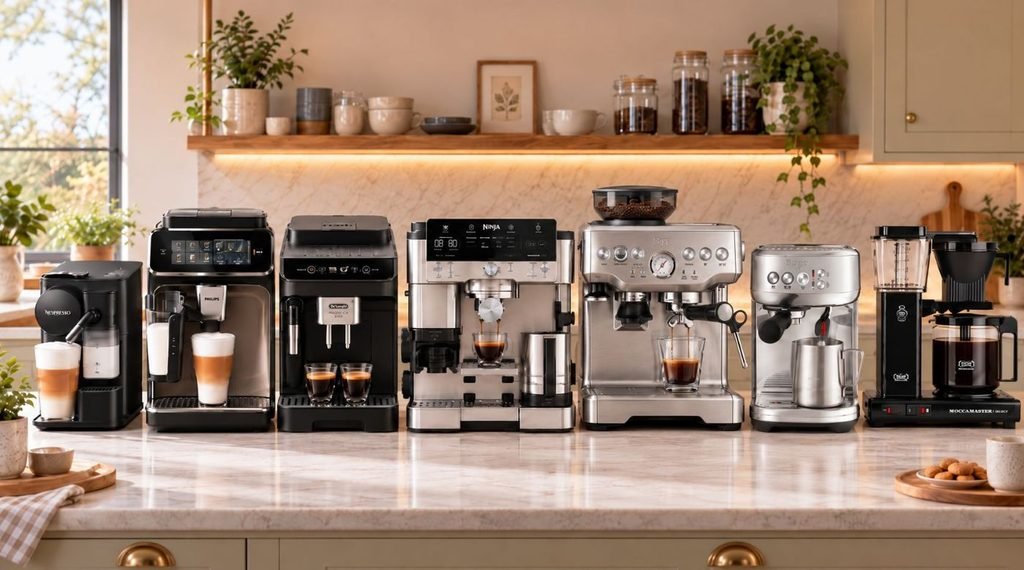
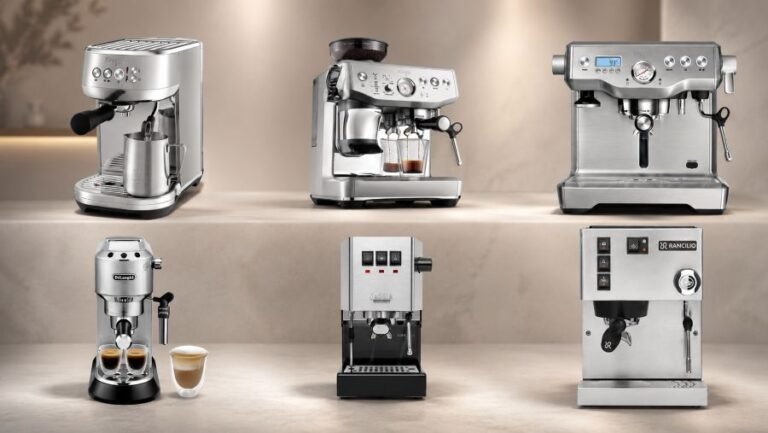
Quick answer: If you mostly drink lattes and flat whites, the Sage Bambino Plus (£399.95) is the one I’d buy, as long as you’re happy to start with pre-ground coffee. For beans in and coffee out with no skill at all, get the Philips Series 3300 LatteGo while it’s £369.99. Black coffee drinkers will get more for their money from the De’Longhi Magnifica Evo, and if filter coffee is all you drink, the Moccamaster KBG Select is hard to beat.
Best coffee machines under £500: my quick picks
| Machine | Best for | Type | Price (October 2026) |
|---|---|---|---|
| Sage Bambino Plus | Best overall, for milk drinks on real espresso | Espresso, no grinder | £399.95 |
| Philips Series 3300 LatteGo | One-touch lattes and cappuccinos | Bean-to-cup | £369.99 (list £549.99) |
| De’Longhi Magnifica Evo ECAM290.21.B | Black coffee from fresh beans | Bean-to-cup, steam wand | Around £319 to £349 |
| Ninja Luxe Café Premier ES601UK | Households that drink a bit of everything | Espresso with grinder | £479.99 at Ninja (list £579.99) |
| Sage Barista Express | Learning espresso properly | Espresso with grinder | Around £475 to £500 on offer (RRP £629.95) |
| Nespresso Lattissima One | Lattes from a pod, with real milk | Capsule with milk system | £179 to £259.99 |
| Moccamaster KBG Select | Filter coffee, and the longest warranty | Filter | Around £238 to £268 |
I checked prices on manufacturer sites and at the big UK retailers in mid-October 2026. They move a lot, especially in the weeks before Black Friday, so it’s worth checking on the day.
How I chose these machines
I picked these from manufacturer specs, user manuals, current UK prices and the things owners mention again and again, good and bad. I also looked hard at machines that didn’t make it, including the De’Longhi Rivelia, which a lot of people assume sits at this price. It doesn’t, at least not new. More on that further down.
Each machine here had to suit a different kind of coffee drinker, so you’re not choosing between seven versions of the same thing. And where a machine is only under £500 because of an offer, I’ve said so plainly rather than tucking it into the small print.
Coffee machines under £500 compared
| Machine | Grinder | Milk | Water tank | Width | Guarantee |
|---|---|---|---|---|---|
| Sage Bambino Plus | None | Automatic steam wand | 1.9L | 19.4cm | 2 years |
| Philips 3300 LatteGo | Ceramic, 12 settings | LatteGo carafe (automatic) | 1.8L | 24.6cm | 2 years |
| De’Longhi Magnifica Evo | Steel burr, 13 settings | Manual steam wand | 1.8L | 24cm | 2 years |
| Ninja Luxe Café Premier | Burr, 25 settings, built-in scale | Dual Froth System (automatic) | 2L | 33.6cm | 2 years, once registered |
| Sage Barista Express | Conical burr, 16 settings | Manual steam wand | 2L | 31.8cm | 2 years |
| Nespresso Lattissima One | Not needed (capsules) | Single-serve milk jug (automatic) | 1L | 15.4cm | 2 years |
| Moccamaster KBG Select | None | None | 1.25L | 32cm | 5 years |
Which of these are genuinely under £500?
Three of my picks are only under budget because they’re discounted right now. Here’s the full picture, so you know what you’d pay on an ordinary week.
| Machine | List price | Price seen (October 2026) | Under £500 without a sale? |
|---|---|---|---|
| Sage Bambino Plus | £399.95 | £399.95, has dropped to around £349 in past sales | Yes |
| Philips 3300 LatteGo | £549.99 | £369.99 at Currys and John Lewis | No, though the offer has run since July |
| De’Longhi Magnifica Evo | £419.99 | Around £319 to £349 | Yes |
| Ninja Luxe Café Premier | £579.99 | £479.99 at Ninja | No |
| Sage Barista Express | £629.95 | Around £475 to £500 | No |
| Nespresso Lattissima One | £259.99 at De’Longhi | £179 at Marks Electrical | Yes |
| Moccamaster KBG Select | Varies by retailer | Around £238 to £268 | Yes |
One thing I’d always check is the ‘was’ price. Currys shows the dates its was-price actually applied, and on the Philips, £549.99 ran from 10 to 30 June 2026. Three weeks. A big saving against a price that barely existed isn’t much of a saving, so look for those dates, or a price history site, before you get excited.
1. Sage Bambino Plus: Best Coffee Machine Under £500 Overall
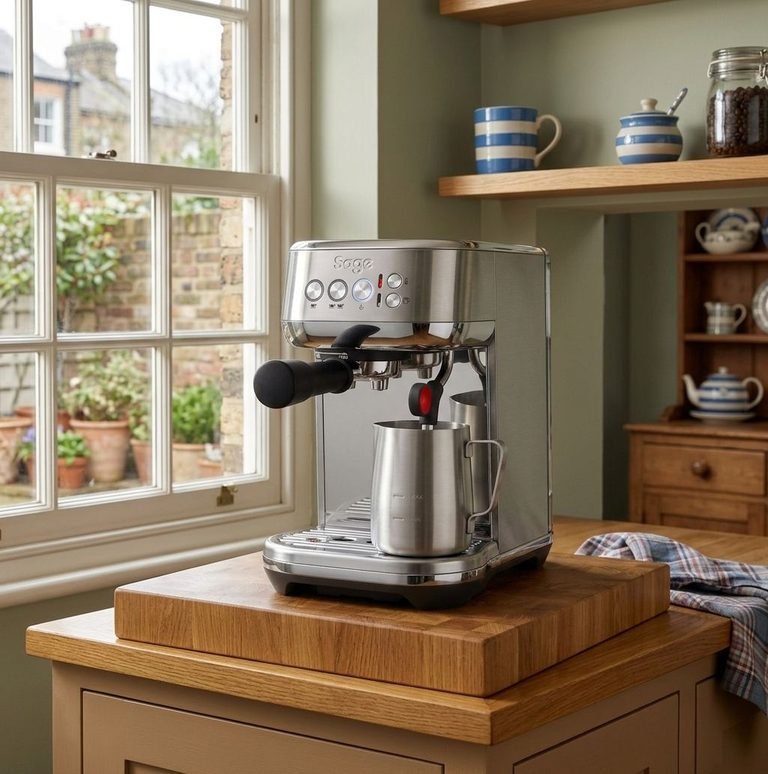
For most people who drink milky coffee, this is the one. It’s a proper espresso machine with a 54mm portafilter and digital temperature control, but what you’ll notice every day is the automatic steam wand. You put the jug on the sensor, choose a temperature and a foam level, and it stops by itself. Nobody in the house has to learn to steam milk, and everyone gets the same flat white.
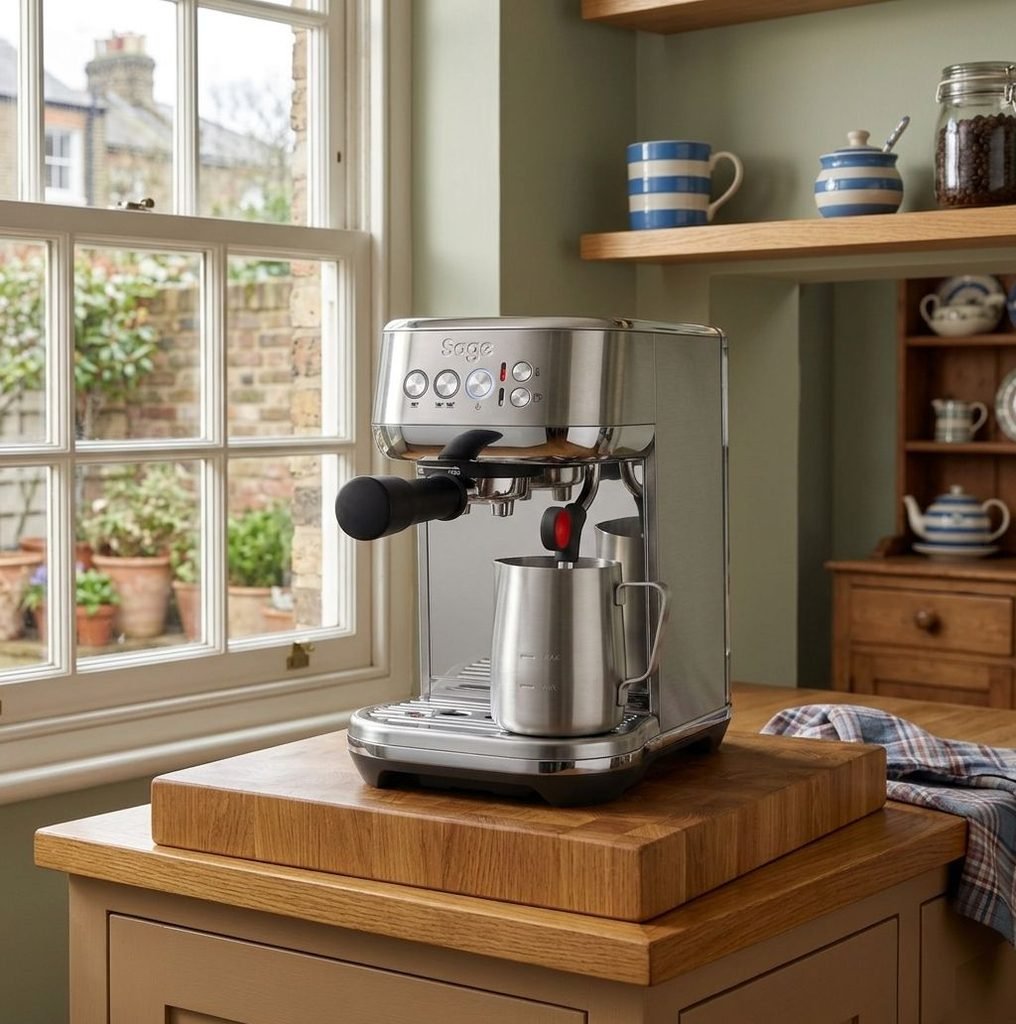
It doesn’t grind, though. That’s fine with supermarket pre-ground coffee and the dual wall baskets, just a bit flatter in flavour. A decent espresso grinder like Sage’s Dose Control Pro (£169.95) takes the total to £569.90, so I’d see the grinder as something to add later, not on day one. I’ve gone into bean freshness, upkeep costs and kitchen space in my full Sage Bambino Plus review, so I won’t repeat it all here.
| Specification | Details |
|---|---|
| Price | £399.95 at Sage and Argos (October 2026) |
| Type | Compact manual espresso machine, ground coffee only |
| Heating | ThermoJet, ready in about 3 seconds (Sage’s figure) |
| Portafilter | 54mm stainless steel, single and dual wall baskets |
| Milk | Automatic steam wand, 3 temperatures and 3 foam levels, plus a manual mode |
| Water tank | 1.9 litres |
| Dimensions (W x D x H) | 19.4 x 36.2 x 30.4cm |
| Weight | About 4.95kg |
| Guarantee | 2 years |
Pros and cons
- Milk comes out the same every time, whoever’s making it
- Ready to brew almost as soon as it’s switched on
- Under 20cm wide, so it fits even small kitchens
- Works with pre-ground coffee now and any grinder later
- No grinder, and adding one pushes you past £500
- Automatic milk only works with the supplied 480ml jug
- Small drip tray that fills quickly with purge water
Buy it if you drink lattes, flat whites or cappuccinos most days and want café-style milk without the learning curve.
Skip it if you want to go from whole beans to coffee with one machine and one budget.
2. Philips Series 3300 LatteGo (EP3347/90): Best Bean-to-Cup for Lattes and Cappuccinos
Press a button, get a latte. That’s really the whole appeal, and the Philips does it well. It grinds the beans, brews, and froths milk in the LatteGo carafe, which is just two parts with no tubes. Philips says it rinses clean in about 10 seconds and both parts can go in the dishwasher, which matters a lot more at 7am than any spec on the box.
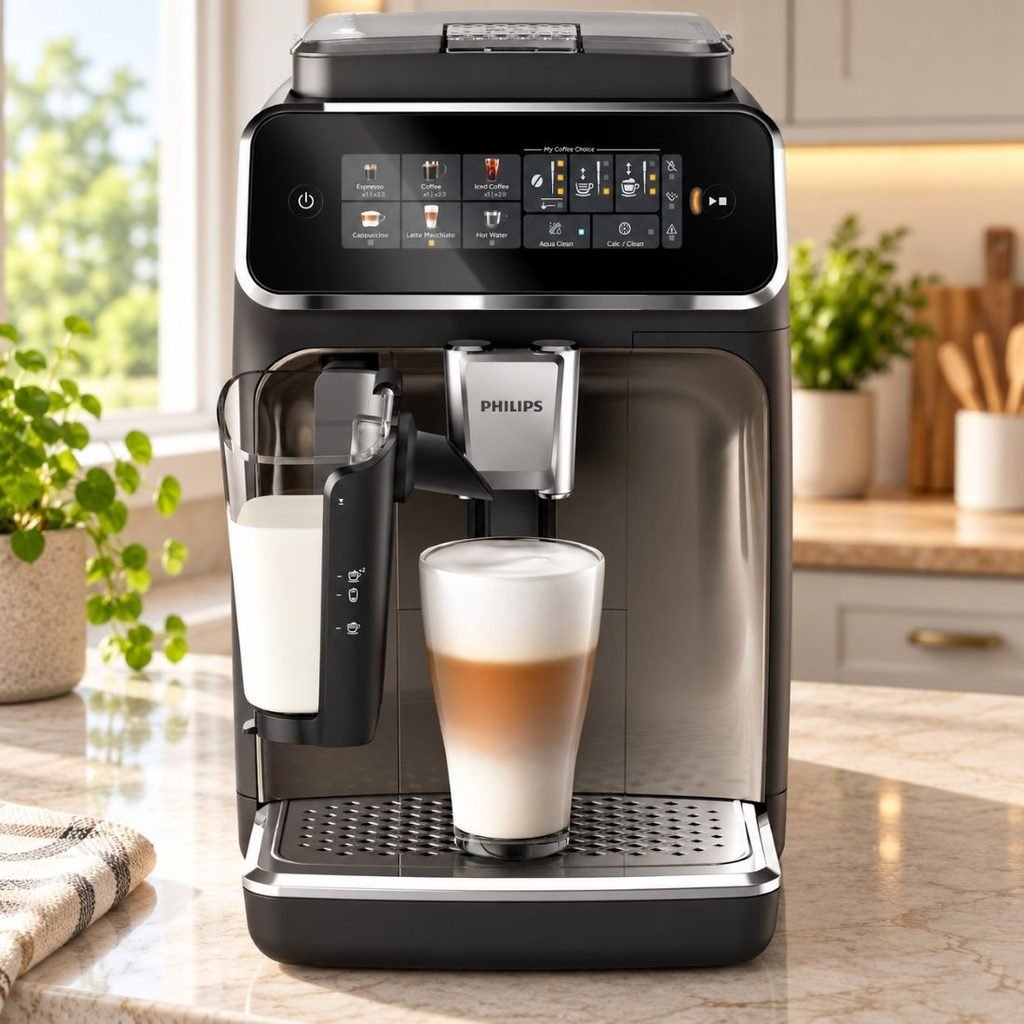
Its list price is £549.99, so strictly it’s only under budget because of the offer. But it’s been £369.99 at Currys since the start of July, and at that price it’s very good value. If you want more options above £500, my guide to the best bean-to-cup coffee machines covers them. One cost to plan for here is the AquaClean water filter. I’ve worked out what it really adds further down, and it’s not quite what the box suggests.
| Specification | Details |
|---|---|
| Price | £369.99 at Currys and John Lewis (list price £549.99) |
| Type | Bean-to-cup with automatic milk |
| Grinder | Ceramic, 12 settings, 275g bean hopper |
| Drinks | 6 one-touch drinks, including espresso, black coffee, cappuccino, latte macchiato and iced coffee |
| Milk | LatteGo carafe, 260ml, dishwasher safe |
| Water tank | 1.8 litres, AquaClean filter compatible |
| Extras | Wi-Fi with the Philips HomeID app, Quiet Mark certified |
| Power | 1,500W |
| Dimensions (W x D x H) | About 24.6 x 43.3 x 37.1cm |
| Guarantee | 2 years |
Pros and cons
- Proper one-touch milk drinks from fresh beans
- LatteGo has no tubes and only two parts to wash
- Quieter than most bean-to-cup machines
- Excellent value at its current price
- Only under £500 while it’s discounted
- You can’t fine-tune espresso like you can on a portafilter machine
- AquaClean filters add a real yearly cost if you use them
- Over 43cm deep, so measure your worktop first
Buy it if you want lattes and cappuccinos from beans at one press and nobody wants to learn anything.
Skip it if you mainly drink black coffee. You’d be paying for a milk system you won’t use.
3. De’Longhi Magnifica Evo (ECAM290.21.B): Best Bean-to-Cup for Black Coffee
If you drink espresso, americanos or long black coffees, the Philips’ clever milk system is wasted on you. The Magnifica Evo gives you fresh beans at the press of a button for around £319 to £349, and unlike the Philips, that’s under £500 at its full £419.99 RRP too. It has a 13-setting steel burr grinder, four one-touch drinks, a pre-ground option for the odd decaf and a brew unit that slides out for rinsing.
There’s a traditional steam wand for when you do want milk, but you’ll be frothing by hand. That’s fine for a weekend cappuccino. If milky drinks are most of what you make, spend the extra £50 or so on the Philips instead.
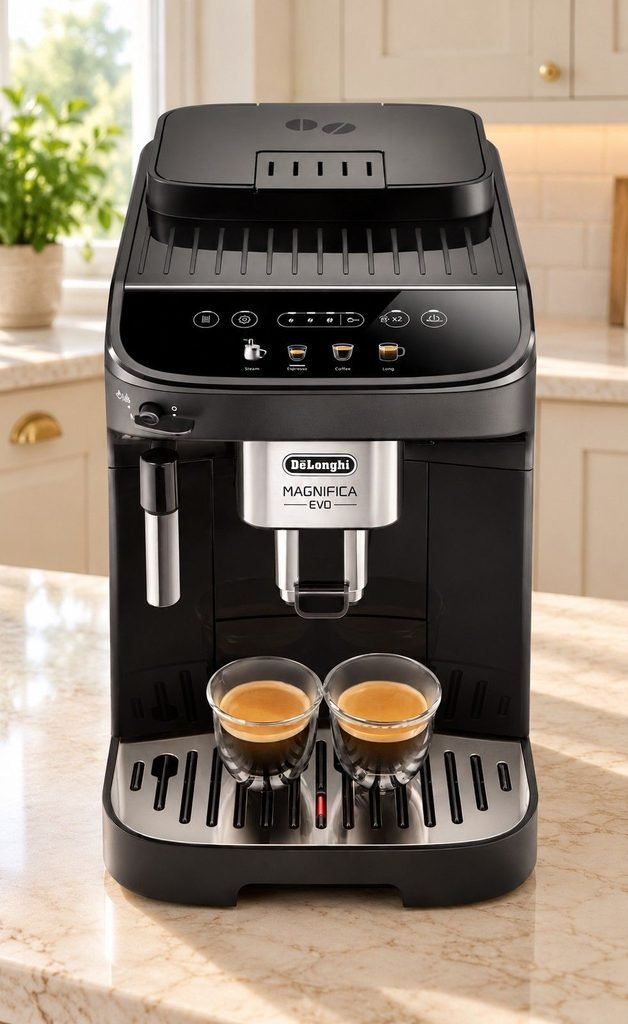
A tip from De’Longhi’s own support pages that I wish more people knew: only turn the grinder dial while the grinder is running, move it one notch at a time, and make at least two coffees before you decide whether it’s helped. There’s ground coffee already sitting in the machine, so the first cup won’t show the change.
| Specification | Details |
|---|---|
| Price | Around £319 to £349 at UK retailers (RRP £419.99) |
| Type | Bean-to-cup with manual steam wand |
| Grinder | Steel burr, 13 settings, 250g hopper, pre-ground option |
| Drinks | 4 one-touch drinks, 2 cups at once |
| Milk | Manual steam wand |
| Water tank | 1.8 litres |
| Power | 1,450W |
| Dimensions (W x D x H) | About 24 x 44 x 36cm |
| Guarantee | 2 years |
Pros and cons
- The cheapest fresh-bean machine here
- Under £500 at full price, not just in a sale
- Removable brew unit keeps cleaning simple
- Takes pre-ground coffee too
- Manual milk frothing takes practice
- Fewer drinks and a simpler display than the Philips
- Grinder changes take a couple of cups to show
Buy it if you mainly drink espresso, americano or black coffee and want fresh beans for well under £400.
Skip it if milky drinks are most of what you make.
4. Ninja Luxe Café Premier (ES601UK): Best All-in-One, When It’s on Offer
This is the machine for houses where nobody drinks the same thing. It’s an espresso machine with a built-in grinder, but it also makes filter-style coffee and cold brew. There are 25 grind settings, a scale that weighs your coffee as it grinds, and Ninja’s Barista Assist, which suggests a grind setting and adjusts the brew for the drink you’ve picked. The Dual Froth System steams and whisks milk at the same time, with presets for steamed milk, thin froth, thick froth and cold foam.
You still dose, tamp (with an assisted tamper) and lock the portafilter in, so it isn’t push-button like the Philips. You just get a lot more guidance than you would on the Sage machines, which makes it far less daunting.
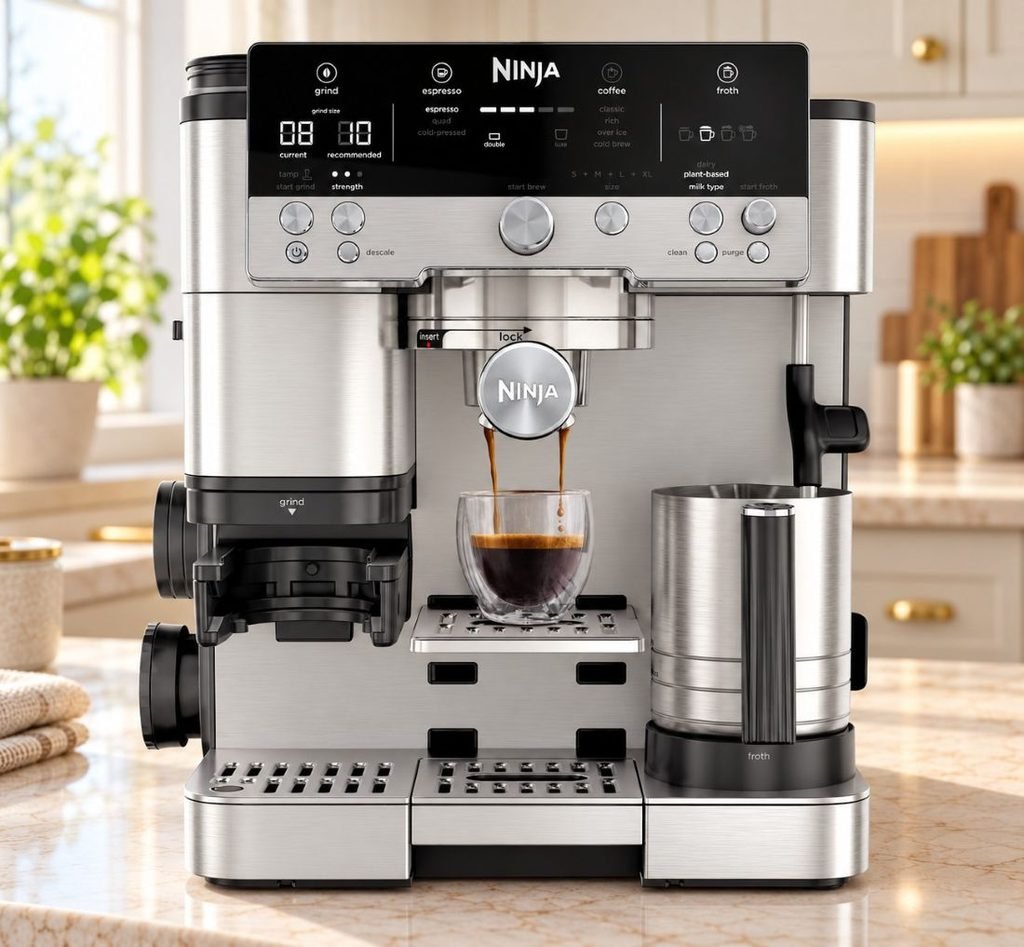
Two things before you buy. Ninja lists it at £579.99 and had it at £479.99 when I checked, so it’s only under £500 while the offer lasts. And the 2-year guarantee applies once you’ve registered the machine with Ninja, so do that the day it arrives. It’s also big, at 33.6cm wide and around 11.8kg.
| Specification | Details |
|---|---|
| Price | £479.99 at Ninja (list price £579.99) |
| Type | Espresso machine with grinder, plus filter-style coffee and cold brew |
| Grinder | Burr, 25 settings, built-in scale |
| Drinks | 4 espresso styles, 4 coffee styles, 7 drink sizes |
| Milk | Dual Froth System, 4 presets including cold foam |
| Baskets | Single, double and Luxe |
| Water tank | 2 litres |
| Power | 1,650W |
| Dimensions (W x D x H) | 33.6 x 34.4 x 37.2cm |
| Weight | About 11.8kg |
| Consumables | Cleaning tablets £9.99 for 8, descaling packets £14.99 for 4 (Ninja) |
| Guarantee | 2 years, on registration with Ninja |
Pros and cons
- Espresso, filter-style coffee and cold brew from one machine
- The built-in scale and grind guidance take the guesswork out of dosing
- Hands-free milk, including cold foam for iced drinks
- Only under £500 while it’s discounted
- Large and heavy, so it needs a permanent spot
- The guarantee depends on registering it
Buy it if your household drinks a mix of things and you’d like some guidance rather than trial and error.
Skip it if you only ever drink one kind of coffee. A simpler machine does that for less.
5. Sage Barista Express (SES875): Best for Learning Espresso
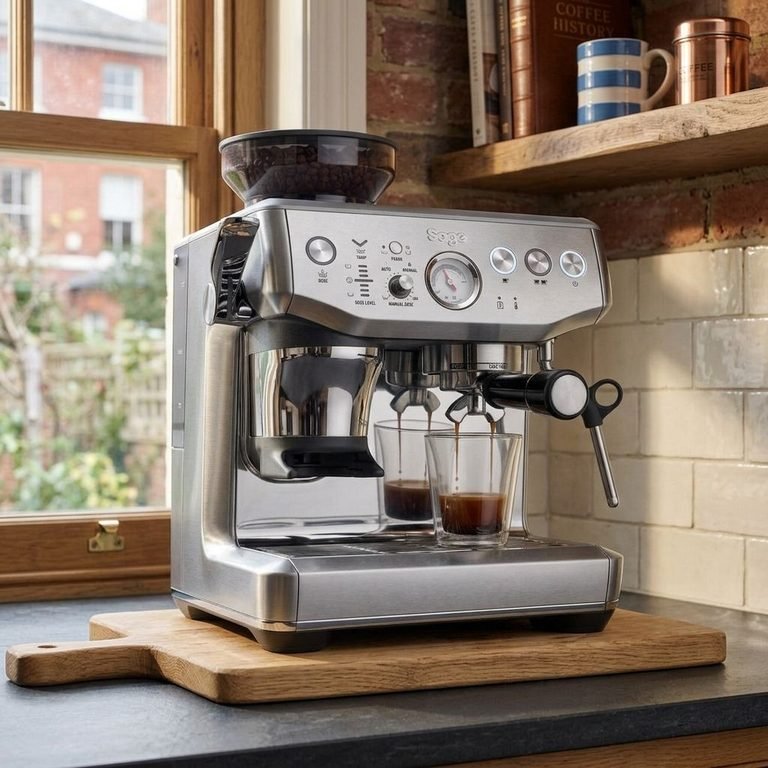
If you actually want to learn espresso, grind, dose, tamp, steam, the lot, this is still the best way to do it near £500. The RRP is £629.95, so wait for an offer. It regularly sells for around £475 to £500. You get a conical burr grinder with 16 settings that grinds straight into the portafilter, a pressure gauge, a separate hot water outlet and a manual steam wand.
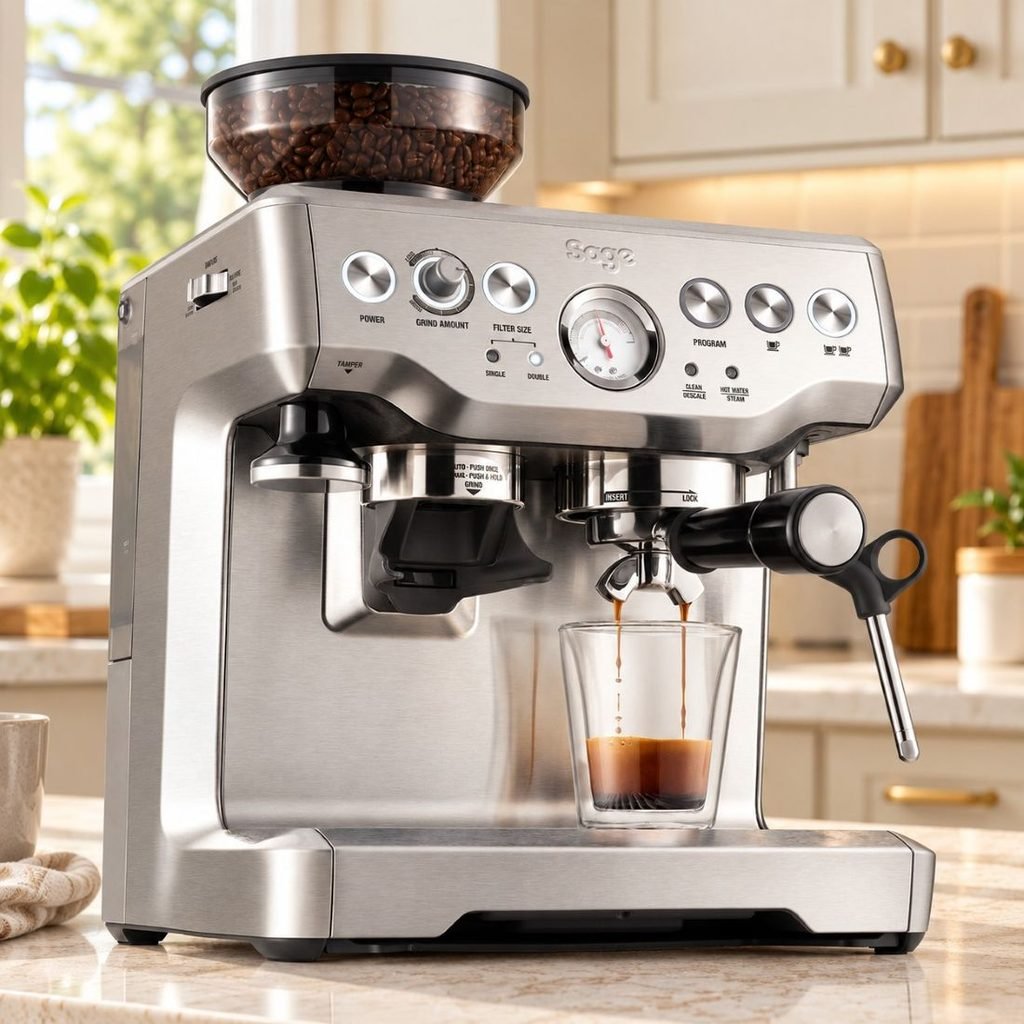
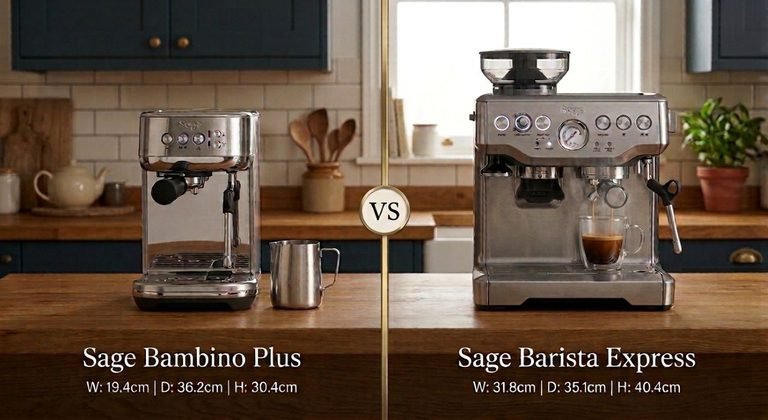
That pressure gauge is the bit I’d point to. When a shot tastes sour or bitter, it helps you work out whether to grind finer, use more coffee or tamp harder, and that’s how you get better. It isn’t quick or hands-off, the grinder can’t be upgraded on its own, and there’s a Clean Me light but no descale reminder, so set one on your phone. If you’re stuck between this and the Bambino Plus, my Sage Bambino Plus vs Barista Express comparison goes through it properly.
| Specification | Details |
|---|---|
| Price | RRP £629.95, seen at around £475 to £500 (October 2026) |
| Type | Manual espresso machine with grinder |
| Grinder | Conical burr, 16 settings, 250g hopper |
| Portafilter | 54mm, single and dual wall baskets |
| Controls | Pressure gauge, programmable shots, brew temperature adjustable by up to 2°C |
| Milk | Manual steam wand with Temp Control jug |
| Water tank | 2 litres |
| Power | 1,850W |
| Dimensions (W x D x H) | 31.8 x 35.1 x 40.4cm |
| Guarantee | 2 years |
Pros and cons
- Whole beans to espresso with no other kit
- The pressure gauge makes learning much easier
- Separate hot water outlet for americanos
- Only under budget on offer
- Over 40cm tall with the hopper on
- No descale reminder
- Manual milk takes practice
Buy it if you want to learn espresso properly, milk included, and you can catch it under £500.
Skip it if you want hands-free milk or the smallest machine you can find.
6. Nespresso Lattissima One: Best Pod Machine for Milk Drinks
Most pod machines leave the milk to you. The Lattissima One does it for you, with real milk. You pour milk into the little 125ml jug, clip it on, and press cappuccino or latte macchiato. The jug is single-serve, so the machine uses all of it and there’s no half-full carafe going warm on the side. It’s also only 15.4cm wide.
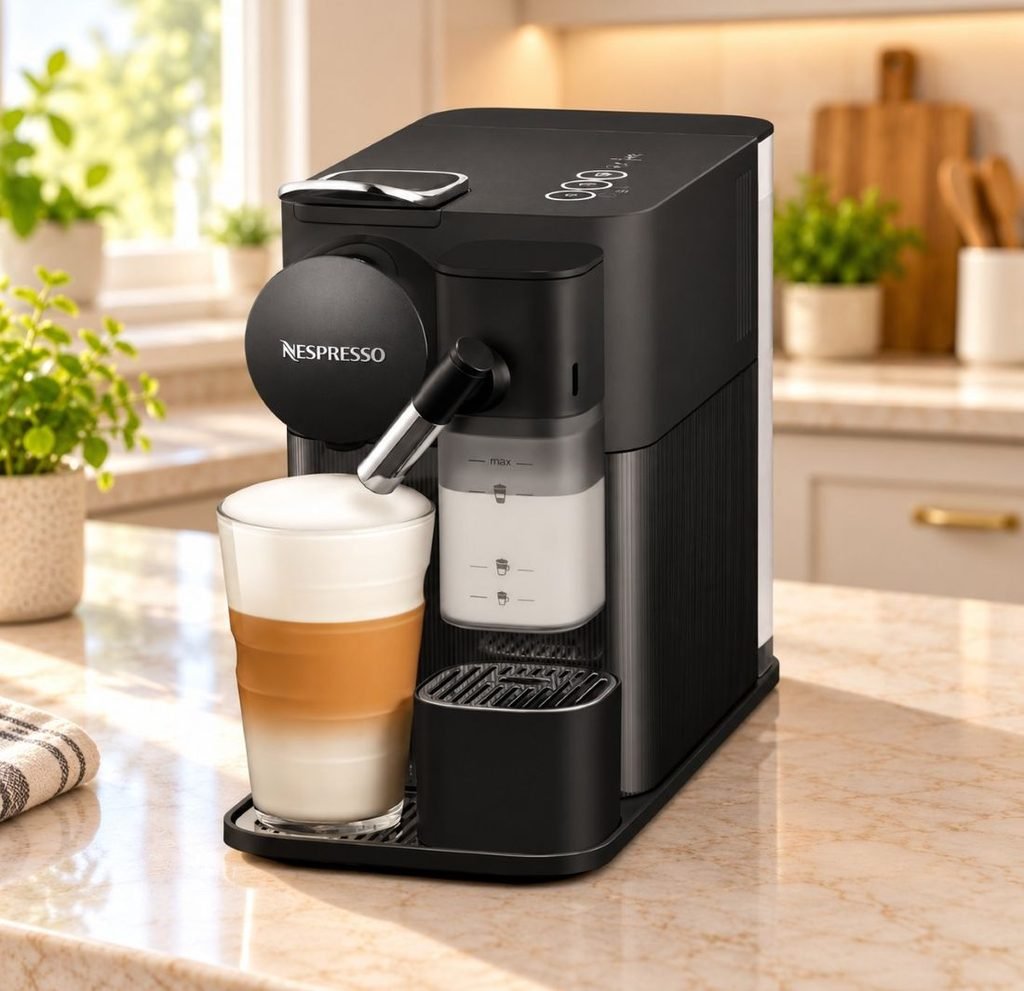
It takes Nespresso Original capsules, which is good news for your wallet, because supermarkets sell compatible ones from around 22p each. The flip side of that single-serve jug is that you make one milk drink at a time, then rinse and refill for the next. So it suits one or two people better than a family. Prices vary a lot, from £259.99 at De’Longhi to £179 at Marks Electrical when I checked. My Nespresso vs Dolce Gusto guide explains the Original and Vertuo systems if you’re weighing up pods more generally.
| Specification | Details |
|---|---|
| Price | £179 at Marks Electrical, £259.99 at De’Longhi (October 2026) |
| System | Nespresso Original capsules |
| Drinks | Espresso, lungo, cappuccino and latte macchiato at one touch |
| Milk | Automatic, single-serve 125ml jug |
| Water tank | 1 litre |
| Dimensions (W x D x H) | 15.4 x 32.4 x 25.6cm |
| Guarantee | 2 years |
Pros and cons
- One-touch milk drinks with real milk, no beans or grinding
- Single-serve jug means no leftover milk
- Cheap compatible capsules keep running costs down
- Small enough for almost any kitchen
- One milk drink at a time
- Smaller water tank than the bean-to-cup machines
- Pods create more packaging waste than beans
Buy it if you want a latte at the press of a button and don’t want to deal with beans, grinders or steam wands.
Skip it if you’re making milk drinks for three or four people at once.
7. Moccamaster KBG Select: Best Filter Coffee Machine
If filter coffee is what you drink, I wouldn’t spend this money on anything else. It brews a full 1.25-litre jug in about six minutes at 92 to 96°C, which is the range filter coffee needs, and it’s certified by both the European Coffee Brewing Centre and the Specialty Coffee Association. Flick the Select switch for half a jug and it slows the flow, so a few cups for one person still taste right.
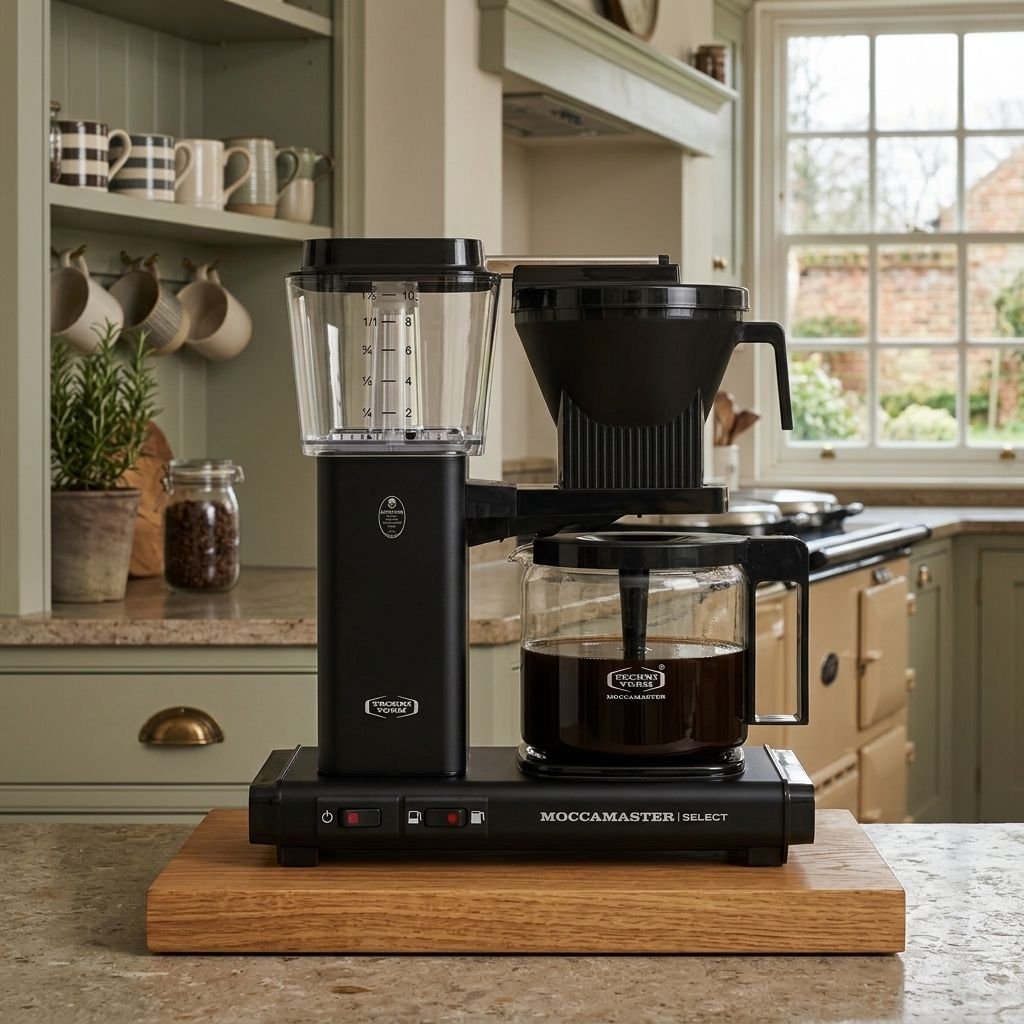
What really sets it apart is the 5-year warranty, more than double anything else here, plus spare parts you can buy separately. At around £238 to £268, that’s roughly £48 to £54 for each year of cover. Compare that with about £200 a year for a £399.95 machine with two years. It doesn’t do espresso, milk or a timer, and the hotplate switches off after 40 minutes. If you sip slowly, my Moccamaster KBG Select review compares it with the thermal-jug KBGT.
| Specification | Details |
|---|---|
| Price | Around £238 to £268 at UK coffee retailers |
| Type | Filter (drip) coffee machine |
| Capacity | 1.25 litres (4 to 10 cups) |
| Brew time | About 6 minutes for a full jug |
| Brew temperature | 92 to 96°C |
| Keep warm | Hotplate at 80 to 85°C, switches off after 40 minutes |
| Filter size | No.4 paper filters |
| Power | 1,520W maximum |
| Dimensions (W x D x H) | 32 x 17 x 36cm |
| Guarantee | 5 years |
Pros and cons
- Consistent, well-extracted filter coffee from one switch
- 5-year warranty and replaceable parts
- Half-jug setting for smaller batches
- Filter coffee only
- No timer
- Hotplate turns off after 40 minutes
Buy it if you drink black filter coffee most days and want something that’ll last.
Skip it if you want espresso, milk drinks or coffee that stays hot all morning.
What £500 buys, and what it doesn’t
Put these machines side by side and a pattern shows up. At full price under £500, an espresso machine gets you a grinder or automatic milk, rarely both. Bean-to-cup machines do give you both, but you swap espresso control for convenience. And the machines that genuinely do everything tend to dip under £500 only in a sale.
| Budget | What you can realistically get | The usual compromise |
|---|---|---|
| Under £300 | A pod machine with milk, or a premium filter machine (Lattissima One, Moccamaster) | No fresh-bean espresso |
| £300 to £400 | Entry bean-to-cup or a compact espresso machine (Magnifica Evo, Philips on offer, Bambino Plus) | Manual milk, or no grinder |
| £400 to £500 | Espresso with a grinder, or an all-in-one on offer (Barista Express, Ninja) | Usually sale-dependent, and they’re bigger machines |
Features worth paying for, and the ones that aren’t
| Worth paying for | Not worth paying extra for |
|---|---|
| Automatic milk, if you have milky coffee every day | High pressure numbers on the box (15 or 19 bar). Espresso is extracted at around 9 bar |
| A proper burr grinder, built in or separate | App connectivity you’ll set up once and forget |
| A removable brew unit on a bean-to-cup machine | Long lists of drink presets you won’t use |
| A longer guarantee, if you plan to keep it for years | A super-fast heat-up, if you’re grinding and tamping by hand anyway |
The running costs nobody mentions
Coffee is the biggest ongoing cost, obviously. What surprised me is how close water filters come on some of these machines. This is what they cost for a household making two drinks a day.
| Machine | Filter and price | When to replace it | Approx. cost per year |
|---|---|---|---|
| Sage Bambino Plus | Sage water filter, £14.95 | Every 3 months or 40 litres | About £60 |
| Philips 3300 LatteGo | AquaClean, around £13 to £16 | When prompted, or at least every 3 months | About £52 to £64 |
| De’Longhi Magnifica Evo | DLSC002, about £6.50 each in a 6-pack (£38.90) | About every 2 months or 50 litres | About £39 |
The Ninja uses its own cleaning tablets and descaling packets instead of a tank filter, and the Lattissima One and Moccamaster just need descaling. If you live in a hard water area, which takes in London and much of the south and east of England, they’ll all need it more often.
What ‘up to 5,000 cups without descaling’ really means
Philips says AquaClean gives you up to 5,000 cups without descaling, as long as you replace the filter eight times. That’s 625 cups per filter. What the advert leaves out is a line in the Philips manual: replace the filter at least every three months, even if the machine hasn’t asked yet.
At two drinks a day you’d make about 180 cups in three months, nowhere near 625. So you’ll be changing filters because of the calendar, not because they’re used up. Eight filters would take you about two years and roughly 1,460 drinks before a descale is due, not 5,000. You’d need to be making around seven drinks a day to get the full 625 out of each one.
There’s one more catch. Turning on an AquaClean filter switches off the machine’s descale alarm. That’s fine while you keep changing filters, but if you let them run out, the machine won’t go back to reminding you to descale. Whichever you choose, filters or descaling, don’t let both slip.
Electricity barely matters
At the current Ofgem price cap of 26.32p per kWh (October to December 2026), the Moccamaster’s 1,450W heater running for about six minutes uses around 0.145kWh. That’s roughly 3.8p for a full 1.25-litre jug, or under 1p a mug if you pour five. A shot and milk on the Bambino Plus is about a penny. Energy just isn’t a good reason to pick one of these over another.
Cost per drink: pods vs beans vs filter
Here’s what each drink costs to make, so you can compare systems properly rather than just machine prices. Swap in your own coffee prices if yours are different.
| Drink | Assumption | Approx. cost |
|---|---|---|
| Espresso machine, double shot, budget beans | 18g from a £15 1kg bag | 27p |
| Espresso machine, double shot, speciality beans | 18g from a £9 250g bag | 65p |
| Bean-to-cup drink | 10g of beans at £15 per kg (your machine’s dose may differ) | 15p |
| Nespresso Original, supermarket compatible | L’OR, 40 capsules for £9 | 22.5p |
| Nespresso Original, Nespresso’s own capsule | About 50p each | 50p |
| Filter mug (250ml) | 15g at £15 per kg (60g per litre) | 22.5p |
| Milk for a latte | 150ml from a £1.65 four-pint bottle | 11p |
Does bean-to-cup work out cheaper than a pod latte?
Let’s compare the two one-touch latte machines on this list. The Philips 3300 is £369.99 and the Lattissima One is £259.99 at De’Longhi, so the Philips costs £110 more.
- A Philips latte costs about 26p (15p of beans and 11p of milk), or about 34p if you add AquaClean filters at roughly 8p a drink (£60 a year ÷ 730 drinks).
- A Lattissima One latte with Nespresso’s own capsule costs about 59p (50p, plus 9p for 125ml of milk). Against that, the Philips earns back its extra £110 in about 330 to 440 drinks, or roughly five and a half to seven months at two a day.
- A Lattissima One latte with supermarket compatibles costs about 32p. Without filters, the Philips saves under 6p a drink and takes more than two and a half years to catch up. With filters, the Philips latte is actually the more expensive one.
Both machines need descaling, so that part’s a wash. The takeaway is simple: bean-to-cup only saves you money if you’d otherwise buy Nespresso’s own pods. If cheap compatibles are fine by you, choose bean-to-cup for the taste, the choice of beans and the lack of pod waste. And if you find the Lattissima One for £179, the gap gets even wider.
Machines that just miss the cut
| Machine | Price (October 2026) | Why it isn’t in the main list |
|---|---|---|
| De’Longhi Rivelia | Lowest new price around £599.99, usually £549.99 to £650 | A brilliant bean-to-cup machine, but it isn’t under £500 new. Used ones are, but you may not get De’Longhi’s guarantee |
| De’Longhi Rivelia Start | £599.99 (launched July 2026) | The smaller, cheaper Rivelia, but still over budget, and the iced-milk carafe is another £99.99 |
| De’Longhi La Specialista Arte (EC9155) | Usually around £529 to £541 | A decent rival to the Barista Express, but it’s normally over £500 and has 8 grind settings to the Sage’s 16. Worth a look if you see it under £450 |
| De’Longhi Magnifica Evo Next (ECAM310.60.B) | Has been listed at £399.99, but I couldn’t confirm a live UK price | Automatic LatteCrema milk and a bigger 1.9-litre tank. If you find it in stock near £400, it’s a fair alternative to the Philips |
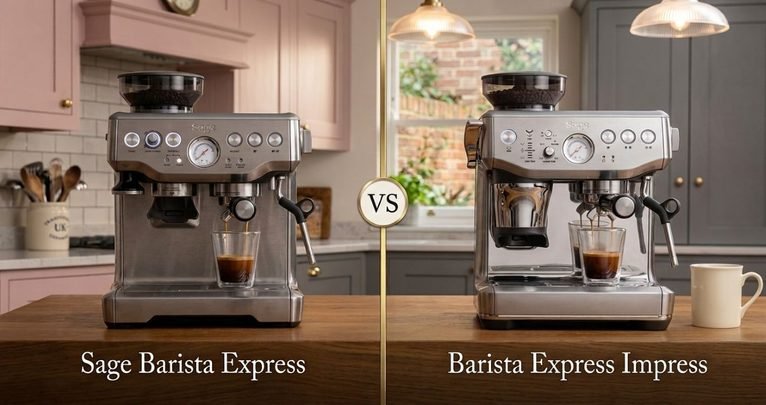
| Sage Barista Express Impress | £599.95 | Assisted tamping is lovely for beginners, but the standard Barista Express does the core job for around £100 less. My Barista Express vs Barista Express Impress comparison covers the difference |
| Ninja Luxe Café Pro | Around £730 list price | More drink settings and a better froth system, but well above this budget. See my Ninja Luxe Café Pro vs Sage Barista Express Impress comparison |
| Melitta Purista | £269 to £349 | Slim at 20cm wide and made for black coffee, but no milk option at all, and the Magnifica Evo gives you more for similar money |
How to choose a coffee machine under £500
- Think about what’s actually in your cup. Mostly lattes and flat whites means automatic milk: the Bambino Plus, Philips, Ninja or Lattissima One. Mostly black coffee or espresso means the Magnifica Evo or Barista Express. A jug of filter coffee means the Moccamaster. For a closer look at milk systems, see my guide to the best coffee machines for cappuccino and latte.
- Count your drinks. One or two a day and a small tank is fine. Four or more and you’ll want a 2-litre tank (Ninja, Barista Express) and a low cost per cup, which means beans rather than branded pods.
- Check the height, not just the width. Wall cupboards catch more people out than worktop space. Use the table below, and leave room to lift a hopper lid or top up a tank from above.
- Know your water. In a hard water area, expect to descale more often, and budget for filters using the running costs table.
- Read the guarantee terms. Ninja’s 2 years depends on registering. Moccamaster gives 5. Sage’s guarantee only covers the original buyer, so a second-hand Sage won’t come with one.
- Look at the price history, not the ‘was’ price. A big discount off a price that only lasted a few weeks isn’t really a discount.
Will it fit under your cupboards?
| Machine | Height |
|---|---|
| Sage Barista Express (with hopper) | 40.4cm |
| Ninja Luxe Café Premier | 37.2cm |
| Philips 3300 LatteGo | About 37.1cm |
| De’Longhi Magnifica Evo | About 36cm |
| Moccamaster KBG Select | 36cm |
| Sage Bambino Plus | 30.4cm |
| Nespresso Lattissima One | 25.6cm |
Which type of coffee machine should you buy?
| Machine type | Best for | Look elsewhere if |
|---|---|---|
| Espresso, no grinder | Milk drinkers with small kitchens, or anyone who already has a grinder | You want beans in and coffee out from one appliance |
| Espresso with grinder | People who enjoy the process and want to learn | You want speed with no skill involved |
| Bean-to-cup | One-touch coffee and milk from fresh beans | You want full control over your espresso |
| Pod with milk | The least effort, the smallest space | You drink a lot of coffee or dislike pod waste |
| Filter | Black coffee by the mug or the jug | You want espresso or milk drinks |
If your budget is a lot lower than £500, or this is your very first machine, my guide to the best coffee machines for beginners includes cheaper and simpler options.
Best coffee machines under £500: final verdict
For most people, the Sage Bambino Plus is the best coffee machine under £500. It’s small, fast, and its automatic milk makes good lattes easy for anyone in the house. Just know going in that fresh-bean espresso means buying a grinder later.
If you’d rather press one button and walk away, the Philips Series 3300 LatteGo is the easiest machine here and great value at £369.99, though that is an offer price. Black coffee drinkers should save their money and get the De’Longhi Magnifica Evo, which is under £500 even at full price.
The Ninja Luxe Café Premier and Sage Barista Express are two to watch rather than chase. Both are only under budget on offer, but when they are, the Ninja is the most flexible machine here and the Barista Express is the best way to learn espresso.
For lattes without beans, the Nespresso Lattissima One is the simplest option. And if all you drink is filter coffee, the Moccamaster KBG Select and its 5-year warranty are hard to argue with. For more choice at every budget, have a look at my guides to the best coffee machines in the UK and the best espresso machines in the UK.
FAQs
What is the best coffee machine under £500 in the UK?
For most milk coffee drinkers, the Sage Bambino Plus at £399.95. For push-button bean-to-cup, the Philips Series 3300 LatteGo while it’s £369.99. For black coffee from beans, the De’Longhi Magnifica Evo. For filter coffee, the Moccamaster KBG Select.
Is the De’Longhi Rivelia available for under £500?
Not new, at the time of writing. It’s been between about £549.99 and £650 at UK retailers, and the cheaper Rivelia Start launched at £599.99. Used ones do sell for less, but check whether De’Longhi’s guarantee would still cover you.
Can you get an espresso machine with a grinder for under £500?
Yes, usually on offer. The Sage Barista Express (RRP £629.95) often sells for around £475 to £500, and the Ninja Luxe Café Premier was £479.99 at Ninja when I checked. At full price, both are over budget.
Is a bean-to-cup machine worth it under £500?
If you want fresh-bean coffee without any skill involved, yes. Just don’t buy one only to save money compared with supermarket compatible pods. Once you count water filters, the saving per drink is tiny or disappears.
Is it cheaper to make coffee at home than buy it from a café?
By a long way. A latte from the Philips 3300 works out at about 34p, including beans, milk and filters. Against a £3.50 café latte, that’s a saving of about £3.16 a drink, so the machine pays for itself after around 117 lattes. Use your own café price and drink count to check.
How often do I need to descale a coffee machine?
Follow the machine’s prompts and the manual, and expect to do it more often in hard water areas. Sage suggests every 60 to 90 days on the Bambino Plus depending on hardness. On a Philips with AquaClean, you won’t need to descale until you’ve used eight filters, as long as you change each one on time.
Should I wait for Black Friday to buy a coffee machine?
If you’ve got your eye on a Sage or Ninja, it’s worth watching, because their prices move a lot in sales. Machines that are already well under £500, like the Magnifica Evo, are less likely to drop by enough to be worth the wait.