
The 5 Best Washing Machines in the UK (2026)
Every machine in this guide is A-rated and spins at 1400rpm, so the energy label won’t do much to help you choose. The useful differences are in the smaller print. Eco energy use ranges from 32 to 51kWh per 100 cycles, one of the quick washes only takes 1kg, depth varies by nearly 9cm, and the warranties look very different once you get past year two.
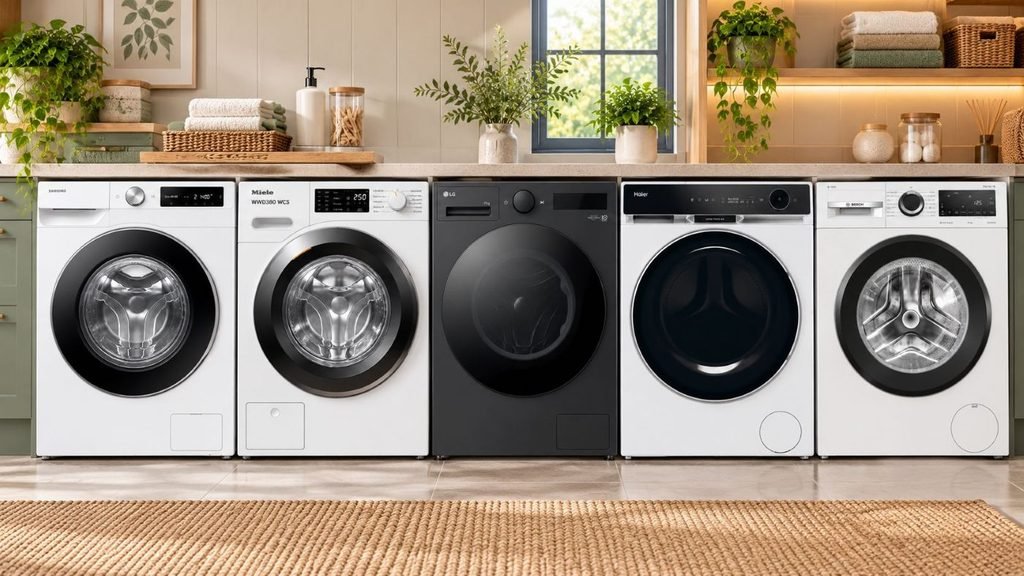
I’ve picked five of the best washing machines UK shoppers can buy at the moment, from Bosch, Haier, Samsung, Miele and LG, and checked each one against the manufacturer’s UK specs, product information sheets and warranty terms. They suit different homes, so the best one for you comes down to how much washing you do and which features you’d use.
Quick verdict
If you just want one name, go for the Bosch Series 6 WGG254F1GB. It has a 10kg drum, i-DOS to dose the detergent and softener, and the shallowest body of the five. While Bosch’s current offer runs, you also get a 5-year parts and labour warranty once you register it.
The other four are better at specific things:
- Best overall: Bosch Series 6 WGG254F1GB (10kg)
- Best for energy efficiency: Haier X Series 11 HW110-BD14397U1 (11kg)
- Best smart all-rounder: Samsung Series 6 WW11DG6B85LEU1 (11kg)
- Best premium: Miele WWD380 WCS PWash&Steam (9kg)
- Best for large families: LG Series 7 F4X7013TBB (13kg)
Best washing machines UK: at a glance
| Model | Best for | Score | Biggest strength | Main limitation |
|---|---|---|---|---|
| Bosch WGG254F1GB | Best overall | 9.5/10 | 10kg + i-DOS + 5-year warranty offer | Highest Eco energy use and loudest spin here |
| Haier HW110-BD14397U1 | Energy efficiency | 9.4/10 | 32kWh per 100 Eco cycles with an 11kg drum | 67.9cm full depth |
| Samsung WW11DG6B85LEU1 | Smart features | 9.2/10 | Auto Dispense, AI Wash and SmartThings | Highest Eco water use (54L) |
| Miele WWD380 WCS | Premium buyers | 9.1/10 | PowerWash, SteamCare and a 4kg/49-minute quick wash | 9kg drum and roughly double the Bosch’s price |
| LG F4X7013TBB | Large families | 9.0/10 | 13kg drum on just 33kWh per 100 Eco cycles | No automatic dosing on this model |
Key specifications compared
| Model | Capacity | kWh/100 Eco cycles | Water per Eco cycle | Spin noise (class) | Auto-dosing | Wi-Fi |
|---|---|---|---|---|---|---|
| Bosch WGG254F1GB | 10kg | 51 | 50L | 74dB (B) | ✓ i-DOS | ✗ |
| Haier HW110-BD14397U1 | 11kg | 32 | 47L | 70dB (A) | ✓ Smart Dosing | ✓ hOn |
| Samsung WW11DG6B85LEU1 | 11kg | 48 | 54L | 72dB (A) | ✓ Auto Dispense | ✓ SmartThings |
| Miele WWD380 WCS | 9kg | 40 | 50L | 72dB (A) | ✗ (CapDosing capsules) | ✓ Miele@home |
| LG F4X7013TBB | 13kg | 33 | 46L | 71dB (A) | ✗ | ✓ ThinQ |
All five are energy class A with a 1400rpm maximum spin and spin-drying class B. The figures are from each manufacturer’s UK specification or product information sheet. The scores are my editorial ratings, not lab cleaning results.
How I chose the top five
I started with the things you notice week to week. That meant drum size, whether the quick wash is any use, automatic dosing, steam and hygiene options, noise, and whether the machine will actually fit. A long feature list counted for very little on its own.
After that I compared the regulated Eco 40-60 energy and water figures, the warranty terms and UK availability. I also looked for themes that keep coming up in owner reviews about the controls, programmes and noise. I’ve used those as a guide to everyday use only, because star ratings can’t tell you much about cleaning or how long a machine will last. Every spec comes from the manufacturer’s UK page, product information sheet or manual. I haven’t used or tested any of these machines myself.
I also made a point of not picking five versions of the same machine. Bosch is the broad recommendation, Haier is about efficiency, Samsung is about automation, Miele is for premium buyers and LG is for big loads.
What matters when buying a washing machine
Choose capacity for the laundry you actually wash
More drum space only helps if you can fill it. For most families, 9 or 10kg is about right. 11kg gives you extra room for towels and bedding, and 13kg comes into its own in homes where the machine is on most days. If you’re stuck between the two most common sizes, my 9kg vs 10kg washing machine guide goes through it in more detail.
Compare the kWh figure, not just the letter
All five are A-rated, but their Eco 40-60 figures go from 32 to 51kWh per 100 cycles. That’s a big spread for one letter. Look at the kWh number on the label instead. It’s also the figure I’ve used for the running costs further down.
Automatic dosing can matter more than an app
Bosch, Haier and Samsung dose detergent and softener automatically on these exact models. You top up a tank now and again and stop measuring, and it’s harder to overdose. These systems use liquid detergent, though, so they’re not much use if you prefer powder or pods. The LG F4X7013TBB doesn’t have ezDispense, and Miele’s CapDosing works with single capsules instead of a bulk tank.
Check depth as carefully as width
Width is easy, because all five are about 60cm. Depth is where people get caught out. It varies by almost 9cm once you include the door, and the Haier and LG need the most room. Measure the space, leave room behind for the hoses and plug, and if your utility room is narrow, check the door can open properly. The full depth table is further down.
Treat quick washes as small-load programmes
A 15-minute wash won’t get through a full drum. Haier rates its Quick 15 for 1kg and Samsung rates its 15′ Quick Wash for 2kg. If you need a half-load done quickly, look at Samsung’s Super Speed, LG’s TurboWash 360 and Miele’s QuickPowerWash. I’ve put them side by side in a table below.
1. Bosch Series 6 WGG254F1GB: Best washing machine overall
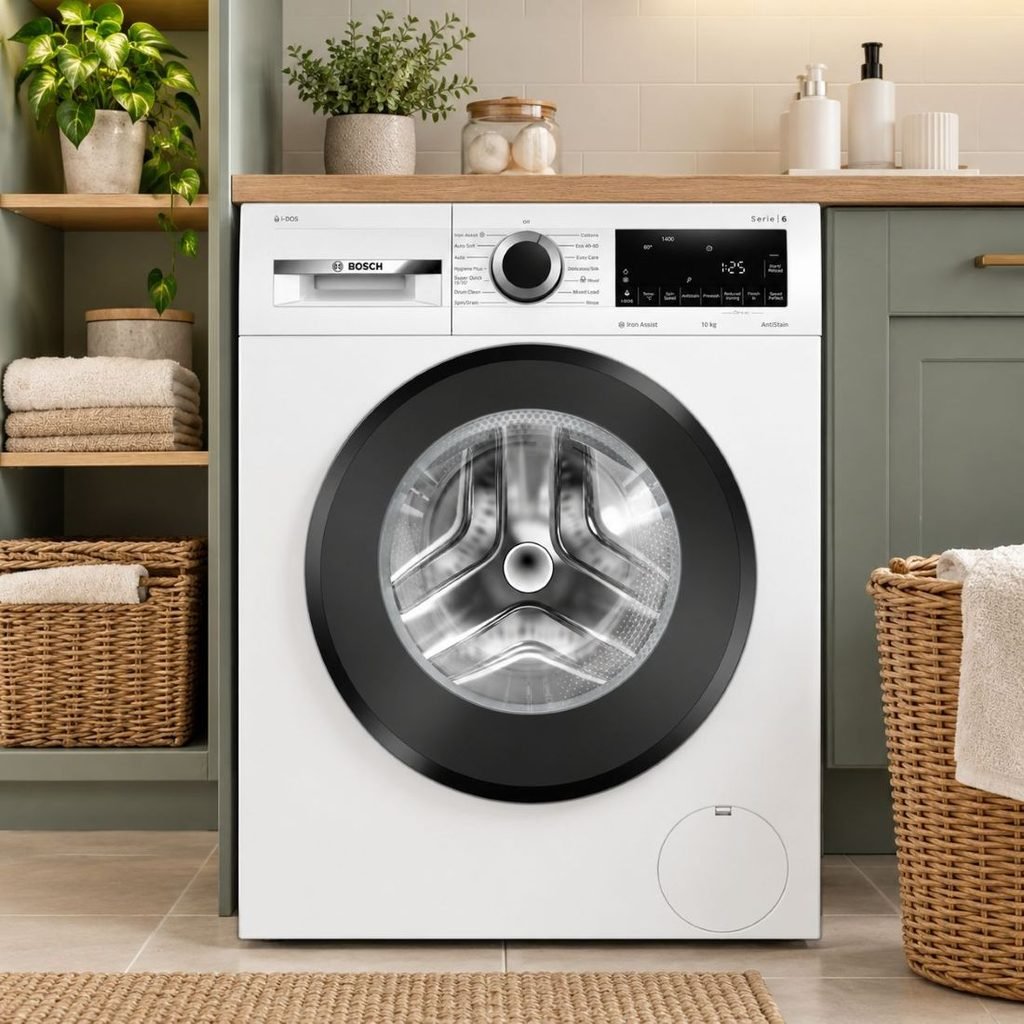
The WGG254F1GB is first because it’s hard to find a real weak spot for an ordinary family. The 10kg drum is big without being excessive, and i-DOS doses liquid detergent and softener for you. There’s AntiStain for four common stains, plus Iron Assist, Allergy Plus, SpeedPerfect and Super Quick 15/30. Bosch rates the 30-minute setting for 4kg, which is enough for a day’s school uniforms and work shirts.
Where it falls behind is efficiency and noise. At 51kWh per 100 Eco cycles it uses the most electricity here, and its 74dB spin puts it in noise class B, while the other four are class A. On the plus side, its 58.8cm body is the shallowest of the five and you never need an app. Bosch is also offering 5 years’ parts and labour cover on machines bought between 1 April 2026 and 31 March 2027 and registered within three months. For most buyers, I think that matters more than a few kWh.
| Specification | Details |
|---|---|
| Capacity | 10kg |
| Drum volume | 70L |
| Maximum spin speed | 1400rpm |
| Energy efficiency class | A |
| Energy / 100 Eco cycles | 51kWh |
| Water / Eco cycle | 50L |
| Spin noise | 74dB(A), noise class B |
| Spin-drying class | B |
| Quick wash | Super Quick 15/30 (30-minute setting rated for 4kg); SpeedPerfect cuts compatible programmes by up to 65% |
| Key features | i-DOS, AntiStain, Iron Assist, Allergy Plus, Reload, SilentPowerDrive motor |
| Smart connectivity | None |
| Dimensions (H × W × D) | 84.5 × 59.8 × 58.8cm (depth excludes door and controls) |
| Warranty | 2 years as standard; 5 years parts and labour if bought 1 Apr 2026 to 31 Mar 2027 and registered within 3 months; 10-year motor warranty |
Pros and cons
- 10kg suits most families without going oversized
- i-DOS takes the measuring out of every wash
- Super Quick 30 handles a realistic 4kg load
- Shallowest body of the five
- 5-year parts and labour warranty offer with registration
- Straightforward to use, with no Wi-Fi to set up
- 51kWh per 100 Eco cycles is the highest figure here
- The only noise class B machine in this shortlist (74dB)
- No app control or remote cycle alerts
Verdict: The easiest machine here to recommend for everyday family washing, because it doesn’t ask you to compromise much anywhere.
Buy it if you want a capable 10kg washer with automatic dosing and you don’t need to control it from your phone.
Skip it if the lowest running cost, an 11 to 13kg drum or Wi-Fi is your priority. Haier and LG are cheaper to run, and Samsung is the better connected option.
2. Haier X Series 11 HW110-BD14397U1: Best for energy efficiency
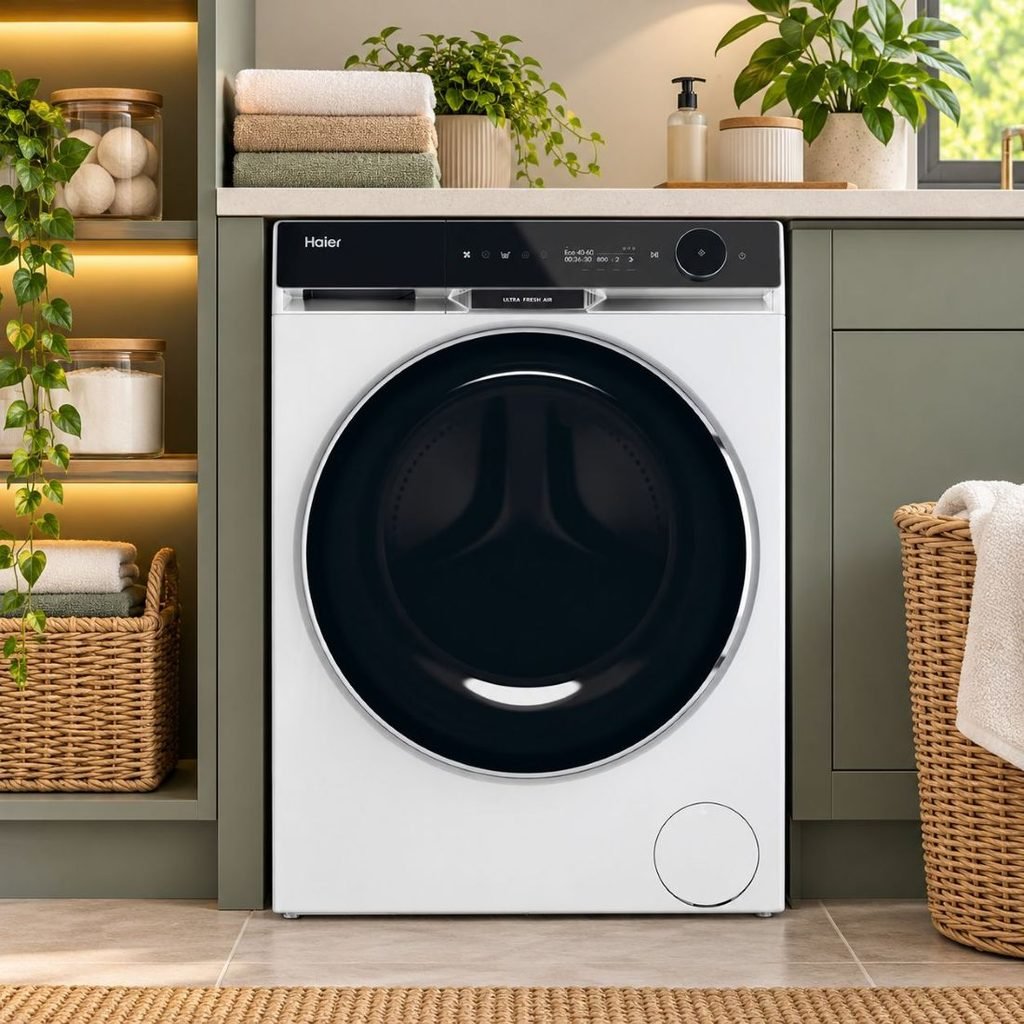
Haier’s X Series 11 combines an 11kg drum with the lowest Eco electricity figure in this group, which is unusual. Its UK spec lists 32kWh per 100 Eco 40-60 cycles and 47 litres per cycle, and Haier sells it as A-40%, so it comfortably beats the A-class limit. On paper it’s the most efficient machine here and one of the biggest.
It’s packed with features, too. Smart Dosing weighs each load and works out how much detergent and softener to add. If you can’t empty the drum straight away, Ultra Fresh Air keeps air moving through it for up to 12 hours. You also get steam, Smart Dual Spray, the Direct Motion motor and hOn app control. And at 70dB on spin, it’s the quietest of the five.
Size is the problem. The cabinet is 62.9cm deep and the full depth is 67.9cm, so get the tape measure out before you order. Quick 15 is also only rated for 1kg. That’s a shirt or two, so it won’t rescue a forgotten PE kit.
| Specification | Details |
|---|---|
| Capacity | 11kg |
| Maximum spin speed | 1400rpm |
| Energy efficiency class | A (marketed as A-40%) |
| Energy / 100 Eco cycles | 32kWh |
| Water / Eco cycle | 47L |
| Spin noise | 70dB(A), noise class A |
| Spin-drying class | B |
| Quick wash | Quick 15, rated for 1kg |
| Key features | Smart Dosing (AutoDose), Ultra Fresh Air (up to 12 hours), Steam, Smart Dual Spray, Refresh programme, Direct Motion motor |
| Smart connectivity | hOn app (Wi-Fi + Bluetooth) |
| Dimensions (H × W × D) | 85 × 59.5 × 62.9cm cabinet; 67.9cm full depth |
| Warranty | 2 years parts and labour; 10-year parts guarantee if registered within 28 days (labour charged after year two) |
Pros and cons
- Lowest Eco electricity use in this shortlist
- 11kg drum without an efficiency penalty
- Quietest spin of the five at 70dB
- Automatic dosing and Ultra Fresh Air for loads left in the drum
- 10-year parts guarantee with registration
- 67.9cm full depth needs careful planning
- Quick 15 is only rated for 1kg
- After year two, the long guarantee covers parts but not labour
- App-led feature set may be more than some buyers want
Verdict: The Bosch suits more homes, but if you have a big household and the space, the Haier costs less to run and does more for you.
Buy it if you wash a lot, care about running costs and want automatic dosing and app control.
Skip it if your recess is shallow, you prefer very simple controls or you rarely fill more than 8 or 9kg.
3. Samsung Series 6 AI Energy + SpaceMax WW11DG6B85LEU1: Best smart all-rounder
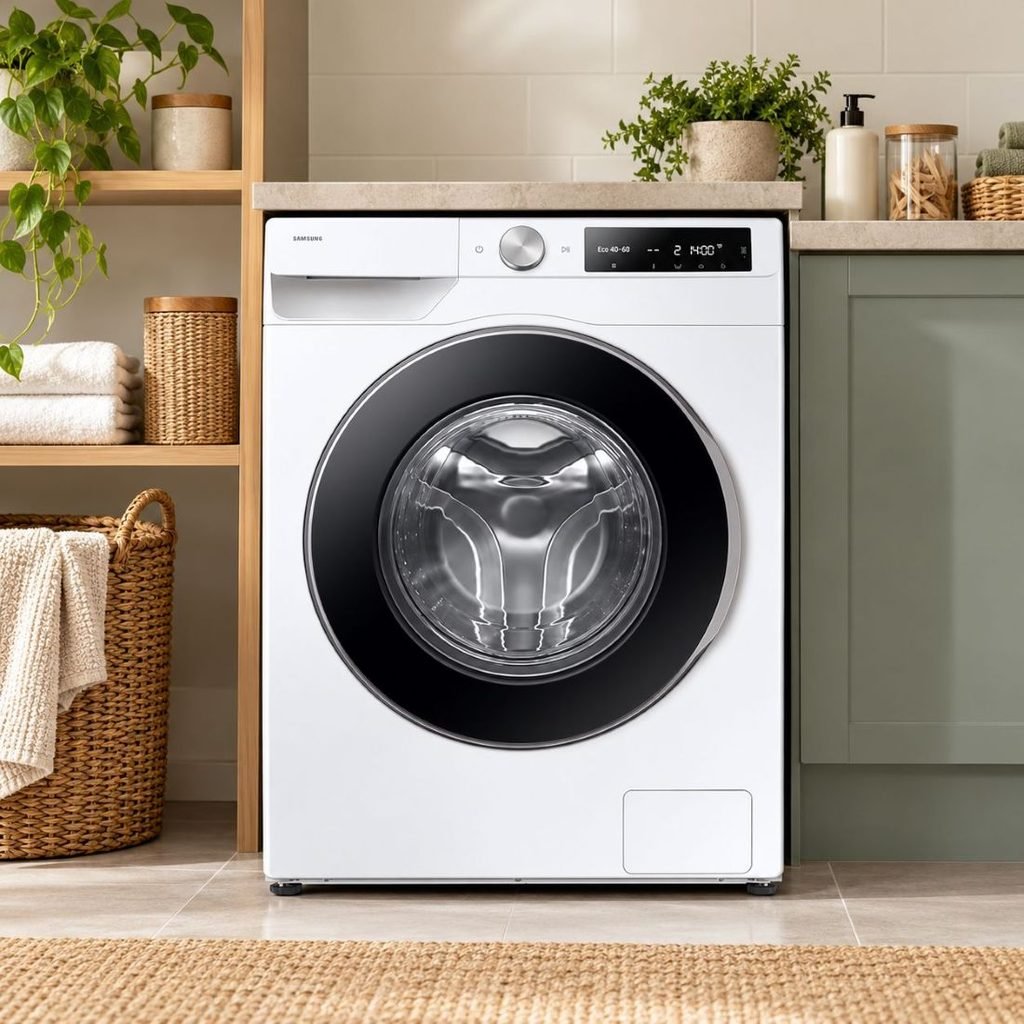
I’ve given Samsung the smart award because its app features come with automation that saves you work. You get AI Wash, Auto Dispense, AI EcoBubble, Hygiene Steam and SmartThings with an 11kg drum, and SpaceMax keeps it all in a standard 60cm-wide, 60cm-deep body (64cm with the door).
Auto Dispense is the bit you’ll notice every day. Detergent and softener go in separate compartments, and Samsung says one fill lasts up to a month at two or three washes a week. Super Speed is the other highlight. It washes 5kg in 39 minutes on its default settings, which is a lot more practical than the 15′ Quick Wash and its 2kg limit.
Efficiency is its weak spot. It uses 48kWh per 100 Eco cycles and 54 litres per cycle, the highest water figure in this group. If you doubt you’ll use the app much, the Haier gives you the same 11kg for less electricity.
| Specification | Details |
|---|---|
| Capacity | 11kg |
| Maximum spin speed | 1400rpm |
| Energy efficiency class | A |
| Energy / 100 Eco cycles | 48kWh |
| Water / Eco cycle | 54L |
| Spin noise | 72dB(A), noise class A |
| Spin-drying class | B |
| Quick wash | Super Speed: 5kg in 39 minutes; 15′ Quick Wash for up to 2kg |
| Key features | AI Wash, Auto Dispense, AI EcoBubble, Hygiene Steam, Super Speed, Drum Clean |
| Smart connectivity | SmartThings Wi-Fi |
| Dimensions (H × W × D) | 85 × 60 × 60cm; 64cm including door |
| Warranty | 2 years as standard; 5 years parts and labour on qualifying purchases registered within 90 days (Samsung’s current offer runs to 1 December 2026); 10-year motor warranty |
Pros and cons
- Auto Dispense holds up to a month of detergent at two or three washes a week
- Super Speed washes 5kg in 39 minutes
- 11kg capacity in a standard-depth body
- SmartThings adds cycle monitoring and notifications
- 5-year warranty offer with registration
- 54L per Eco cycle is the highest water figure here
- 48kWh per 100 Eco cycles is well above Haier and LG
- A lot of features to learn if you like simple controls
Verdict: The one to pick if you want the machine to do more of the thinking. Auto Dispense, AI Wash and Super Speed all take small jobs off your hands.
Buy it if you want an 11kg washer with automatic dosing, app control and a fast programme that handles a proper load.
Skip it if you’ll never open the app, or Eco water and electricity use matter more to you than convenience. Haier is the better efficiency-led 11kg option.
4. Miele WWD380 WCS PWash&Steam: Best premium
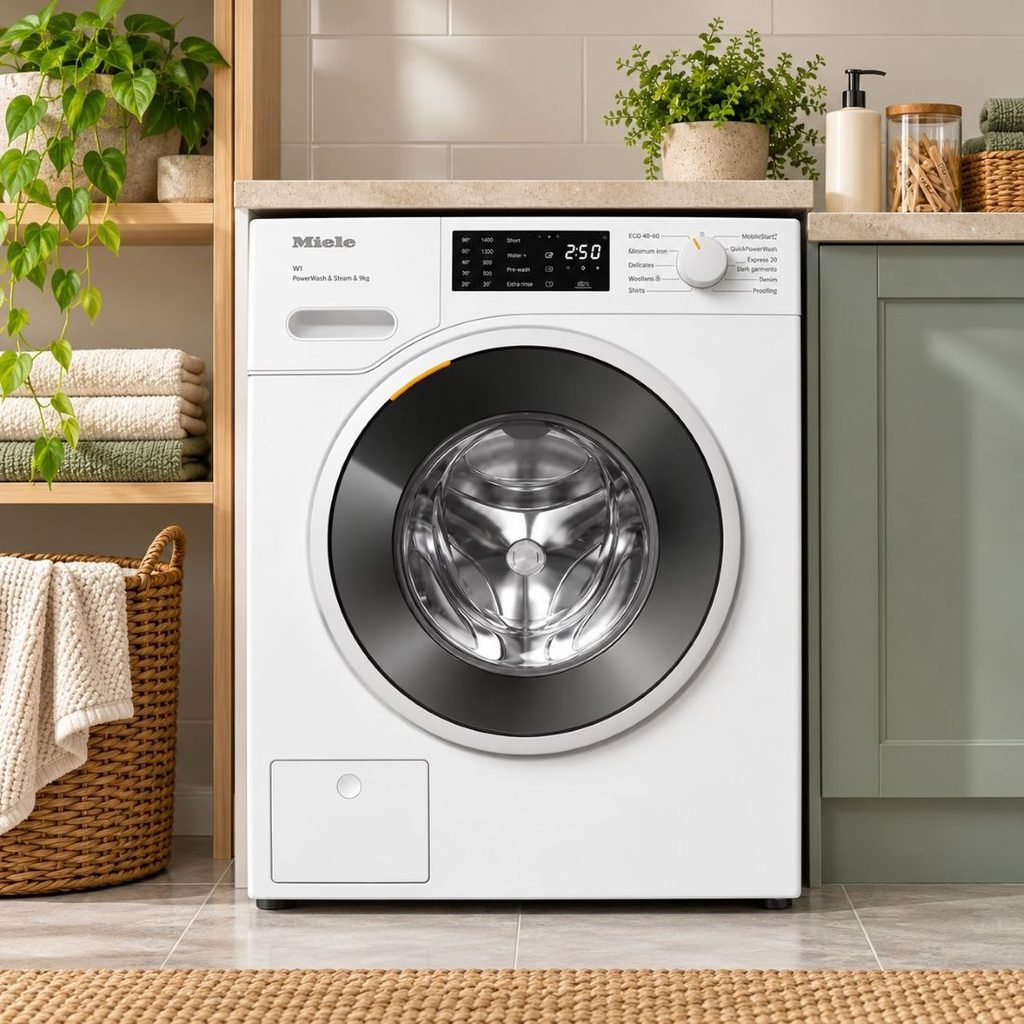
The WWD380 suits people who care more about how their clothes are treated than about drum size. At 9kg it’s the smallest machine here. But PowerWash, SteamCare, the Honeycomb drum, AddLoad and Miele@home give it its own character, and if your household doesn’t need 11kg, the smaller drum won’t hold you back much.
QuickPowerWash is the programme I’d single out. Miele rates it for 4kg of cottons in 49 minutes, so it’s a quick wash you could happily use every day. The Eco figures are decent too, at 40kWh per 100 cycles and 50 litres per cycle, and its 72dB spin is in noise class A.
Before you pay the extra, check two things. First, this model has no bulk auto-dosing. You put your own detergent in the drawer as normal, and CapDosing is an optional way to add Miele’s single-dose capsules, for example for woollens or fabric conditioner. Second, the price. In early November 2026 it cost roughly double the Bosch at major UK retailers, and it comes with a 2-year guarantee. The extra money goes on Miele’s care features and build quality. You won’t get it back through lower bills.
| Specification | Details |
|---|---|
| Capacity | 9kg |
| Maximum spin speed | 1400rpm |
| Energy efficiency class | A |
| Energy / 100 Eco cycles | 40kWh |
| Water / Eco cycle | 50L |
| Eco 40-60 duration (full load) | 3hr 49min |
| Spin noise | 72dB(A), noise class A |
| Spin-drying class | B |
| Quick wash | QuickPowerWash: 4kg of cottons in 49 minutes |
| Key features | PowerWash, QuickPowerWash, SteamCare, Honeycomb drum, CapDosing, AddLoad |
| Smart connectivity | Miele@home |
| Dimensions (H × W × D) | 85 × 59.6 × 64.3cm |
| Warranty | 2-year guarantee |
Pros and cons
- Strong range of fabric-care features, including SteamCare
- QuickPowerWash handles 4kg in 49 minutes
- 40kWh per 100 Eco cycles is competitive
- Miele@home and AddLoad add convenience without taking over
- 9kg is the smallest drum in this shortlist
- No bulk automatic dosing on this model
- Roughly double the Bosch’s price at the time of writing
- Only a 2-year guarantee, where rivals offer 5 or 10 years with registration
Verdict: Hard to justify on value alone, which is why it’s my premium pick. If 9kg is enough and you want the care features, none of the others really matches it.
Buy it if 9kg suits your household and you’re happy to pay more for steam, garment care and a quick wash you’ll actually use.
Skip it if value per kilogram is your main concern, you need 11 to 13kg or bulk auto-dosing is essential. Bosch gives you more capacity for less, while Haier and Samsung add automatic dosing to bigger drums.
5. LG Series 7 AI Direct Drive F4X7013TBB: Best for large families
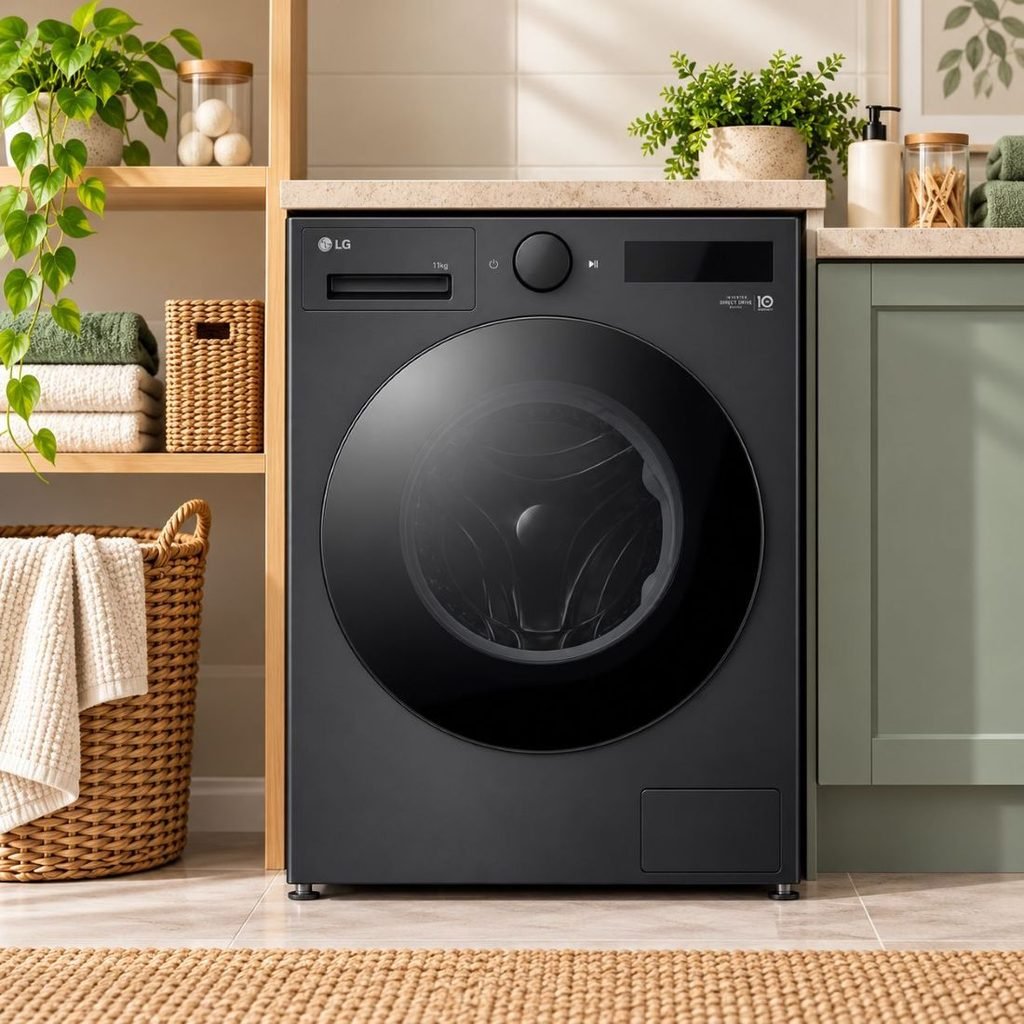
At 13kg, the F4X7013TBB has the biggest drum here, and LG hasn’t sacrificed efficiency to get it. It uses 33kWh per 100 Eco cycles and 46 litres per cycle, the lowest water figure in this group. TurboWash 360, AI Direct Drive, Steam and ThinQ mean there’s more to it than size. If you’re washing duvets, towels and kids’ kit every week, this is the one to look at.
TurboWash 360 does 5kg in 39 minutes, which is handy when you don’t have a full drum’s worth. Quick 14 is there for small, lightly soiled loads. The main thing missing is auto-dosing. This model has an ordinary detergent drawer without LG’s ezDispense, so if you want both, look at the F4X7513TBB, a 13kg Series 7 model that has it. The body is 61.5cm deep, or 65.5cm from the back cover to the door.
| Specification | Details |
|---|---|
| Capacity | 13kg |
| Maximum spin speed | 1400rpm |
| Energy efficiency class | A |
| Energy / 100 Eco cycles | 33kWh |
| Water / Eco cycle | 46L |
| Spin noise | 71dB(A), noise class A |
| Spin-drying class | B |
| Quick wash | TurboWash 360: 5kg in 39 minutes; Quick 14 for small loads |
| Key features | AI Direct Drive, TurboWash 360, Steam, Add Item |
| Smart connectivity | ThinQ Wi-Fi |
| Dimensions (H × W × D) | 85 × 60 × 61.5cm; 65.5cm to the door |
| Warranty | 2 years parts and labour as standard; 10-year Direct Drive motor warranty (parts); LG’s 5-year registration offer covered this model on purchases to 30 Sept 2026, so check whether it has been renewed |
Pros and cons
- 13kg is the largest drum in this shortlist
- 33kWh per 100 Eco cycles is impressively low for the capacity
- Lowest Eco water use here (46L)
- TurboWash 360 handles 5kg in 39 minutes
- 13kg is more than many households need
- No ezDispense automatic dosing on this model
- 65.5cm depth to the door needs measuring
Verdict: Not the one I’d suggest for most homes, but a very good buy if you’ll regularly fill 13kg.
Buy it if your machine is rarely off, you wash bedding and towels often or you’d like to do fewer, bigger loads.
Skip it if you rarely fill more than 9 or 10kg, your space is tight on depth or automatic dosing is a must. Paying for drum space you never use won’t make it better value.
Quick washes compared: what each fast programme can really handle
Quick-wash times get plenty of attention, but the rated load matters more. These are the manufacturers’ own figures.
| Model | Fast programme | Time | Rated load |
|---|---|---|---|
| Bosch WGG254F1GB | Super Quick 15/30 | 15 or 30 min | 4kg on the 30-minute setting |
| Haier HW110-BD14397U1 | Quick 15 | 15 min | 1kg |
| Samsung WW11DG6B85LEU1 | Super Speed / 15′ Quick Wash | 39 min / 15 min | 5kg / 2kg |
| Miele WWD380 WCS | QuickPowerWash | 49 min | 4kg of cottons |
| LG F4X7013TBB | TurboWash 360 / Quick 14 | 39 min / 14 min | 5kg / small loads |
For a half-load in under an hour, Samsung and LG are the best here, and Miele isn’t far behind. Bosch’s 30-minute setting works well for everyday top-ups. Haier’s Quick 15 is really for one or two items.
Eco 40-60, the programme the energy label is based on, takes a long time. With a full load it runs for 3hr 49min on the Miele, 3hr 58min on the Haier and 4hr on the Samsung. That’s normal. It saves energy by washing at a lower temperature for longer.
Will it fit? Dimensions and depth compared
| Model | Height × width | Body depth | Depth including door |
|---|---|---|---|
| Bosch WGG254F1GB | 84.5 × 59.8cm | 58.8cm | Not listed by Bosch |
| Haier HW110-BD14397U1 | 85 × 59.5cm | 62.9cm | 67.9cm |
| Samsung WW11DG6B85LEU1 | 85 × 60cm | 60cm | 64cm |
| Miele WWD380 WCS | 85 × 59.6cm | 64.3cm overall | 64.3cm |
| LG F4X7013TBB | 85 × 60cm | 61.5cm | 65.5cm |
Most fitted kitchens use a 60cm-deep worktop, and the hoses and plug need room behind the machine. That makes the Bosch and Samsung the easiest to fit flush, while the Haier will stick out the most. Think about the door as well. With it open, Bosch quotes 104.9cm of depth, and retailers list about 109cm for the Samsung and 114cm for the LG. In a narrow utility room or galley kitchen, that’s worth measuring too.
Running costs: what will each machine cost?
To keep things fair, I’ve used each machine’s published Eco 40-60 figure and 220 washes a year. The electricity price is 26.32p per kWh, Ofgem’s average Direct Debit price-cap rate for England, Scotland and Wales from 1 October to 31 December 2026. The sum is simple: kWh per 100 cycles ÷ 100 × 26.32p. I’ve left out water, detergent and standing charges, and your own tariff, programmes and load sizes will move the numbers.
| Model | kWh/100 Eco cycles | Electricity per cycle | 220 cycles a year | Over 10 years |
|---|---|---|---|---|
| Bosch WGG254F1GB | 51 | 13.4p | £29.53 | about £295 |
| Haier HW110-BD14397U1 | 32 | 8.4p | £18.53 | about £185 |
| Samsung WW11DG6B85LEU1 | 48 | 12.6p | £27.79 | about £278 |
| Miele WWD380 WCS | 40 | 10.5p | £23.16 | about £232 |
| LG F4X7013TBB | 33 | 8.7p | £19.11 | about £191 |
So the gap between the cheapest machine to run (Haier) and the dearest (Bosch) is about £11 a year, or roughly £110 over ten years at today’s price. I wouldn’t let that decide things for you. The same model can easily vary by more than £110 from one retailer to another, and capacity, warranty and how well you fill each load will count for more over the years.
Water costs depend on your supplier and whether you have a meter. Eco 40-60 is also only the test programme. Quick, hot, steam and hygiene cycles all use different amounts of energy and water.
Warranties compared: register early
The warranties differ more than the spec sheets suggest, and most of the longer cover only applies if you register in time. These are the terms each manufacturer published in autumn 2026.
| Model | Standard | Extended cover | Registration deadline | Motor |
|---|---|---|---|---|
| Bosch | 2 years | 5 years parts and labour (purchases 1 Apr 2026 to 31 Mar 2027) | 3 months | 10 years |
| Haier | 2 years parts and labour | 10-year parts guarantee; labour charged from year three unless a labour promotion applies | 28 days | No separate motor warranty |
| Samsung | 2 years | 5 years parts and labour on qualifying models (current offer to 1 Dec 2026) | 90 days | 10 years (motor only) |
| Miele | 2 years | None as standard | Not applicable | Not specified |
| LG | 2 years parts and labour | 5-year offer ran to 30 Sept 2026; check for renewal | 90 days (when offered) | 10 years (parts) |
Haier’s 10-year guarantee needs a careful read. After year two it covers parts, but labour is down to you unless your purchase included one of Haier’s separate labour promotions. Haier currently quotes a fixed-price repair of £160 including VAT for appliances up to 10 years old. The Bosch and Samsung offers are simpler, with five years of parts and labour. Whichever you choose, register it on the day it arrives.
Which of the five should you choose?
| If you want… | Choose | What you give up |
|---|---|---|
| The safest all-round pick that fits most spaces | Bosch WGG254F1GB | Wi-Fi and the lowest running costs |
| Low running costs with a big drum and auto-dosing | Haier HW110-BD14397U1 | Depth: allow 67.9cm |
| Smart automation and a fast 5kg wash | Samsung WW11DG6B85LEU1 | Eco water and electricity efficiency |
| Premium garment care in a 9kg machine | Miele WWD380 WCS | Capacity, auto-dosing and value |
| The biggest drum for a laundry-heavy home | LG F4X7013TBB | Automatic dosing |
If these are more than you want to spend, I’ve also covered the best washing machines under £400 and the best washing machines under £300.
Final verdict
For most UK homes, the Bosch Series 6 WGG254F1GB is the best washing machine in this group. It doesn’t top any single spec, but it gets very little wrong. The 10kg drum, i-DOS, AntiStain, Iron Assist and SpeedPerfect handle normal family washing well, it fits more spaces than the others, and the current 5-year warranty offer is a nice extra.
If running costs are your priority, go for the Haier. An 11kg drum on 32kWh per 100 cycles is hard to beat. Samsung is the one for automation, Miele is the premium pick for its care features and QuickPowerWash, and LG makes sense when you’ll really use 13kg.
My advice is to start with the drum size you’ll fill. Then check the depth against your space, the load limit on the quick wash you’ll use most and the warranty registration deadline. Those checks will tell you more than the biggest drum or the longest feature list.
Frequently asked questions
What is the best washing machine in the UK in 2026?
Of these five, the Bosch Series 6 WGG254F1GB suits the most households. It has a 10kg drum, i-DOS automatic dosing, good stain and quick-wash options and, at the moment, a 5-year warranty offer.
Which washing machine is cheapest to run?
On the published Eco 40-60 figures, the Haier is lowest at 32kWh per 100 cycles, closely followed by the LG at 33kWh. At 26.32p per kWh and 220 Eco cycles a year, that’s roughly £18.53 and £19.11 a year for electricity.
Which washing machine is best for a large family?
The LG F4X7013TBB, with a 13kg drum and a low 33kWh per 100 Eco cycles. If 13kg sounds like too much, the 11kg Haier and Samsung are sensible alternatives.
Is a 9kg washing machine big enough for a family?
For many households, yes. A 9kg drum copes well with everyday washing, but if you wash bedding often or like to combine loads, 10 or 11kg may suit you better. If you’re coming from a smaller machine, my 8kg vs 9kg comparison shows what the extra kilogram gets you.
Is automatic detergent dosing worth having?
It can be, especially if you wash often and use liquid detergent. Bosch, Haier and Samsung include it on these models. LG doesn’t on the F4X7013TBB, and Miele uses CapDosing capsules alongside a normal drawer instead.
Does a 15-minute wash clean a full load?
No. Very short cycles are designed for small, lightly soiled loads: Haier’s Quick 15 is rated for 1kg and Samsung’s 15′ Quick Wash for 2kg. For a bigger load in a hurry, Samsung’s Super Speed and LG’s TurboWash 360 both handle 5kg in 39 minutes.
Does 1400rpm mean all five will leave clothes equally dry?
Broadly, on paper. All five carry spin-drying class B, which means the Eco 40-60 programme leaves between 45% and 54% residual moisture. Load size and balance still make a difference. My 1200 vs 1400 vs 1600rpm guide explains when a faster spin is worth it, and if you dry indoors, a dehumidifier for drying clothes can help with what’s left.
Are smart washing machines worth it?
They can be, if alerts, remote control or automation will change how you do the washing. If you normally pick a programme at the machine and walk away, you won’t miss Wi-Fi. The Bosch manages perfectly well without it.
Bosch or Haier: which is better?
The Bosch suits more homes, thanks to its 10kg drum, i-DOS, shallower body and 5-year parts and labour warranty offer. The Haier is better if you want lower running costs, an 11kg drum and app control, and you have the depth to fit it.


One Comment